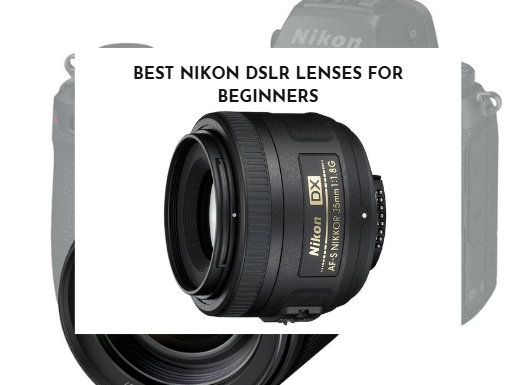
Best Nikon DSLR Lenses for Beginners
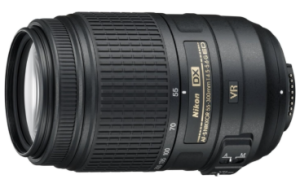
1)Nikon AF-S DX NIKKOR 55-300mm f/4.5-5.6G ED Vibration Reduction Zoom Lens
Check Price in Amazon
The Nikon AF-S DX NIKKOR 55-300mm f/4.5-5.6G ED Vibration Reduction Zoom Lens is an excellent choice for beginners looking to explore telephoto photography with a Nikon DSLR. Designed specifically for DX-format cameras, this lens delivers a generous 5.5x zoom range that allows photographers to move seamlessly from mid-range to long-distance shooting. With a focal length spanning 55mm to 300mm, it is well suited for wildlife, sports, travel, and outdoor photography, giving new users the flexibility to experiment with different subjects and shooting styles.
Image stability is a major advantage of this lens. Nikon’s Vibration Reduction technology helps reduce camera shake, which is especially useful when shooting handheld at longer focal lengths. The built-in tripod detection mode automatically adjusts stabilization when mounted, helping beginners achieve sharper results with less effort. This feature is particularly valuable for users still developing steady shooting techniques.
Optical performance is enhanced by a well-designed lens construction that includes two Extra-low Dispersion elements and a High Refractive Index lens element. These components work together to minimize chromatic aberration, reduce distortion, and maintain good contrast throughout the zoom range. Images appear clear and detailed, making the lens capable of producing pleasing results straight out of the camera.
Autofocus performance is handled by Nikon’s Silent Wave Motor, ensuring smooth, accurate, and quiet focusing. This makes the lens suitable not only for still photography but also for video recording, where reduced focus noise is beneficial. The minimum focusing distance of 4.6 feet allows for decent close-up capability, adding to the lens’s versatility. A 58 mm filter thread makes it easy and affordable to use common filters, while the snap-on lens cap provides simple and secure protection.
Overall, this lens stands out as a practical learning tool for new photographers who want extended reach without the complexity or cost of professional telephoto lenses. It offers dependable performance, useful features, and a user-friendly experience that supports growth and experimentation.
Pros
- Wide 55–300mm zoom range for versatile shooting
- Vibration Reduction helps achieve sharper handheld images
- ED and HRI elements improve clarity and reduce color fringing
- Quiet and smooth autofocus with Silent Wave Motor
- Lightweight and easy to handle for beginners
- Uses affordable 58 mm filters
Cons
- Variable aperture limits low-light performance at longer focal lengths
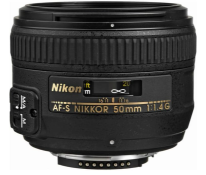
2)Nikon AF-S FX NIKKOR 50mm f/1.4G Lens with Auto Focus
Check Price in Amazon
The Nikon AF-S FX NIKKOR 50mm f/1.4G Lens with Auto Focus is an excellent choice for beginners who want to grow their photography skills using a Nikon DSLR. This prime lens offers a classic 50mm focal length that delivers a versatile field of view suitable for portraits, street photography, environmental shots, and everyday scenes. Its Nikon F mount is compatible with both FX and DX format cameras, giving new photographers flexibility should they upgrade camera bodies in the future.
One of the defining attributes of this lens is its F1.4 maximum aperture. This wide aperture allows the lens to gather a lot of light, making it easier to shoot in low-light conditions and to create images with smooth, visually pleasing background blur. The aperture range extends to F16 minimum, providing control over depth of field and exposure in bright environments. Beginners will find this range useful as it encourages creative use of focus and background separation.
Autofocus performance is strong thanks to the ultrasonic type AF motor, which quickly and accurately locks on to subjects. Focus operation is smooth and quiet, ideal for both still photography and video recording. Full time manual focusing lets users fine-tune focus without switching out of autofocus mode, which is helpful for gaining confidence and control as skills improve.
The lens accepts 58mm filters, a common size that makes it convenient and cost effective to add polarizing or neutral density filters to expand creative options.
While the lens is not zoomable, its fixed focal length encourages photographers to move physically to compose their shots. This constraint helps beginners develop a better understanding of perspective and composition.
With a minimum focus distance of 0.45m (17.72 inches), it gets you reasonably close to your subject for detailed shots and candid portraits. The included HB 47 lens hood helps reduce flare and protects the front element, adding to the overall value of the package.
Overall, the Nikon 50mm f/1.4G is a rewarding lens for anyone starting out with Nikon DSLR photography. It balances solid optical performance, reliable autofocus, and creative potential in an accessible package. Whether used on an FX or DX body, this lens delivers engaging results that help new shooters grow their confidence and photographic eye.
Pros
- Bright F1.4 maximum aperture for excellent low light performance and depth of field control
- Quiet and accurate autofocus with ultrasonic motor
- Full time manual focus control without needing to switch modes
- Compatible with Nikon F mount on both FX and DX cameras
- Accepts widely available 58mm filters
- Close minimum focus distance for detailed shots
- Comes with HB 47 lens hood
Cons
- Not having zoom capability may feel limiting to some beginners
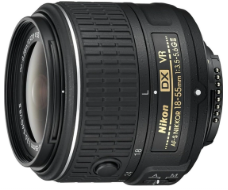
3)Nikon AF-S DX NIKKOR 18-55mm f/3.5-5.6G Vibration Reduction II Zoom Lens with Auto Focus
Check Price in Amazon
The Nikon AF-S DX NIKKOR 18-55mm f/3.5-5.6G Vibration Reduction II Zoom Lens is a reliable and versatile lens that pairs naturally with Nikon DSLR cameras, especially for beginners exploring photography. With a useful 18-55mm focal length range, this lens covers wide angle to short telephoto perspectives, making it suitable for landscapes, portraits, street photography, and general everyday shooting. Its focal range provides a flexible starting point for new photographers who want to experiment with different types of images without needing multiple lenses right away.
One of the appealing aspects of this lens is its compact and lightweight design, which is about 25 percent smaller and lighter than previous versions. This makes it easy to carry during walks, travels, and long shooting sessions without feeling weighed down. The reduced size also supports beginners who are still getting comfortable with handling camera gear and learning how to frame shots.
Vibration Reduction technology on this lens gives up to 4 stops of blur-free handheld shooting, which helps when shooting in lower light or at slower shutter speeds. For someone new to photography, this means more usable images when handheld shots are necessary and less reliance on a tripod. The technology helps stabilize the viewfinder as well, making it easier to compose shots with confidence.
The optical design is optimized for DX format cameras, which are the most common entry-level and mid-range Nikon DSLR models. On a DX camera body, the lens delivers a maximum angle of view of 76 degrees at the wide end and minimum angle of view of 28°50’ at the telephoto end. This range allows you to capture both wide scenes and tighter compositions without switching lenses, encouraging experimentation and learning.
For beginners stepping into Nikon DSLR photography, this lens provides a balanced mix of performance, convenience, and affordability. It helps new users build foundational skills in composition, zoom framing, and handheld shooting, all with a lens that feels natural and intuitive to use.
Pros
- Covers a useful wide to short telephoto focal range that supports many types of photography
- Lightweight and smaller size makes the camera easier to carry and handle
- Vibration Reduction helps deliver sharper images when shooting handheld
- Designed specifically for Nikon DX format cameras
- Offers broad angles of view from 76 degrees to 28°50’
Cons
- Image quality is solid for beginners but not as sharp as higher-end lenses
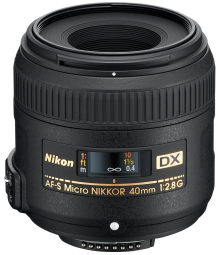
4)Nikon AF-S DX Micro-NIKKOR 40mm f/2.8G Close-up Lens
Check Price in Amazon
The Nikon AF-S DX Micro-NIKKOR 40mm f/2.8G Close-up Lens is a fantastic option for beginners who want to dive into close-up and macro photography with their Nikon DSLR. Designed specifically for DX-format cameras, this lens combines portability with impressive optical capabilities. Its compact and lightweight design makes it easy to carry on shoots, whether you are exploring outdoors, photographing small objects, or experimenting with creative perspectives.
With a 40mm focal length and a maximum reproduction ratio of 1.0x, this lens allows you to capture subjects life-size on the sensor. Beginners will enjoy seeing fine details in flowers, insects, food, or everyday objects, and the lens performs well across its entire focus range from close-up subjects to infinity.
The optical design consists of 9 elements in 7 groups, which helps deliver sharp images with good contrast and clarity. This versatility makes it a practical choice for someone who wants one lens that can handle both close-up work and general photography.
Autofocus is smooth and quiet thanks to Nikon’s Silent Wave Motor (SWM). This makes focusing enjoyable and reliable, particularly important for new photographers who are still learning how to nail precise focus. The lens also incorporates a close-range correction system (CRC), which improves performance when focusing at short distances, giving you crisp, detailed results when photographing small subjects. A focus distance indicator shows distances from 0.53 feet to infinity, making it easy to judge how close you can get to your subject without guessing.
Even though this is a prime lens that is not zoomable, it encourages you to move physically and explore different angles, which helps you develop a stronger sense of composition. The angle of view at 38 degrees provides a natural perspective that balances close-up detail with surrounding context. Whether you are capturing texture, patterns, or tiny living things, this lens makes macro photography approachable and fun.
For beginners stepping into Nikon DSLR photography, this Micro-NIKKOR lens opens the door to a new kind of creative expression. It brings professional-level macro performance into a user-friendly package that helps build confidence and skill.
Pros
- Captures life-size close-up images with 1.0x reproduction
- Compact and lightweight design makes it easy to carry
- Sharp results from close range to infinity
- Autofocus is quiet and smooth with Silent Wave Motor
- Close-range correction system improves macro focus performance
- Focus distance indicator helps with accurate composition
Cons
- Limited general telephoto use due to fixed focal length
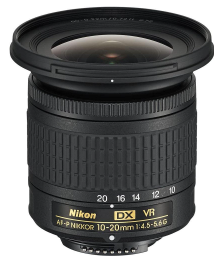
5)Nikon AF-P DX NIKKOR 10-20mm f/4.5-5.6G VR Lens
Check Price in Amazon
The Nikon AF-P DX NIKKOR 10-20mm f/4.5-5.6G VR Lens is a fantastic choice for beginners who want to expand beyond standard kit lenses and explore the creative possibilities of ultra-wide-angle photography with their Nikon DSLR. This lens opens up an expansive angular field of view from 109 degrees to 70 degrees, allowing you to include more of your scene in every shot.
Whether you are shooting landscapes, architecture, interiors, or dynamic environmental portraits, this extra wide view helps you capture dramatic compositions that simply aren’t possible with most general-purpose lenses.
Designed specifically for Nikon’s DX-format cameras, this lens balances performance with a compact, lightweight, and durable build that makes it a joy to carry on travels, outdoor outings, and everyday excursions. Its solid construction gives you confidence in a range of shooting environments while still being light enough that beginners won’t feel bogged down by heavy gear. The overall handling supports relaxed creativity for photographers who are learning how different focal lengths influence composition.
Optics on this 10-20mm deliver pleasing image quality across the zoom range, producing sharp photos and smooth videos even in challenging light conditions. This is especially helpful when you’re shooting handheld without extra support.
The minimum focus distance of just 0.22 meters (0.8 feet) across all zoom settings allows you to get close to your subject while still including dramatic background perspective, expanding your creative options when working with tight spaces or small details within sweeping scenes.
Autofocus performance is enhanced by a near-silent stepping motor, which operates quietly and smoothly. This is particularly valuable for video recording, where noisy focusing can distract from your footage.
Combined with Vibration Reduction (VR) image stabilization, this lens helps you capture sharp handheld shots and stable video clips even in less than ideal lighting, making it easier for beginners to produce high-quality results without advanced gear or extensive experience. The lens also accepts screw-on filters, giving you the flexibility to use polarizers, neutral density, and other creative accessories.
For newcomers to Nikon DSLRs, the AF-P DX NIKKOR 10-20mm f/4.5-5.6G VR serves as a creative doorway into ultra-wide photography. It invites experimentation with perspective and storytelling while being forgiving and user-friendly for developing photographers.
Pros
- Ultra-wide view enhances creative composition possibilities
- Compact and lightweight build makes it easy to carry on outings
- Durable design suitable for varied shooting conditions
- Strong optical performance for both photos and video
- Close minimum focus distance expands creative framing
- Quiet autofocus motion works well for video recording
- Image stabilization helps maintain sharp handheld shots
- Compatible with common screw-on filters
Cons
- Variable aperture limits low-light performance compared to faster lenses
6)Nikon AF-S DX Micro-NIKKOR 40mm f/2.8G Close-up Lens
Check Price in Amazon
The Nikon AF-S DX Micro-NIKKOR 40mm f/2.8G Close-up Lens is an excellent choice for beginners who want to explore close-up and macro photography with their Nikon DSLR. Designed for DX-format cameras, this lens delivers impressive performance in a compact and lightweight package that won’t weigh you down during outings or extended shooting sessions. Its size and balance make it easy to use for photographers who are still gaining confidence handling their gear.
This lens offers a 40mm focal length with a maximum reproduction ratio of 1.0x, which means you can capture subjects life-size on the camera sensor.
Whether you are photographing flowers, insects, food, or intricate textures, this lens helps you reveal detail that often goes unnoticed. With 9 elements in 7 groups in its optical design, images are sharp from close-up distances all the way to infinity. You can rely on it to produce clear results across a wide range of subjects.
Autofocus is smooth and quiet thanks to Nikon’s Silent Wave Motor (SWM). The focus action is responsive and ideal for everyday photography as well as close-up work. The lens also uses a close-range correction system (CRC), which improves optical performance when focusing very near to your subject.
This means you get well-defined images without having to struggle with manual adjustments. A focus distance indicator shows where the lens is focusing from 0.53 feet to infinity, making it easy to judge how close you can safely get to your subject.
Although this lens is not zoomable, its single focal length encourages you to move and position yourself creatively to compose your shots. The angle of view is 38 degrees, giving you a natural perspective that works well for everyday scenes as well as detailed close-ups. The minimum focus distance of 0.53 feet brings you close enough to capture intricate details while still allowing enough working space between you and your subject.
For beginners stepping into Nikon DSLR photography, the AF-S DX Micro-NIKKOR 40mm f/2.8G makes macro and close-up shooting approachable and fun. It delivers strong optical quality and dependable performance without overwhelming complexity.
Pros
- Life-size 1.0x reproduction for true macro detail
- Lightweight and easy to carry
- Produces sharp images from close range to infinity
- Quiet and accurate autofocus with Silent Wave Motor
- Close-range correction improves focus performance
- Clear focus distance indicator for easy reference
Cons
- Angle of view may feel narrow for broader scene
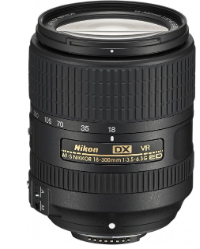
7) Nikon AF-S DX NIKKOR 18-300mm f/3.5-6.3G ED Vibration Reduction Zoom Lens with Auto Focus
Check Price in Amazon
The Nikon AF-S DX NIKKOR 18-300mm f/3.5-6.3G ED Vibration Reduction Zoom Lens is an excellent all-around lens for beginners stepping into Nikon DSLR photography. Its 18-300mm focal length range gives you an extremely broad range of views, from wide angle scenes to strong telephoto reach. This flexibility makes it ideal for everyday shooting, travel, wildlife, sports, landscapes, and portraits without needing to change lenses often. New photographers can explore many types of photography with just this one lens on their camera.
With an angle of view that ranges from 76 degrees at the wide end to 5 degrees 20′ at the telephoto end, the lens captures expansive vistas and far-away details alike. This lets you frame sweeping landscapes and then zoom in to fill the frame with distant subjects without swapping gear. The maximum magnification of 0.32x is useful for shooting closer details of subjects like flowers or small objects, especially at the telephoto range. The minimum focus distance of 1.6 feet (0.48 meters) helps bring subjects into focus even when you are relatively close, adding versatility for casual close-up shots.
The aperture range on this lens goes from f/3.5 to f/22, giving you control over depth of field and exposure. While the aperture narrows at longer focal lengths, the range remains useful for everything from casual snapshots to more thoughtful compositions. The lens is designed with Nikon’s autofocus technology that supports reliable focusing performance. This is especially helpful for beginners who need dependable autofocus as they build confidence in their shooting skills.
Vibration Reduction technology on this lens helps keep your handheld shots sharp, especially at longer focal lengths where camera shake is more noticeable. For those just getting comfortable with DSLR photography, this helps reduce the number of blurry images and allows you to shoot in lower light without immediately needing a tripod. The zoom lens design also means you can react quickly to changing scenes and subjects, expanding your creative options throughout the day.
The Nikon 18-300mm is engineered to be approachable and forgiving for newcomers, often becoming a go-to lens that grows with you as your skills improve. It brings a wide range of photographic possibilities into one single unit on your camera.
Pros
- Extremely broad focal length range that supports many shooting situations
- Angle of view transitions from wide to telephoto smoothly
- Useful close-up ability with a reasonable minimum focus distance
- Vibration Reduction helps reduce blur from camera shake
- Good for travel and everyday use without carrying many lenses
- Handles both landscapes and distant subjects well
Cons
- Variable aperture means less light at longer focal lengths
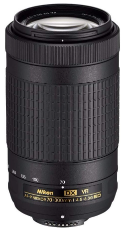
8)Nikon AF-P DX NIKKOR 70-300mm f/4.5-6.3G ED VR Lens
Check Price in Amazon
The Nikon AF-P DX NIKKOR 70-300mm f/4.5-6.3G ED VR Lens is a practical and approachable telephoto option for beginners using Nikon DSLR cameras. Designed for DX format bodies, this lens offers an effective focal length equivalent of 105–450mm in 35mm terms, making it well suited for photographing wildlife, sports, distant landscapes, and everyday moments that require extra reach. Its 4.3x telephoto zoom range allows new photographers to explore long-distance shooting without investing in heavy or expensive professional lenses.
Despite its extended reach, this lens remains compact and lightweight, which is especially helpful for beginners who want portability and ease of handling. The balanced design makes it comfortable to use during travel, outdoor activities, or long shooting sessions. With a minimum reproduction ratio of 0.22x, it also allows for modest close-up shots of subjects such as flowers or details, adding flexibility beyond distant photography. The 58mm filter attachment size keeps filters affordable and easy to find.
Image stability is enhanced through Nikon VR image stabilization, which helps reduce camera shake when shooting handheld at longer focal lengths. This is particularly valuable for beginners who may not yet be comfortable using tripods or managing fast shutter speeds. Lens settings can be accessed directly through the camera menu, simplifying operation and reducing the need for manual switches on the lens itself.
Optical performance is supported by the use of one ED glass element, which helps minimize chromatic aberrations and maintain good clarity throughout the zoom range. Images appear sharp and well controlled for a lens in this class, making it suitable for casual photography and learning telephoto techniques. The aperture range from f/4.5–6.3 to f/32 provides flexibility for depth of field control and exposure management in a variety of lighting conditions.
Compatibility is an important consideration with this lens. It is fully compatible with newer Nikon DSLR models such as the D7500, D5600, D5500, D5300, D3400, D3300, and D500, with some models requiring firmware updates. Certain cameras support limited functionality, while older Nikon DSLR and film camera models are not compatible. For beginners using supported bodies, however, the lens integrates smoothly and performs reliably.
Overall, the Nikon AF-P DX NIKKOR 70-300mm f/4.5-6.3G ED VR Lens is a strong learning tool for those entering telephoto photography. It combines reach, portability, and ease of use in a way that encourages experimentation and skill development.
Pros
- Long telephoto reach ideal for wildlife and sports photography
- Compact and lightweight design for easy carrying
- Nikon VR stabilization helps produce sharper handheld images
- ED glass element improves image clarity and reduces aberrations
- Affordable filter size allows easy accessory use
- Simple control through camera menu
Cons
- Compatibility limited to certain Nikon DSLR models
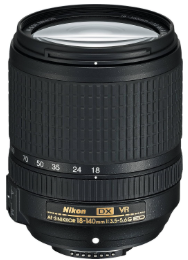
9)Nikon AF-S DX NIKKOR 18-140mm f/3.5-5.6G ED Vibration Reduction Zoom Lens
Check Price in Amazon
The Nikon AF-S DX NIKKOR 18-140mm f/3.5-5.6G ED Vibration Reduction Zoom Lens is a versatile and dependable choice for beginners using Nikon DSLR cameras. Designed to handle a wide range of everyday shooting situations, this lens smoothly transitions from wide angle at 18 millimeters to telephoto at 140 millimeters, making it ideal for travel, portraits, landscapes, family moments, and casual video recording. For new photographers, having this much flexibility in a single lens reduces the need for frequent lens changes and encourages experimentation.
Autofocus performance is handled by Nikon’s Silent Wave Motor, which delivers fast, accurate, and quiet focusing. This makes the lens comfortable to use for both still photography and video, especially in situations where focus noise could be distracting. The minimum focus distance of 0.45 meters (1.48 feet) across all zoom positions allows you to get relatively close to your subject, giving you more creative freedom when framing shots and capturing details.
Image stability is enhanced by Vibration Reduction technology, which helps produce sharper handheld photos and smoother videos in low-light conditions and when shooting at longer focal lengths. With a 7.8x zoom ratio, the lens provides strong reach without sacrificing ease of handling, which is particularly helpful for beginners still learning how to maintain steady shooting technique.
Optical quality is supported by a thoughtful lens construction of 17 elements in 12 groups, including Extra-low Dispersion glass and an aspherical lens element. These components work together to reduce chromatic aberration, improve clarity, and control distortion. The addition of Nikon Super Integrated Coating improves light transmission, enhances color consistency, and reduces flare and ghosting, resulting in clean and natural-looking images in a variety of lighting situations.
Built as a Type G AF-S DX lens with a built-in CPU and Nikon F mount, this lens integrates seamlessly with Nikon DX-format DSLR cameras. Its balanced design and reliable performance make it a comfortable everyday companion for photographers who are building their skills and exploring different types of photography.
Pros
- Wide to telephoto zoom range covers most everyday shooting needs
- Quiet and accurate autofocus with Nikon Silent Wave Motor
- Vibration Reduction improves handheld shooting in low light
- Good close focusing ability across the zoom range
- ED and aspherical elements enhance image clarity
- Super Integrated Coating improves color and reduces flare
- Strong all-in-one lens for travel and general photography
Cons
- Variable aperture limits low-light performance at longer focal lengths
You may also like to read: 7 Best Canon DSLR Cameras
Advantages of Using Nikon DSLR Lenses for Beginners
Ease of Use and Beginner-Friendly Handling
Nikon DSLR lenses are designed with simplicity and comfort in mind, making them easy for beginners to handle and operate. Many models are lightweight, well balanced, and intuitive to mount and control. Features such as smooth zoom rings, clear focus behavior, and minimal external switches help new users concentrate on composition rather than technical complexity. This user-friendly design reduces the learning curve and builds confidence from the first day of shooting.
Reliable and Accurate Autofocus Performance
Most Nikon DSLR lenses include technologies such as Silent Wave Motor or stepping motors that deliver fast, accurate, and quiet autofocus. For beginners, dependable autofocus is essential because it helps capture sharp images without constant manual adjustments. This reliability allows new photographers to focus on timing and framing while gradually learning how autofocus systems work in different situations.
Wide Range of Versatile Lens Options
Nikon offers an extensive selection of DSLR lenses that cover everything from wide-angle and standard zooms to telephoto and macro lenses. Beginners can start with an all-purpose zoom lens and later expand into specialized lenses as their interests grow. This flexibility supports experimentation with landscapes, portraits, wildlife, close-ups, and video, all within the same camera system.
Image Stabilization for Sharper Handheld Shots
Many Nikon DSLR lenses feature Vibration Reduction technology, which helps minimize blur caused by camera shake. This is especially beneficial for beginners who may not yet have steady shooting techniques or who often shoot handheld in low light. Image stabilization increases the number of usable photos and reduces frustration caused by motion blur.
Strong Optical Quality for Learning and Growth
Nikon lenses commonly use advanced optical elements such as Extra-low Dispersion glass, aspherical elements, and specialized coatings. These features help produce images with good sharpness, contrast, and color accuracy. For beginners, this consistent image quality makes it easier to evaluate their work and understand how settings like aperture and focal length affect results.
Compatibility and Upgrade Flexibility
Many Nikon DSLR lenses are compatible with both DX and FX format cameras. This allows beginners to continue using their lenses even if they upgrade to a more advanced Nikon DSLR in the future. This long-term compatibility makes investing in Nikon lenses more cost effective and reduces the need to replace equipment as skills improve.
Factors to Consider When Choosing the Best Nikon DSLR Lenses for Beginners
Focal Length Range
The focal length range determines how wide or how far a lens can see. Beginners benefit from lenses that cover multiple focal lengths because they allow experimentation with landscapes, portraits, everyday scenes, and distant subjects. A flexible focal length range reduces the need to change lenses often and helps new photographers understand how perspective and framing change as focal length increases or decreases.
Maximum Aperture
The maximum aperture affects how much light the lens can let in and how much background blur can be achieved. A wider aperture makes it easier to shoot in low-light situations and creates pleasing separation between the subject and the background. For beginners, learning how aperture influences brightness and depth of field is an essential photography skill, so having a useful aperture range supports creative growth.
Autofocus Performance
Fast and accurate autofocus is critical for beginners who are still learning how to time their shots. A reliable autofocus system helps capture sharp images of moving or unpredictable subjects without constant adjustments. Quiet autofocus is also beneficial for video recording and casual shooting, making the overall experience more enjoyable and less distracting.
Image Stabilization
Image stabilization helps reduce blur caused by camera shake, especially when shooting handheld or at longer focal lengths. This feature is particularly valuable for beginners who may not yet have steady shooting techniques. Stabilization increases the number of usable photos and allows new photographers to shoot confidently in lower light conditions without relying heavily on a tripod.
Lens Size and Weight
Lightweight and compact lenses are easier for beginners to carry and handle. Heavy lenses can cause fatigue and make it harder to maintain steady framing. A manageable size encourages photographers to bring their camera more often, practice regularly, and enjoy the learning process without feeling weighed down by equipment.
Optical Quality
Good optical quality ensures sharp images, accurate colors, and minimal distortion. Lenses with well-designed optical elements help beginners clearly see the results of their settings and techniques. Consistent image quality makes it easier to evaluate photos, learn from mistakes, and understand how camera settings affect the final image.
Compatibility with Camera Bodies
Lens compatibility with different camera bodies is an important long-term consideration. Beginners often start with entry-level cameras and later upgrade to more advanced models. Choosing lenses that remain compatible across camera upgrades helps protect the investment and allows photographers to grow within the same system without replacing equipment.
Learning and Creative Potential
The best beginner lenses support learning by encouraging experimentation with composition, perspective, and focus. Lenses that allow close focusing, wide angles, or background blur help beginners explore different creative styles. A lens that grows with the photographer keeps learning engaging and supports skill development over time.
FAQs
What type of lens is best for beginners using a Nikon DSLR?
For beginners, a versatile lens that covers a wide range of focal lengths is usually the best choice. Such lenses allow new photographers to shoot landscapes, portraits, everyday moments, and even distant subjects without constantly changing lenses. This flexibility makes learning easier because beginners can experiment with different styles of photography while focusing on core skills like composition, exposure, and framing.
Do beginners really need image stabilization in a Nikon DSLR lens?
Image stabilization is highly beneficial for beginners. It helps reduce blur caused by hand movement, especially when shooting in low light or using longer focal lengths. Since new photographers may not yet have steady shooting techniques, stabilization increases the chances of getting sharp images and reduces frustration during the learning process.
Should beginners choose zoom lenses or fixed focal length lenses?
Zoom lenses are often better for beginners because they offer flexibility and convenience, allowing photographers to adjust framing without moving closer or farther from the subject. However, fixed focal length lenses can also be valuable learning tools, as they encourage movement and thoughtful composition. Many beginners start with a zoom lens and later add a fixed focal length lens as their skills develop.