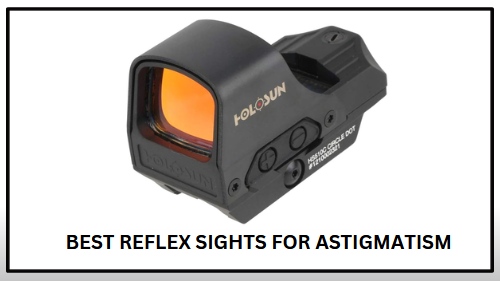
Few things are more frustrating than lining up a shot only to find your red dot looks like a smeared starburst instead of a crisp, clean aiming point. If you struggle with this, you’re not alone, and the best Reflex Sights for Astigmatism can make a real difference. While no optic can correct astigmatism itself, the right one gives you the control to find a sight picture that looks clear and manageable through your own eyes.
When comparing these sights, I pay particular attention to reticle flexibility and brightness control. Multiple reticle options, such as a simple dot, circle-dot, or larger outer reference, give you different ways to view the aiming point, while adjustable brightness helps you manage its appearance as lighting conditions change. The ability to switch off or simplify certain reticle elements can provide another level of control, while factors such as eye relief, multicoated optics, and durable, water-resistant construction contribute to the overall viewing experience.
In this guide, I’ll walk you through the key features to look for, share my top picks, and provide a buying guide to help you compare your options. I’ll also answer frequently asked questions about reticle types, brightness, and multiple reticle configurations.
By the end, you’ll have a clearer understanding of what to look for when choosing among the best Reflex Sights for Astigmatism.
Here are my top picks for the best Reflex Sights for Astigmatism:
- HOLOSUN 510C Multi-Reticle Reflex Sight — Best for Reticle Flexibility
- Holosun HS407C X2 Reflex Red Dot Sight — Best for a Simple Reticle
- Holosun HS507C-X2 Reflex Red Dot Sight — Best for a Structured Reticle
How We Tested the Best Reflex Sights for Astigmatism
We evaluated the best Reflex Sights for Astigmatism by focusing on how each optic presents and adjusts its illuminated aiming point. Since astigmatism can affect the way a reticle appears, the evaluation focused on the options available for changing the sight picture rather than assuming one reticle configuration works for everyone.
Reticle design was the starting point. Single dots, circle-dot configurations, multiple reticle options, and additional visual references were considered based on the type of aiming point they provide. The goal was to determine how much choice each design gives someone assessing which presentation works best for their individual vision.
Reticle adjustability was another key consideration, particularly brightness controls and the ability to change or deactivate certain reticle elements. These features give the user more control over how prominent the illuminated aiming point appears under different lighting conditions.
The evaluation also covered optical and viewing characteristics, including the sight’s viewing design, eye relief, and optical coating. Such factors help determine how the reticle fits into the overall sight picture rather than treating the illuminated aiming point in isolation.
Practical features rounded out the evaluation. Battery access, power-management systems, weight, housing materials, and protection against dust and water all contributed to our assessment of how each optic balances its reticle options with the practical requirements of regular use.
Because astigmatism affects individuals differently, we focused on the flexibility and control each sight provides rather than treating one reticle as universally suitable for everyone.
Best Reflex Sights for Astigmatism
1. HOLOSUN 510C Multi-Reticle Reflex Sight
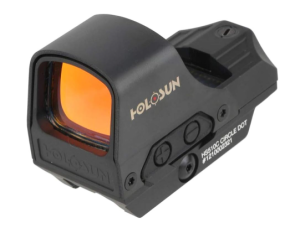
If you are trying to find a reflex sight that gives you more than one way to view an illuminated aiming point, the Holosun HS510C offers three reticle configurations to try. Its Multiple Reticle System provides a 2 MOA dot, a 65 MOA circle, or a combination of both. That flexibility is particularly relevant when astigmatism makes one reticle presentation appear less defined than another, since you can switch between configurations rather than relying on a single aiming point.
The 65 MOA circle provides a larger visual reference around the center, while the circle-dot configuration combines that reference with the 2 MOA dot. Switching to dot-only removes the outer circle for a simpler sight picture. Because astigmatism affects how illuminated reticles appear differently from person to person, having these options lets you determine which presentation works best for your own vision.
Reticle choice is not the only adjustment that matters. The HS510C has adjustable illumination, allowing you to change the brightness of the aiming point as lighting conditions change. When selecting the best Reflex Sights for Astigmatism, this level of control is useful because the appearance of an illuminated reticle can change with brightness and surrounding light.
The open design provides a broad viewing area, while multicoated optics support the sight’s optical system. Shake Awake activates the optic when movement is detected, and Solar Failsafe provides an additional power source when sufficient light is available. Together, these features add practical convenience without taking attention away from the HS510C’s main advantage: the ability to experiment with different reticle presentations.
Specifications
- Reticle: 2 MOA dot, 65 MOA circle, or circle-dot
- Magnification: 1x
- Emitter type: Open
- Illumination: Red LED
- Optical coating: Multicoated
- Viewing design: Open reflex
- Power features: Shake Awake and Solar Failsafe
- Housing: Aluminum
Pros
- Multiple reticle configurations
- Larger circle provides an alternative aiming reference
- Adjustable illumination
- Shake Awake power management
- Solar Failsafe
Cons
- Open-emitter design
- Mount not included
2. Holosun HS407C X2 Reflex Red Dot Sight
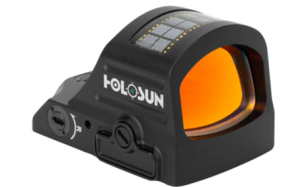
A simple reticle can be preferable when you do not want additional elements competing for attention in the sight picture. The Holosun HS407C X2 uses a single 2 MOA red dot, giving you one central aiming reference instead of a circle-dot or multi-reticle configuration. For someone comparing the best Reflex Sights for Astigmatism, that straightforward presentation provides a useful alternative to optics with more complex reticles.
The dot’s brightness is adjustable across multiple settings, so you can control its intensity according to the surrounding light. That adjustment is particularly relevant when an illuminated dot appears more prominent at higher brightness levels. Rather than being limited to one fixed intensity, you can experiment with different settings to find a presentation that works for your individual vision.
The HS407C X2 also keeps the viewing experience straightforward with an open-reflex design, multicoated optics, and unlimited eye relief. These features complement the single-dot reticle without adding another layer of complexity to the sight picture.
For longer-term convenience, Shake Awake activates the optic when movement is detected, while Solar Failsafe provides an additional power source when sufficient light is available. The sight runs on a CR1632 battery and uses a 7075-T6 aluminum housing. An IP67 rating provides protection against dust and water exposure, while its 1.5-ounce weight keeps the optic relatively light.
Specifications
- Reticle: 2 MOA red dot
- Magnification: 1x
- Optic type: Open reflex
- Eye relief: Unlimited
- Optical coating: Multicoated
- Brightness: Multiple settings
- Battery: CR1632
- Housing: 7075-T6 aluminum
- Weight: 1.5 oz
Pros
- Simple 2 MOA dot
- Adjustable brightness
- Multicoated optics
- Shake Awake technology
- Solar Failsafe
- Lightweight housing
Cons
- Open-emitter design
3. Holosun HS507C-X2 Reflex Red Dot Sight
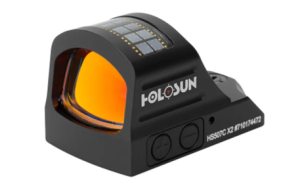
The Holosun HS507C-X2 uses the ACSS Vulcan reticle, which combines a 10 MOA center chevron with a large outer reference circle. This gives you a more structured sight picture than a conventional single-dot reticle while keeping the central aiming point clearly defined.
The outer circle can be deactivated when you prefer a less prominent reticle presentation. There is also a circle-dot configuration, giving you another option for how the aiming point appears through the optic. Since astigmatism can affect how illuminated reticles appear from person to person, having different presentations to compare can help you determine which configuration works best for your vision.
Brightness adjustment provides another way to control the reticle’s appearance. Multiple brightness settings let you change its intensity according to the surrounding lighting, while multicoated glass and unlimited eye relief complement the open-reflex design.
Practical features are built around straightforward operation. The side-access battery tray makes the CR1632 battery easier to reach, while Shake Awake activates the optic when movement is detected. Solar Failsafe provides an additional power source when sufficient light is available. A 7075-T6 aluminum housing and IP67 rating add durability, while the 1.5-ounce weight keeps the sight lightweight.
Specifications
- Reticle: Circle-dot or ACSS Vulcan
- Center aiming point: 10 MOA chevron with ACSS Vulcan
- Magnification: 1x
- Optic type: Open reflex
- Eye relief: Unlimited
- Brightness: Multiple settings
- Battery: CR1632
- Housing: 7075-T6 aluminum
- Weight: 1.5 oz
Pros
- Multiple reticle options
- ACSS Vulcan reference circle
- Deactivatable outer circle
- Adjustable brightness
- Side-access battery tray
- Solar Failsafe
Cons
- More complex reticle presentation
Advantages of Using Reflex Sights for Astigmatism
Greater flexibility in reticle presentation
Reflex sights with multiple reticle configurations give you more than one way to view an illuminated aiming point. Options such as a dot, circle-dot, or reticle with an outer reference allow you to compare different presentations instead of being restricted to a single illuminated pattern. This flexibility is useful when assessing which reticle appears clearest through your vision.
Adjustable brightness for different lighting conditions
Brightness adjustment lets you control how prominent the illuminated reticle appears as surrounding light changes. A lower setting can provide a less intense aiming point, while a higher setting can improve visibility when ambient light is stronger. Having multiple illumination levels gives you greater control over the sight picture in different conditions.
Simple sight pictures when preferred
Not every user needs additional reticle elements. A sight with a straightforward dot provides a single central reference without a surrounding circle or secondary aiming elements. That simpler presentation can be useful if additional visual information makes the reticle harder to distinguish.
Different visual references to choose from
Some reflex sights add a circle or other reference around the central aiming point, providing an alternative to a conventional single-dot presentation. A larger outer circle creates a more prominent visual reference, while a circle-dot configuration combines that reference with a central aiming point. These options allow you to assess which type of reticle presentation is most manageable for your vision.
Better control over everyday usability
Practical features such as accessible battery compartments, Shake Awake, Solar Failsafe, lightweight construction, and weather protection can make a reflex sight easier to operate and maintain. These features do not alter how astigmatism affects a reticle, but they contribute to the optic’s overall convenience during regular use.
Factors to Consider When Choosing the Best Reflex Sights for Astigmatism
Reticle configuration
Reticle configuration is one of the first things to consider because illuminated aiming points can appear differently through the eyes of people with astigmatism. Some sights use a single dot, while others offer circle-dot combinations, multiple reticle options, or additional visual references. Consider which type of aiming point gives you a clear and manageable sight picture.
Brightness adjustment
Brightness control is important because the intensity of an illuminated reticle affects how prominent it appears against the surrounding environment. A sight with multiple brightness settings gives you more control over the aiming point in different lighting conditions. When selecting the best Reflex Sights for Astigmatism, look for enough adjustment to find a setting that provides a clear, manageable reticle without making it unnecessarily prominent.
Reticle flexibility
Beyond the type of reticle available, consider how much control you have over its presentation. Some optics allow you to switch between configurations or deactivate certain reticle elements, giving you the option to simplify the sight picture when needed. Making it a key factor, this flexibility gives you more ways to adjust the reticle rather than being limited to one fixed presentation.
Sight picture and viewing design
The overall sight picture should also influence your choice. An open viewing design, suitable eye relief, and appropriate optical coating can affect how easily you acquire and maintain a view through the optic. These features do not correct astigmatism, but they contribute to the overall viewing experience and determine how the illuminated reticle fits within the sight picture.
Aiming-point size
The size of the central aiming point can affect how prominent it appears within the sight picture. A smaller dot provides a more compact central reference, while larger aiming elements create a more noticeable visual pattern. Making it a key factor, aiming-point size should be considered alongside the overall reticle design rather than as an isolated specification.
Power and battery management
Power management affects how convenient the optic is to operate and maintain. Features such as automatic activation and alternative power sources can reduce the need for frequent manual adjustments, while battery type and accessibility affect routine maintenance. Consider how the sight manages power as part of the overall ownership experience.
Durability and practical construction
The sight’s construction matters because the reticle and optical system need protection during regular use. Consider factors such as housing material, weight, and resistance to dust and water when comparing your options. A durable construction also affects how practical the optic is to carry, maintain, and use over time, making it an important consideration when selecting the best Reflex Sights for Astigmatism.
Best Reflex Sights for Astigmatism FAQs
Can a reflex sight correct astigmatism?
No. A reflex sight cannot correct astigmatism or change the underlying condition. However, reticle design and brightness settings can affect how clearly the aiming point appears, making some configurations easier to use than others.
Are red dots or circle-dot reticles better for astigmatism?
Neither is universally better. A simple dot offers a single aiming reference, while a circle-dot adds a larger visual element around the center point. Choose the reticle that appears clearest through your vision without adding unnecessary visual clutter.
What brightness should I use with astigmatism?
There is no single brightness setting that suits everyone. Lower illumination can reduce the visual prominence of the reticle, while brighter settings can improve visibility in strong surrounding light. Adjust the brightness to the lighting conditions and use the setting that produces the clearest sight picture.
Are multiple reticle options better for astigmatism?
Multiple reticle options give you more flexibility to find a configuration that appears clear through your vision. You can compare a simple dot, circle-dot, or other available patterns and settle on the presentation that is easiest to see without becoming distracting.
Conclusion
The best Reflex Sights for Astigmatism offer useful flexibility when an illuminated reticle does not appear the same to everyone. These sights do not correct astigmatism, but having greater control over how the aiming point appears can make it easier to find a sight picture that feels clear and manageable.
Ultimately, the right choice comes down to how the reticle appears through your own vision and how easily you can adjust it to suit different viewing conditions.
More from us: