Do you want to buy the best Canon rangefinder film cameras for classic 35mm photography? I have put together this guide to help you find a Canon rangefinder that delivers the right combination of precise focusing, quality optics, reliable mechanical operation, versatile lens compatibility, and authentic vintage character.
These cameras are particularly appealing for photographers who enjoy the hands on process of film photography, from manually composing through an optical viewfinder to advancing each frame after the exposure.
I will take you through my top picks, highlight their key features and strengths, explain what to look for when buying a Canon rangefinder film camera, and answer the most common questions in the FAQs so you can choose the right model with confidence.
See summary of the best canon rangefinder film cameras
- Canon Canonet QL17 GIII 35mm Rangefinder Film Camera: Best Overall
- Canon 7: Best Classic Rangefinder
- Canon Model 7S Rangefinder 35mm Film Camera: Best for Advanced Features
- Canon P (1959): Best Value Vintage Option
- Canon VI L: Best for Viewfinder Versatility
- Canon L1: Best for Fast Lens Compatibility
- Canon IIF: Best Compact Vintage Option
7 Best Canon Rangefinder Film Cameras
1) Canon Canonet QL17 GIII 35MM Rangefinder Film camera
Check Price in Amazon
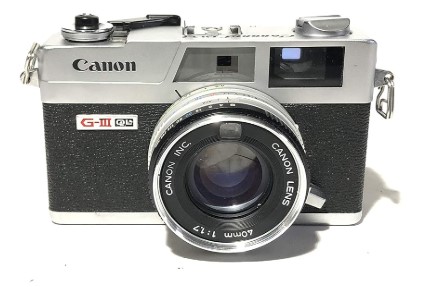
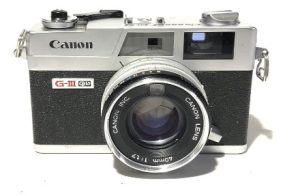
The Canon Canonet QL17 GIII is one of the best Canon rangefinder film cameras for photographers who want a classic 35mm camera with a fast lens, practical exposure controls, and traditional rangefinder focusing. Introduced in 1972 as the third generation of the Canonet series, it has become a popular choice among film photography enthusiasts who appreciate its compact design and straightforward operation.
The camera’s 40mm f/1.7 lens is one of its most appealing features. The relatively wide maximum aperture makes it useful when shooting in lower light and provides more flexibility when controlling depth of field. Its 40mm focal length also offers a versatile perspective for street photography, portraits, travel, and everyday scenes.
Focusing is handled through a coincidence rangefinder system, allowing photographers to align the focusing images in the viewfinder for more precise results. The viewfinder offers approximately 0.5x to 0.7x magnification, providing a practical framing experience while maintaining the classic feel of rangefinder photography.
The QL17 GIII also gives photographers a choice between shutter priority and fully manual shooting. Shutter priority provides a convenient way to control motion while allowing the camera to determine the aperture, while manual mode gives experienced users greater control over exposure. Its mechanical shutter adds to the camera’s traditional film photography character.
Overall, the Canon Canonet QL17 GIII is an excellent choice for anyone searching for one of the best Canon rangefinder film cameras. Its fast 40mm lens, accurate focusing system, flexible exposure modes, and classic construction make it a versatile option for photographers who want a more hands on 35mm film experience.
Specifications
- Brand: Canon
- Model: Canonet G III QL17
- Film format: 35mm
- Lens: 40mm f/1.7
- Focusing: Coincidence rangefinder
- Viewfinder magnification: 0.5x to 0.7x
- Exposure modes: Shutter priority and manual
- Shutter: Mechanical
- Battery: Required
Pros
- Fast 40mm f/1.7 lens
- Accurate rangefinder focusing
- Shutter priority and manual exposure modes
- Versatile focal length for everyday photography
- Classic compact design
- Mechanical shutter
- Excellent choice for street and travel photography
Cons
- Fixed lens limits focal length flexibility
2) Canon 7
Check Price in Amazon
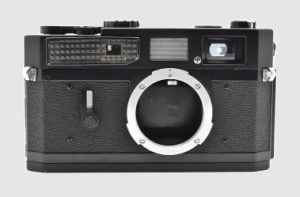
The Canon 7 is one of the best Canon rangefinder film cameras for photographers and collectors who appreciate classic Japanese rangefinder engineering. Introduced in 1961, it was designed for fast and responsive 35mm photography during a period when rangefinders were increasingly competing with SLR cameras. Its combination of a built in exposure meter, versatile framelines, fast shutter, and Leica Thread Mount compatibility makes it an especially interesting vintage camera.
A major advantage of the Canon 7 is its LTM mount, also known as the Leica screw mount or M39 mount. This gives photographers access to a broad selection of compatible lenses, while the camera also features a special outer bayonet designed to accommodate Canon’s exceptionally fast 50mm f/0.95 lens. This combination makes the camera particularly attractive to collectors and photographers interested in vintage available light photography.
The 0.8x viewfinder incorporates a coincidence rangefinder and offers manually selectable framelines for 35mm, 50mm, 85mm or 100mm, and 135mm lenses. Automatic parallax correction further improves composition when working with different focal lengths. This flexibility makes the Canon 7 more adaptable than many contemporary screw mount rangefinders.
Another important feature is its built in selenium exposure meter, which was a significant advancement for Canon rangefinders at the time. The meter is linked to the shutter speed control and provides readings that help guide aperture selection. However, because of the camera’s age, the condition of the original meter should be checked carefully when purchasing a used example.
The Canon 7 uses a metal focal plane shutter with speeds ranging from 1 second to 1/1000 second, along with additional settings for timed and bulb exposures. It also includes a self timer and flash synchronization at 1/60 second. With its substantial 670g body, mechanical construction, flexible viewfinder, and classic rangefinder operation, the Canon 7 remains a fascinating choice for vintage film photography.
Specifications
- Brand: Canon
- Model: Canon 7
- Film format: 35mm
- Mount: Leica Thread Mount, M39
- Viewfinder magnification: 0.8x
- Framelines: 35mm, 50mm, 85/100mm, and 135mm
- Shutter speeds: 1 second to 1/1000 second
- Exposure meter: Built in selenium meter
- Weight: Approximately 670g
- Flash synchronization: 1/60 second
Pros
- Versatile Leica Thread Mount compatibility
- Built in exposure meter
- Bright 0.8x rangefinder viewfinder
- Multiple selectable framelines
- Fast shutter speed up to 1/1000 second
- Supports the distinctive Canon 50mm f/0.95 lens
- Solid vintage construction
- Excellent collector appeal
Cons
- Original selenium meter may no longer function accurately
3) Canon Model 7S Rangefinder 35mm Film Camera
Check Price in Amazon
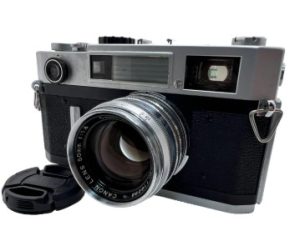
The Canon Model 7S is one of the best Canon rangefinder film cameras for photographers who want a classic 35mm camera with sophisticated features and strong vintage character. Introduced in 1965 as the successor to the Canon 7, it retained the core rangefinder design while making several important improvements, most notably replacing the earlier selenium meter with a battery powered CdS exposure meter and adding an accessory shoe.
At the heart of the Canon 7S is its Leica Thread Mount compatible lens system, which provides access to a wide selection of screw mount lenses. It also retains Canon’s special three lug bayonet arrangement for the legendary 50mm f/0.95 lens, giving the camera an unusual connection to some of the fastest optics of its era.
The camera features a 0.8x coincidence rangefinder with manually selectable projected framelines for 35mm, 50mm, 85mm or 100mm, and 135mm lenses. Automatic parallax correction helps maintain accurate framing as you switch between focal lengths. This flexible finder is one of the most appealing aspects of the Canon 7S for photographers who enjoy composing through a traditional rangefinder.
Its battery powered CdS meter was a significant upgrade over the selenium system used in the earlier model. The meter operates across high and low sensitivity ranges and is coupled to the shutter speed dial, allowing the photographer to determine the appropriate aperture from the meter reading. Because these cameras are now several decades old, the condition of the meter and battery compartment should be checked carefully before purchase.
The Canon 7S uses a horizontal travel metal focal plane shutter with speeds from 1 second through 1/1000 second, along with Bulb and timed settings. It also provides a self timer, shutter button lock, flash synchronization at 1/60 second, and an accessory shoe that was missing from the original Canon 7. These features make it a remarkably capable camera for its era.
For collectors and film photographers, the Canon 7S offers an appealing combination of historical significance, interchangeable lens flexibility, mechanical construction, and improved metering. Its relatively limited production compared with the original Canon 7 also gives it additional collector interest.
Specifications
- Brand: Canon
- Model: 7S
- Film format: 35mm
- Lens mount: Leica Thread Mount and special Canon bayonet
- Focusing: Coupled coincidence rangefinder
- Viewfinder magnification: 0.8x
- Framelines: 35mm, 50mm, 85/100mm, and 135mm
- Shutter speeds: 1 second to 1/1000 second
- Exposure meter: Battery powered CdS
- Flash synchronization: 1/60 second
- Accessory shoe: Yes
Pros
- Excellent 0.8x rangefinder viewfinder
- Multiple selectable framelines
- Improved CdS exposure metering
- Leica Thread Mount lens compatibility
- Supports Canon’s 50mm f/0.95 lens
- Metal shutter with speeds up to 1/1000 second
- Includes an accessory shoe
- Strong collector appeal
Cons
- Battery powered meter may require servicing
4) Canon P (1959)
Check Price in Amazon
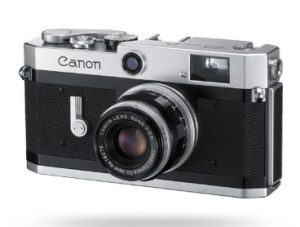
The Canon P is one of the best Canon rangefinder film cameras for photographers who appreciate classic mechanical design, straightforward controls, and a traditional 35mm shooting experience. Introduced in 1959, the P was designed as a more accessible alternative within Canon’s rangefinder lineup. Despite its simpler viewfinder arrangement, it proved highly successful, with close to 100,000 units produced.
A major feature of the Canon P is its 1x viewfinder, which provides a life size view when using a 35mm lens. Within this main viewing area are frame markings for 50mm and 100mm lenses, with parallax correction built into the framing system. This makes the camera particularly well suited to photographers who primarily use lenses between 35mm and 100mm.
The camera uses a threaded lens mount, giving photographers access to compatible screw mount optics. Standard lens options included 50mm versions with maximum apertures of f/1.4 and f/2.8. The ability to use interchangeable lenses makes the Canon P considerably more flexible than fixed lens rangefinder cameras, particularly for photographers who want to explore different focal lengths.
Its mechanical focal plane shutter provides speeds from 1 second through 1/1000 second, along with Bulb and X settings. A built in self timer adds further functionality, while flash synchronization supports both FP and X sync. Film handling is also straightforward, with a top mounted advance lever, collapsible rewind crank, and a frame counter that automatically resets when the back is opened.
The Canon P does not have a built in exposure meter, although a separate selenium meter was available as an accessory. This keeps the camera relatively straightforward while giving photographers the option of adding external metering. With its solid construction, versatile lens mount, life size viewfinder, and classic mechanical operation, the Canon P remains an appealing choice for collectors and film photographers who enjoy a more hands on shooting experience.
Specifications
- Brand: Canon
- Model: Canon P
- Film format: 35mm
- Image size: 24 x 36mm
- Lens mount: Threaded mount
- Viewfinder: 1x coincidence rangefinder
- Frame lines: 35mm, 50mm, and 100mm
- Weight: Approximately 790g with 50mm f/2.8 lens
Pros
- Excellent 1x viewfinder
- Interchangeable screw mount lenses
- Shutter speeds up to 1/1000 second
- Built in self timer
- Automatic parallax correction
- Solid mechanical construction
- Compatible with a wide range of focal lengths
- Strong historical and collector appeal
Cons
- No built in exposure meter
5) Canon VI-L
Check Price in Amazon
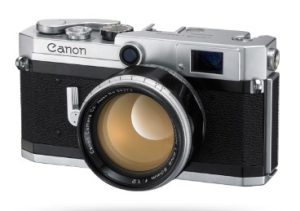
The Canon VI L is one of the best Canon rangefinder film cameras for photographers who appreciate advanced vintage engineering and extensive manual control. Built around a traditional 35mm rangefinder design, it combines a durable mechanical shutter, interchangeable screw mount lenses, a built in exposure meter, and an unusually flexible viewfinder system.
At the heart of the Canon VI L is its rotating Galilean viewfinder, which provides three different magnification levels. The 0.65x setting is suited to 35mm lenses, the 1.0x position works with 50mm lenses, and the 1.55x magnification provides a much larger focusing view. This makes the camera particularly versatile for photographers who frequently work with different focal lengths or want more precise focusing.
The rangefinder also incorporates automatic parallax correction and projected frame markings for 50mm and 100mm lenses. Its screw mount accepts interchangeable lenses, including fast options such as the Canon 50mm f/1.2. This gives photographers considerable flexibility while retaining the classic handling associated with vintage rangefinder cameras.
The Canon VI L uses a horizontal travel metal focal plane shutter with speeds from 1 second to 1/1000 second, along with Bulb and X settings. A built in self timer and support for FP and X flash synchronization add useful functionality. Film is advanced using a top mounted lever, while a collapsible crank handles rewinding.
Another useful feature is the built in selenium exposure meter. It provides aperture readings through two selectable sensitivity ranges, with an optional low light booster extending its usefulness in darker conditions. Since these meters are several decades old, their current performance should be checked carefully when purchasing a used camera.
With its substantial 940g body, sophisticated viewfinder, fast lens compatibility, built in meter, and mechanical controls, the Canon VI L is an impressive example of Canon’s late screw mount rangefinder engineering. It is particularly appealing to collectors and experienced film photographers who want a feature rich vintage camera.
Specifications
- Brand: Canon
- Model: VI L
- Film format: 35mm
- Image size: 24 x 36mm
- Lens mount: Threaded mount
- Viewfinder magnification: 0.65x, 1.0x, and 1.55x
- Metering: Built in selenium meter
- Weight: Approximately 940g body only
Pros
- Three selectable viewfinder magnifications
- Excellent rangefinder focusing flexibility
- Compatible with interchangeable screw mount lenses
- Supports fast lenses such as a 50mm f/1.2
- Built in exposure meter
- Shutter speeds up to 1/1000 second
- Automatic parallax correction
- Built in self timer
- Strong collector appeal
Cons
- Heavy compared with many compact rangefinders
6) Canon L1
Check Price in Amazon
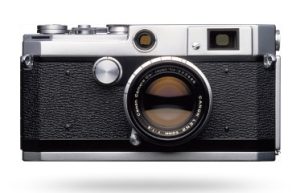
The Canon L1 is one of the best Canon rangefinder film cameras for photographers and collectors who appreciate early rangefinder engineering, interchangeable lenses, and fully mechanical operation. Built for 35mm photography, it combines a traditional rangefinder focusing system with a versatile shutter arrangement and compatibility with fast lenses such as the Canon 50mm f/1.2.
A key feature of the Canon L1 is its rotating Galilean viewfinder, which incorporates a coincidence rangefinder for focusing. The design provides three magnification settings, giving photographers greater flexibility when composing and focusing with different lenses. An accessory shoe with a parallax correction mechanism further supports the use of external viewfinder accessories.
The camera uses a horizontal travel focal plane shutter with durable cloth curtains. Its shutter controls are divided across two dials, providing speeds from 1 second through 1/1000 second, along with Bulb and timed settings. A shutter safety lock helps prevent accidental activation, while several flash synchronization options give the camera additional versatility.
The Canon L1 accepts interchangeable lenses, with 50mm f/1.2 and f/1.8 options among the standard choices. The fast f/1.2 lens is particularly appealing for available light photography, allowing more light to reach the film and offering greater creative control over depth of field.
Film handling follows the traditional approach expected from a vintage rangefinder. Film is loaded through the rear of the camera and advanced using a top mounted lever, while a collapsible crank is used for rewinding. At approximately 915g with the 50mm f/1.2 lens, the camera has a substantial feel that reflects its mechanical construction.
Overall, the Canon L1 is an intriguing choice for anyone looking for one of the best Canon rangefinder film cameras with a strong vintage character. Its interchangeable lens system, flexible viewfinder, fast shutter speeds, and classic mechanical operation make it particularly attractive to collectors and experienced film photographers.
Specifications
- Brand: Canon
- Model: L1
- Film format: 35mm
- Image size: 24 x 36mm
- Lens options: 50mm f/1.2 and 50mm f/1.8
- Shutter speeds: 1 second to 1/1000 second, plus Bulb and timed settings
- Weight: Approximately 915g with 50mm f/1.2 lens
Pros
- Fast 50mm f/1.2 lens compatibility
- Flexible rotating viewfinder
- Accurate coincidence rangefinder focusing
- Shutter speeds up to 1/1000 second
- Multiple flash synchronization options
- Mechanical shutter safety lock
- Interchangeable lens design
- Strong vintage and collector appeal
Cons
- Relatively heavy with the fast lens attached
7) Canon IIF
Check Price in Amazon
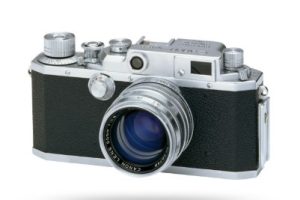
The Canon IIF is one of the best Canon rangefinder film cameras for photographers and collectors who enjoy the simplicity and mechanical character of classic 35mm equipment. Its compact body, interchangeable lens capability, and traditional rangefinder focusing make it an appealing option for anyone interested in experiencing vintage film photography without the complexity of more advanced models.
At the heart of the Canon IIF is its universal threaded lens mount, which allows it to work with compatible screw mount lenses. The standard 50mm f/1.8 lens provides a versatile perspective for everyday photography, portraits, street scenes, and travel. Its reasonably fast aperture also makes it useful when working in less demanding lighting conditions.
The camera features a coincidence rangefinder integrated into a reversed Galilean viewfinder. The viewfinder can be rotated between three magnification settings, providing additional flexibility when framing and focusing. This design gives the Canon IIF a more engaging focusing experience than simpler fixed focus film cameras.
Its horizontal travel focal plane shutter uses cloth curtains and provides speeds ranging from 1/25 to 1/500 second, along with slower settings and timed operation. The camera also supports FP flash synchronization through its flash rail, giving photographers the option to use compatible flash equipment.
Film handling is distinctly vintage. Loading requires removal of the baseplate before the film can be inserted, while a top mounted knob advances the film and handles rewinding. The frame counter is manually adjusted, reinforcing the camera’s straightforward mechanical character.
Overall, the Canon IIF is a charming choice among the best Canon rangefinder film cameras for collectors and enthusiasts who value compact construction and classic operation. It may not offer the convenience of later models, but its simple mechanical design and interchangeable lens system give it plenty of appeal for traditional film photography.
Specifications
- Brand: Canon
- Model: IIF
- Film format: 35mm
- Image size: 24 x 36mm
- Lens: Canon 50mm f/1.8
- Lens mount: Universal threaded mount
- Shutter speeds: 1/25 to 1/500 second, plus slower settings
- Flash synchronization: FP sync
Pros
- Compact vintage design
- Versatile 50mm f/1.8 lens
- Universal threaded lens mount
- Three position viewfinder magnification
- Traditional rangefinder focusing
- Mechanical film handling
- Excellent collector appeal
- Simple and engaging shooting experience
Cons
- Film loading is less convenient than later cameras
Factors to Consider When Choosing The Best Canon Rangefinder Film Cameras
Lens Compatibility
Lens compatibility is an important consideration because different Canon rangefinder bodies can use different mounting systems. Many classic models use threaded mounts, while some also support specialized mounting arrangements. A camera with broader lens compatibility gives you more freedom to experiment with different focal lengths and apertures, from standard lenses for everyday photography to faster optics for low light work.
Rangefinder and Viewfinder Quality
A clear and accurately calibrated rangefinder can make a significant difference in the shooting experience. Look for a camera with a bright viewfinder, useful magnification, and a focusing patch that remains easy to see. Some models also provide multiple magnification settings or selectable frame lines, which can make composing with different lenses much easier.
Shutter Performance
The shutter determines how effectively the camera can handle different lighting conditions and moving subjects. Consider the available shutter speed range, shutter type, and overall condition of the mechanism. Faster speeds can help freeze action and control exposure in bright conditions, while slower settings are useful for deliberate low light photography.
Exposure Metering
Built in metering can make shooting considerably easier, particularly when working quickly. Some vintage cameras use selenium meters, while others rely on battery powered metering systems. Since these components are several decades old, it is important to verify that the meter is functioning properly. A camera with a non working meter can still be usable with an external light meter, but this adds another step to the shooting process.
Lens Aperture
The maximum aperture of the compatible lens affects how much light reaches the film and how much control you have over depth of field. Faster lenses are particularly valuable for available light photography and can produce a shallower background blur. If you plan to shoot indoors, at dusk, or in other challenging lighting, lens speed should be a major part of your decision.
Manual Controls
Consider how much involvement you want when taking photographs. Fully manual cameras provide direct control over shutter speed and exposure, making them appealing to experienced photographers who want to make deliberate creative decisions. Simpler models can be easier to operate, while more advanced bodies may offer additional controls that provide greater flexibility.
Build Quality and Condition
Vintage camera condition is often more important than the original specifications. Inspect the shutter curtains, rangefinder alignment, film advance, rewind mechanism, lens mount, viewfinder, and external controls before buying. A well maintained camera can remain highly dependable, while an attractive but neglected example may require expensive repairs before it can be used confidently.
Film Handling and Accessories
The loading and advancing system can affect how convenient a camera is to use. Older models may require more manual steps, while later designs can make film loading and transport easier. Also consider whether the camera supports useful accessories such as flash equipment, external meters, cases, or specialized viewfinders, particularly if you plan to build a complete vintage photography setup.
Best Canon Rangefinder Film Cameras FAQs
Are Canon rangefinder film cameras good for beginners?
Yes. Some models provide relatively simple controls and straightforward rangefinder focusing, making them suitable for photographers learning the fundamentals of film photography. However, completely mechanical models require the user to understand exposure settings, film loading, and manual focusing, so beginners should choose a camera that matches their comfort level.
What lenses can be used with Canon rangefinder film cameras?
It depends on the camera’s mounting system. Many classic models use a universal threaded mount compatible with a broad selection of screw mount lenses. Certain bodies also support specialized mounts designed for particular lenses. Checking the specific mount before purchasing additional optics is essential.
Do vintage Canon rangefinder cameras need batteries?
Not necessarily. Some models operate mechanically and can take photographs without a battery, while others use batteries for their built in exposure meters. Older metering systems may no longer work correctly, so buyers should check the meter and battery compartment when evaluating a used camera.
Are old Canon rangefinder cameras still worth using today?
Absolutely. Their combination of mechanical construction, interchangeable lenses, optical viewfinders, and tactile controls gives them a distinctive shooting experience. They can also produce excellent photographs when paired with a good lens and fresh film. The main consideration is condition, as decades of storage and use can affect shutters, meters, rangefinders, seals, and other mechanical components.
Conclusion
The best Canon rangefinder film cameras offer something that is increasingly rare in modern photography: a camera that makes you actively participate in every frame.
Their carefully engineered rangefinders, characterful lenses, mechanical shutters, and unmistakable vintage construction turn a roll of film into a deliberate photographic journey.
Whether you prefer the precision of interchangeable lenses, the challenge of manual exposure, or simply the tactile pleasure of advancing each frame by hand, these cameras remain remarkably rewarding tools.
Their age is part of the appeal, giving photographers the opportunity to use a piece of photographic history while creating images with a character that feels distinctly their own.
See Also: