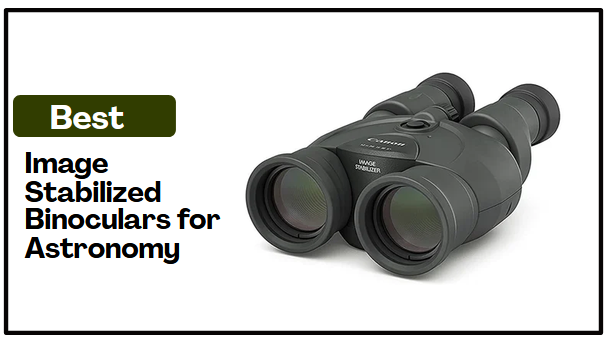
To find the best Image Stabilized Binoculars for Astronomy, I focused on the features that shape a night of observing, including magnification, objective lens size, exit pupil, the type of stabilization, battery life, eye relief and weather protection.
Below is a deep dive into seven models that steady the view at the press of a button, letting you hold 10x, 14x or even 18x magnification in your hands without a tripod, so stars stay sharp instead of dancing across the field. Alongside the detailed reviews, you will find my top picks at a glance, a buying guide on what matters most and answers to the questions stargazers ask most often.
Let’s find the right pair for your sky.
A Quick Snapshot of Our Top Picks
- Canon 12×36 Image Stabilization III Binoculars – Best Overall
- Canon 18×50 Image Stabilization All-Weather Binoculars – Best High Magnification Pick
- SIG SAUER ZULU6 HDX PRO 18x50mm Image Stabilized Binoculars – Best Adaptive Stabilization
- Fujinon Techno Stabi TS1440 14×40 Image Stabilization Binoculars – Best for Boats and Moving Vehicles
- SIG SAUER ZULU6 HDX PRO 16x50mm Image Stabilized Binoculars – Best Balance of Power and Brightness
- Canon 10×30 Image Stabilization II Binoculars – Best Compact Option
- Canon 10×42 L IS WP Image Stabilized Binoculars – Best Premium Optics
Best Image Stabilized Binoculars for Astronomy
1. Canon 12×36 Image Stabilization III Binoculars
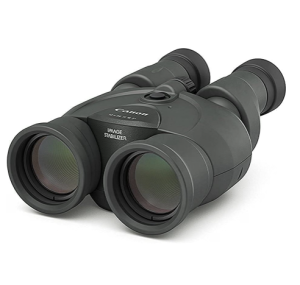
The Canon 12×36 Image Stabilization III Binoculars pack 12x magnification into a body small enough to slip into a backpack, and they manage that power without the constant wobble that usually ruins handheld stargazing. Canon applies the same stabilization approach used in its EF camera lenses, so pressing the button settles the view almost instantly. Stars that would otherwise dance across the field hold still as crisp points of light.
Light gathering comes from 36mm objective lenses, which deliver bright, high resolution images for a compact pair. Porro II prisms help here too, keeping light loss to a minimum as the image travels through the optics. That matters after dark, when every bit of brightness helps you pick out detail on the Moon or separate stars in a dense cluster.
Edge sharpness is another strength. A doublet field flattener keeps the image clean and nearly free of distortion from the center right out to the rim, so stars near the edge of the view stay round instead of smearing. For anyone scanning a wide patch of sky, that consistency makes the whole field usable rather than just the middle.
Comfort has been thought through as well. Eye relief of 14.5mm lets eyeglass wearers take in the full view, while improved power efficiency stretches battery life across longer sessions. The low reflective exterior and lead free glass round out a build that feels refined and considered. Together, these qualities earn this pair a place among the best Image Stabilized Binoculars for Astronomy, especially for those who value portability.
Casual stargazers will get the most from it, particularly those who want a grab and go pair for backyard sessions, camping trips or a quick look at the night sky without setting up a telescope. It also works well for beginners who want more reach than a 10x model but are not ready to carry a heavier 50mm pair. And because it handles birdwatching just as comfortably, it suits anyone looking for one pair that covers both day and night.
Specifications
- Objective lens diameter: 36mm
- Exit pupil: 3mm
- Magnification: 12x
- Prism type: Porro II
- Eye relief: 14.5mm
- Field flattener: Doublet
- Stabilization: Canon optical image stabilization
- Glass: Lead free
Pros
- Compact and easy to carry
- Steady view at 12x power
- Sharp stars from center to edge
- Comfortable for eyeglass wearers
Cons
- Stabilization depends on battery power
2. Canon 18×50 Image Stabilization All-Weather Binoculars
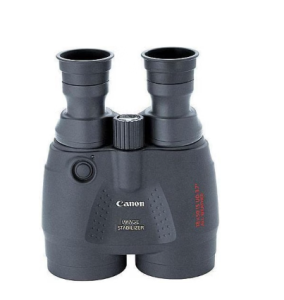
At 18x magnification, even a heartbeat can turn a star field into a blur. That is the problem this Canon pair was built to solve. Its built-in optical image stabilizer, powered by two AA batteries, takes a level of power that would normally demand a tripod and makes it steady enough to hold in your hands.
The 50mm objective lenses are what make it so appealing to night sky observers. They pull in plenty of light, and multi-coated optics then boost contrast, clarity and color accuracy. The result is a wide, bright field of view that makes faint targets easier to locate and study once your eyes have adjusted to the dark.
Viewing comfort is well covered. Eye relief measures 15mm, and the 2.8mm exit pupil delivers a focused, detailed image at this high power. Focus reaches down to 19.7 feet, which confirms this is a tool built for distant subjects rather than anything close by. For astronomy, that trade is easy to accept.
Toughness is part of the appeal too. The body resists both shock and water, so dew settling on a cold night or a sudden drizzle will not cut your session short. A 58mm filter thread adds flexibility, letting you attach screw-in filters to suit specific observing needs.
This pair suits committed amateur astronomers who want telescope-like reach without hauling a mount into the field. It is a strong match for long scanning sessions under dark skies, where high magnification reveals more of what you came to see. Observers who head out in unpredictable weather will also appreciate a build that keeps going when conditions turn damp.
Specifications
- Magnification: 18x
- Objective lens diameter: 50mm
- Exit pupil: 2.8mm
- Eye relief: 15mm
- Closest focus: 19.7 feet
- Filter size: 58mm
- Lens coating: Multicoated
- Power: 2 AA batteries
- Protection: Shock and water resistant
Pros
- Steady handheld view at 18x
- Bright, wide field from 50mm lenses
- Handles damp nights well
- Filter thread adds versatility
Cons
- Large size makes it less convenient to carry
- Long close focus limits nearby viewing
3. SIG SAUER ZULU6 HDX PRO 18x50mm Image Stabilized Binoculars
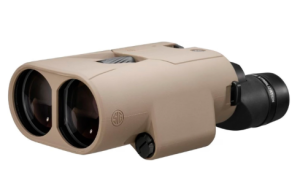
Most stabilized binoculars apply the same level of correction no matter how you hold them. SIG Sauer took a smarter route with its OmniScan OIS system, which uses a digital accelerometer to read your movement and adjust on the fly. Hold the binoculars still on a star cluster and stabilization increases; sweep slowly across the sky and it eases off, so panning feels natural rather than sluggish.
Paired with 18x magnification and 50mm objective lenses, that adaptive system gives you plenty of reach and a generous apparent field of view. The large objectives also gather the light needed for dimmer targets, which is exactly where high power becomes useful after dark.
Optical quality comes from the HDX PRO lens system. SpectraCoat anti-reflection coatings raise light transmission and cut ambient glare, while LensArmor coatings protect the outer glass from scratches. Reengineered lens prescriptions also improve color accuracy. For stargazing, less glare translates into darker backgrounds and better contrast around stars, especially during twilight when the sky is just starting to darken.
The ergonomics have been refined with long nights in mind. Battery compartments sit on opposite sides of the body for better balance, and both the focus wheel and diopter ring have an upgraded texture that is easier to grip in the dark. Two included AA batteries deliver up to 40 hours of runtime, and the binoculars can be mounted on a tripod when you want to observe for extended periods.
Durability is just as strong. An IPX7 rating means the binoculars are waterproof and fogproof, while the thermoplastic frame and rubber armor guard against impacts and provide a secure, non-slip hold.
This model is ideal for observers who spend long, cold nights outside and need optics that stay clear when temperatures drop. It also fits hunters who stargaze at the end of the day and want one rugged pair for both. Anyone planning tripod sessions to study the Moon or bright clusters in detail will find it a dependable companion.
Specifications
- Stabilization: OmniScan OIS with digital accelerometer
- Lens coatings: SpectraCoat and LensArmor
- Waterproof rating: IPX7
- Fogproof: Yes
- Power: 2 AA batteries (included)
- Runtime: Up to 40 hours
- Magnification: 18x
- Objective lens diameter: 50mm
- Build: Thermoplastic frame with rubber armor
- Tripod: Mountable
Pros
- Stabilization adapts to your movement
- Long battery life
- Fully waterproof and fogproof
- Comes with foam case and neck strap
Cons
- High power makes small targets harder to locate
4. Fujinon Techno Stabi TS1440 14×40 Image Stabilization Binoculars
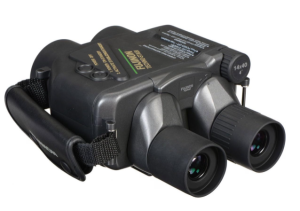
Fujinon designed the Techno Stabi TS1440 to hold a steady image even when the surface beneath you is moving, with use from boats and vehicles specifically in mind. That same capability pays off under the night sky. With ±5 degrees of vertical stabilization, it can absorb noticeably larger hand movements and keep a star locked in place at 14x magnification.
That wide correction range is the main reason to choose it. Shakes and jumps that would throw other views off target are smoothed out, so you can settle on a subject and study it instead of chasing it around the field. At 14x, it sits comfortably between compact 10x models and heavy 18x options, giving solid reach without becoming difficult to aim.
On the optical side, Fujinon’s patented EBC coating works alongside phase coating to deliver strong light transmission through the 40mm objective lenses. Brighter, cleaner images help when you are working with dim targets, and the center focus wheel makes it quick to snap stars into sharp points.
The build is tough and practical. Its fiberglass reinforced plastic body is wrapped in rubber armor for a firm grip, and it is both waterproof and fogproof. The package adds real value too, including a mil-spec hard carrying case, a flotation strap, eyepiece covers and a cleaning cloth. Power comes from four AA alkaline batteries.
For stargazers who observe from a boat deck, a moving vehicle or a windy hilltop, this is one of the most capable image stabilized binoculars for astronomy you can bring along. It also suits observers whose hands tend to tremble during long sessions, since the generous stabilization range covers more than slight wobbles. Anyone who wants a single rugged pair for marine trips and night sky viewing will find it a practical fit.
Specifications
- Power: 4 AA alkaline batteries
- Exit pupil: 2.9mm
- Stabilization range: ±5 degrees
- Coatings: EBC and phase coating
- Focus: Center focus
- Objective lens diameter: 40mm
- Body: Fiberglass reinforced plastic with rubber armor
- Protection: Waterproof and fogproof
- Magnification: 14x
Pros
- Wide stabilization range handles larger movements
- Works well from boats and vehicles
- Includes a rugged hard case and flotation strap
- Secure, rubber armored grip
Cons
- Needs four batteries instead of two
- Hard case adds bulk when traveling
5. SIG SAUER ZULU6 HDX PRO 16x50mm Image Stabilized Binoculars
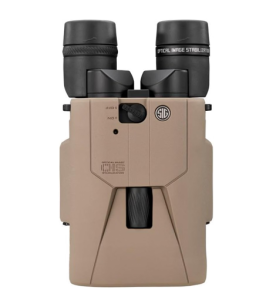
Observers who find 18x a little too demanding to aim will appreciate what a step down to 16x does for the experience. The SIG Sauer ZULU6 HDX PRO 16x50mm keeps the large 50mm objective lenses and adaptive stabilization of its higher powered sibling, but the slightly lower magnification makes it easier to find targets and hold them in view.
That change also brightens the image. With a 3.1mm exit pupil, more light reaches your eye, which helps when you are scanning dim star fields or tracing the outline of a faint cluster. You still get a generous apparent field of view, so sweeping across the Milky Way feels open rather than cramped.
Stabilization is handled by OmniScan OIS, which relies on a digital accelerometer to measure how much you are moving. Slow, careful movements receive more correction, while faster sweeps receive less, giving you a steady view when you stop and a smooth one when you pan.
The HDX PRO lens system adds SpectraCoat anti-reflection coatings for better light transmission and less glare, alongside abrasion-resistant LensArmor coatings that keep the glass in good condition through regular field use. Improved color accuracy rounds out an optical package designed for low light, when the sky is shifting from dusk to full darkness.
Handling is equally well considered. Battery compartments placed on opposite sides balance the body, and the textured focus wheel and diopter ring offer better control. Two AA batteries are included and provide up to 40 hours of use. An IPX7 waterproof and fogproof rating, a thermoplastic frame and rubber armor make it ready for rough conditions, and a tripod mount option supports longer sessions.
This pair makes sense for beginners stepping into high powered stabilized viewing who want reach without a steep learning curve. It is equally well matched to hunters who stay out after sunset to watch the sky, and to campers who need one rugged pair that tolerates rain, cold and rough handling.
Specifications
- Magnification: 16x
- Objective lens diameter: 50mm
- Exit pupil: 3.1mm
- Stabilization: OmniScan OIS
- Lens coatings: SpectraCoat and LensArmor
- Protection: IPX7 waterproof and fogproof
- Power: 2 AA batteries (included)
- Runtime: Up to 40 hours
- Accessories: Foam carrying case and neck strap
Pros
- Easier to aim than higher power options
- Brighter view from a larger exit pupil
- Stabilization scales with your movement
- Weatherproof build for harsh nights
Cons
- Less reach for small, faint targets
6. Canon 10×30 Image Stabilization II Binoculars
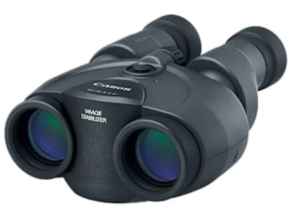
Canon’s 10×30 Image Stabilization II Binoculars keep stabilized viewing simple: a 10x view, a compact body and the same optical stabilization approach found in Canon’s EF lenses. Even at moderate power, handheld binoculars pick up small tremors, and pressing the stabilizer removes them so stars appear as clean, steady points.
At 10x, the field of view is wide and forgiving. That makes it easy to sweep along the Milky Way, trace constellations or find your way around the sky before zooming in with a higher powered instrument. Lower magnification also means the view stays easy to aim, which is a real help for anyone still learning the night sky.
The 30mm objective lenses work with Porro II prisms to keep light loss low and resolution high. A doublet field flattener holds sharpness from the center to the edges of the view, so the entire field stays crisp and nearly distortion-free. Lead free glass and a refined, non-glossy front cover with a low reflective exterior complete the optical design.
Practical touches make it pleasant to use. Eye relief of 14.5mm keeps the full image visible for those who wear glasses, and better power efficiency lets the batteries last longer between swaps. Its small size means you can toss it in a bag without a second thought.
Newcomers to stargazing will find this an approachable first pair, since the wide view and steady image take much of the frustration out of locating targets. Travelers who want something light for dark-sky destinations will value how little room it takes up. It also works for sports, birdwatching and daytime outings, giving you one versatile pair for both day and night.
Specifications
- Magnification: 10x
- Objective lens diameter: 30mm
- Exit pupil: 3mm
- Prism type: Porro II
- Eye relief: 14.5mm
- Field flattener: Doublet
- Stabilization: Canon optical image stabilization
- Glass: Lead free
Pros
- Very compact and travel friendly
- Wide view for scanning the sky
- Sharp image across the full field
- Comfortable with eyeglasses
Cons
- Less detail on the Moon than higher power models
7. Canon 10×42 L IS WP Image Stabilized Binoculars
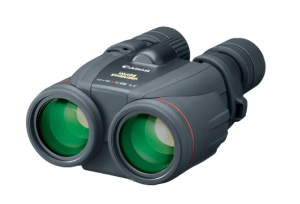
Bright stars and the edge of the Moon often pick up colored fringes through ordinary optics, a flaw known as chromatic aberration. Canon tackles it directly in the 10×42 L IS WP with two Ultra-low Dispersion (UD) lens elements on each side, part of its high quality L series optics. The payoff is cleaner, more natural color around bright objects, which makes a clear difference when you are studying the night sky.
Brightness is the other major draw. A 4.2mm exit pupil, the largest of any Canon IS binocular, combines with the 42mm objective lenses to produce an exceptionally bright view in low light. For astronomy, that means more of the faint detail comes through as dusk fades into full darkness.
The view itself is wide and sharp. An apparent angle of view of 65 degrees gives you plenty of sky to explore, and doublet field flattener lenses keep images crisp and free of distortion right to the edges. Stabilization is activated with a single touch, so steadying the image takes no effort mid-session.
This was Canon’s first waterproof binocular to include its Image Stabilizer technology, and the build reflects that focus on reliability. Metallic coating on the body components prevents fogging, while the distinctive grip design is easy to hold for long periods. The package includes a padded case with strap, a neoprene strap, an eyepiece rainguard, a push-on objective cap and two AA batteries.
Among the best Image Stabilized Binoculars for Astronomy, this pair suits observers who place clarity and brightness above everything else. It is a strong choice for those who observe under dark skies and want the most light-efficient view in a stabilized design. Its waterproof build also makes it a dependable option for marine use and wildlife watching, so one premium pair covers a wide range of outdoor activities.
Specifications
- Field flattener: Doublet
- Magnification: 10x
- Apparent angle of view: 65 degrees
- Optics: L series with 2 UD elements per side
- Objective lens diameter: 42mm
- Protection: Waterproof with anti-fog coating
- Stabilization: One touch Image Stabilizer
- Power: 2 AA batteries
- Exit pupil: 4.2mm
Pros
- Excellent color correction around bright objects
- Very bright view in low light
- Fully waterproof build
- Comes with a complete accessory kit
Cons
- Bulkier than compact 30mm and 36mm pairs
Advantages of Using Image Stabilized Binoculars for Astronomy
Steady Views at High Magnification
The biggest benefit of the best Image Stabilized Binoculars for Astronomy is the ability to hold 12x, 14x or even 18x magnification steady in your hands. Normally, power at that level magnifies every breath and pulse along with the stars, turning sharp points of light into jittery streaks. Stabilization cancels out those small movements, so you can study a target instead of fighting to keep it in view.
More Detail From the Same Optics
A shaking image hides detail that the lenses are perfectly capable of showing. Once the view settles, your eye can pick out finer features, such as craters along the Moon’s terminator, close pairs of stars and the individual members of a bright cluster. In practice, stabilization lets you see more of what the glass is already delivering.
Quick Setup and Easy Portability
A telescope needs a mount, alignment and time to cool down before it performs at its best. Image stabilized binoculars for astronomy, on the other hand, are ready the moment you lift them to your eyes. That makes them ideal for spontaneous sessions in the backyard, short trips to darker skies or a quick look when clouds part for a few minutes.
Less Strain During Long Sessions
Trying to hold a shaky view steady forces your arms, neck and eyes to work harder than they should. With the image locked in place, you can relax your grip and let your eyes do the observing. As a result, longer scans across the sky feel comfortable rather than tiring.
Viewing From Moving Platforms
Some stabilization systems are designed to handle the larger movements that come with boats and vehicles. For observers who stargaze from a deck at sea or a parked car on a windy night, this opens up viewing opportunities that ordinary binoculars simply cannot match.
One Pair for Day and Night
The same features that help at night work just as well in daylight. Stabilized binoculars handle birdwatching, wildlife viewing, sports and marine use with ease, so a single purchase covers far more than astronomy alone.
Factors to Consider When Choosing the Best Image Stabilized Binoculars for Astronomy
Magnification
Higher power brings distant objects closer, but it also narrows the view and makes targets harder to find. A 10x model offers a wide, forgiving field that suits sweeping the Milky Way and learning the constellations. Moving up to 14x through 18x reveals more detail on the Moon and in star clusters, though it demands a little more patience when aiming.
When comparing the best Image Stabilized Binoculars for Astronomy, think about whether you prefer browsing broad areas of sky or zooming in on specific objects.
Objective Lens Size and Exit Pupil
The objective lens diameter controls how much light the binoculars collect, which directly affects how many faint stars you can see. Larger lenses, around 50mm, gather noticeably more light than 30mm or 36mm designs. Exit pupil, found by dividing the lens size by the magnification, tells you how bright the image will appear. A larger exit pupil generally produces a brighter view, which helps when observing dim targets.
Type of Stabilization
Not every stabilization system works the same way. Some apply a fixed level of correction, while adaptive systems adjust automatically based on how quickly you move, giving more correction when you hold still and less when you pan. Others focus on a wide correction range that can absorb larger movements, which is valuable on boats or in vehicles. Match the system to how and where you plan to observe.
Optical Quality and Coatings
Glass and coatings shape what you actually see. Multicoated lenses improve contrast and light transmission, while field flattener elements keep stars sharp right to the edge of the view. Low dispersion glass reduces colored fringes around bright objects such as the Moon. Prism quality also matters, since better prisms lose less light along the way.
Power Source and Battery Life
Every pair of image stabilized binoculars for astronomy relies on batteries to run its stabilizer, so check how many the binoculars use and how long they last. Most models take two AA batteries, though some need four. Runtime varies as well, with certain designs offering up to 40 hours on a single set. Carrying spares is always wise for long nights, especially in cold weather, which drains batteries faster.
Weather Resistance
Night observing often means dew, damp air and sudden temperature drops. Waterproof and fogproof construction keeps moisture out of the optics so your view stays clear. If you observe in humid climates, near water or in changeable weather, a sealed and armored body is well worth prioritizing.
Eye Relief and Comfort
Eye relief determines how far your eye can sit from the eyepiece while still seeing the full image. Around 14.5mm or more makes viewing comfortable for eyeglass wearers. A good grip, well placed controls and textured focus wheels also make a difference when you are adjusting settings in the dark.
Size and Tripod Compatibility
Compact models are easy to pack for travel and quick sessions, while larger 50mm designs offer more light but take up more space. If you plan long observing sessions, check whether the binoculars can be mounted on a tripod. Doing so reduces arm fatigue and gives you an even steadier platform for detailed viewing.
Best Image Stabilized Binoculars for Astronomy FAQs
Are image stabilized binoculars worth it for astronomy?
For most stargazers, yes. Hand shake becomes a serious problem above 10x, blurring stars into streaks and hiding fine detail. Stabilization removes that movement at the press of a button, giving you the reach of high magnification without carrying a tripod. The result is sharper views of the Moon, star clusters, and rich star fields in a tool you can grab and use in seconds.
What magnification is best for stargazing with image stabilized binoculars?
It depends on how you like to observe. Around 10x gives a wide, easy-to-aim view that suits sweeping the Milky Way and learning constellations. Moving to 14x through 18x brings out more detail on specific targets but narrows the field. Many observers find 12x to 16x a comfortable balance between reach and ease of use.
Do I need a large objective lens for viewing the night sky?
Larger lenses collect more light, which helps you see fainter stars and dimmer objects. A 50mm lens gathers noticeably more light than a 30mm or 36mm design, though it also makes the binoculars heavier. Exit pupil, found by dividing the lens size by the magnification, is a useful guide: a larger number means a brighter image.
How long do the batteries last, and should I carry spares?
Runtime varies by model, with some designs lasting up to 40 hours on two AA batteries while others use four. Cold nights drain batteries faster, so packing a spare set is a smart habit—especially for long sessions or trips to remote dark-sky sites.
Conclusion
Choosing the right pair of bioculars comes down to one simple question: where and what do you plan to observe? Stargazers watching from a boat deck or a windy ridge should lean toward a wide stabilization range, while those chasing faint detail and color purity will appreciate low-dispersion glass and a larger exit pupil.
Beyond those differences, every model here shares the same core strength. The best Image Stabilized Binoculars for Astronomy take magnification that would normally demand a tripod and hold it steady in your hands, keeping stars locked right where you point them.
Add quick setup and easy portability, and you have a tool that is ready the moment the clouds part.