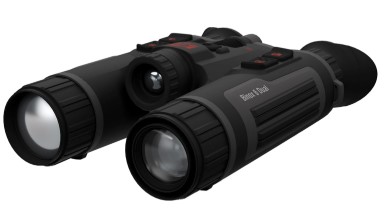
Do you want to find the best thermal binoculars that can detect movement even in complete darkness?
I have explored advanced options that use heat detection technology to deliver clear, detailed images regardless of lighting conditions. These devices go far beyond basic visibility, offering impressive range, sharp imaging, and modern features that improve both awareness and decision-making in the field.
In this guide, I will cover the key features, share the top picks, provide a practical buying guide, and answer common questions to help you choose with confidence.
See summary of the best thermal binoculars:
- Best overall: ATN BinoX 6 Dual
- Best premium option: Pulsar Merger LRF XP35
- Best budget: HikMicro Habrok 4K HE25L
- Best long-range: Pulsar Accolade 2 LRF XP50
- Best for professional use: AGM Explorator FSB50-640
- Best battery life: ATN BinoX 4T 384 2-8X
- Best for zoom capability: ATN BinoX 4T 384 4.5-18X
7 Best Thermal Binoculars
1) ATN Binox 6 Dual
Check Price in Amazon
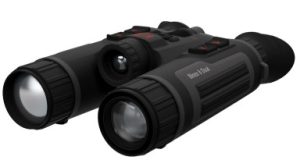
The ATN Binox 6 Dual positions itself as one of the most advanced thermal binoculars available by combining multiple technologies into a single device. Instead of relying solely on thermal imaging, it integrates a 6th generation thermal sensor alongside a 4K Ultra HD day and night camera, allowing seamless viewing across different lighting conditions. This makes it highly versatile for users who need consistent performance from daylight through complete darkness.
One of its defining strengths is the multispectral capability. With four viewing modes including thermal, day, night, and twilight, the binocular adapts instantly to changing environments without requiring additional gear. This eliminates the need to switch between optics, which improves efficiency in the field. The thermal sensor itself comes in multiple resolutions, offering strong sensitivity to small temperature differences and enabling clear detection even through fog, smoke, or dense vegetation.
Image clarity is enhanced through AI-assisted processing that improves contrast and sharpness in real time. Combined with a high-resolution OLED display and smooth refresh rate, the viewing experience remains fluid and detailed, even when tracking moving targets. Features like dual view and picture in picture allow users to observe both thermal and visual imagery simultaneously, providing better context when identifying targets.
The binocular also includes practical tools designed for field use. A built-in laser rangefinder helps measure distance accurately, while digital zoom and multiple color palettes give flexibility depending on terrain and conditions. Battery performance supports extended use with replaceable cells and external power options, and the magnesium alloy construction ensures durability in harsh outdoor environments.
Pros
- Combines thermal, day, night, and twilight vision in one device
- High sensitivity thermal sensor with multiple resolution options
- 4K Ultra HD daytime imaging with strong detail
- Built in laser rangefinder for accurate distance measurement
- Dual view improves situational awareness
- Rugged waterproof construction for demanding environments
Cons
- Higher price compared to many thermal devices
2) Pulsar Merger LRF XP35
Check Price in Amazon
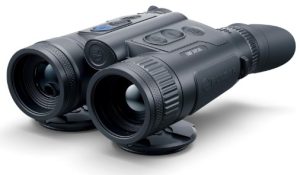
The Pulsar Merger LRF XP35 is widely regarded as one of the best thermal binoculars for users who demand precision, comfort, and consistent performance in challenging environments. Built around a 640×480 thermal sensor with high sensitivity, it delivers clear and informative imaging even in conditions such as fog, humidity, or dense vegetation. Its ability to detect heat signatures at distances of up to about 1350 meters makes it highly effective for long range observation while maintaining strong detail at closer ranges.
One of its most practical strengths is the wide field of view, which is among the largest in its class at around 17.8 degrees. This allows users to scan large areas quickly while maintaining situational awareness, reducing the need for constant panning. Combined with smooth 50 Hz image refresh and advanced image processing, the binocular provides stable and fluid visuals, which is especially useful when tracking moving targets or surveying open terrain.
The dual eyepiece design enhances viewing comfort by allowing natural two eye observation. This reduces fatigue during extended use and improves depth perception compared to monocular devices. The ergonomic layout also places controls within easy reach, making operation straightforward even in the dark. Its compact form factor and balanced weight contribute to better handling without sacrificing durability, thanks to a rugged magnesium alloy body and waterproof construction.
A built in laser rangefinder adds another layer of functionality by allowing accurate distance measurement up to about 1000 meters. This feature is particularly useful for hunting, security, or search tasks where distance estimation is critical. Additional features such as onboard photo and video recording, Wi Fi connectivity, and multiple color palettes provide flexibility for both documentation and customization. The dual battery system combines an internal and removable battery, offering extended runtime for longer field sessions.
Pros
- Wide field of view improves scanning efficiency
- High sensitivity thermal sensor delivers clear imaging in difficult conditions
- Built in laser rangefinder provides accurate distance measurement
- Comfortable dual eyepiece design reduces eye fatigue
- Durable waterproof construction suitable for harsh environments
- Integrated recording and wireless connectivity features
Cons
- Premium price point may not suit all budgets
3) HikMicro Habrok 4K HE25L
Check Price in Amazon
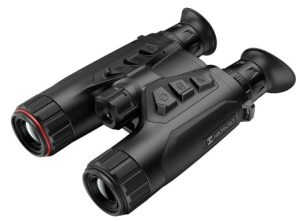
The HikMicro Habrok 4K HE25L stands out as one of the most versatile thermal binoculars by combining thermal imaging with high resolution digital optics in a single compact device. Designed as a multi-spectrum solution, it allows users to switch between thermal, full color daytime viewing, and infrared night vision without changing equipment. This flexibility makes it particularly useful for wildlife observation, hunting, and outdoor surveillance where lighting conditions can change rapidly.
The thermal module provides reliable detection capabilities, with a 256 × 192 sensor and sensitivity that can pick up subtle heat differences even through foliage or camouflage. With a detection range of up to around 1200 meters, it enables quick identification of heat sources before switching to the optical channel for more detailed viewing. This combination improves both detection speed and target confirmation in real world conditions.
On the optical side, the 4K UHD sensor delivers sharp and detailed images during the day and maintains clarity into twilight conditions. The adjustable magnification range of approximately 5.5x to 22x allows users to scan wide areas or zoom in for finer details when needed. The inclusion of an infrared illuminator also supports clear viewing in complete darkness, extending usability well beyond daylight hours.
Practical features further enhance its performance in the field. A built in laser rangefinder offers distance measurements up to about 1000 meters, while the OLED display provides a clear and immersive viewing experience. The binocular is designed for comfort, with adjustable interpupillary distance and intuitive controls that can be used even with gloves. Its magnesium alloy body keeps weight relatively low while maintaining durability for outdoor use.
Battery performance is also well considered, with replaceable rechargeable batteries delivering around 8 hours of continuous use. Combined with energy saving features like auto screen off, the device supports extended sessions without frequent interruptions. Overall, it provides a balanced mix of functionality, portability, and usability in a single system.
Pros
- Multi spectrum capability with thermal, day, and night vision in one device
- 4K UHD optical sensor delivers clear and detailed daytime images
- Thermal detection range of around 1200 meters for effective spotting
- Built in laser rangefinder improves distance estimation
- Flexible zoom range supports both scanning and detailed observation
- Lightweight magnesium construction enhances portability and durability
Cons
- Thermal resolution is lower compared to high end premium models
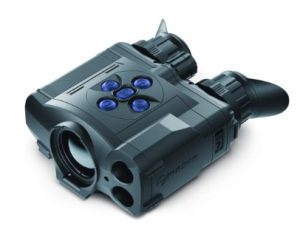
4) Pulsar Accolade 2 LRF XP50
Check Price in Amazon
The Pulsar Accolade 2 LRF XP50 is widely considered one of the most capable thermal binoculars for users who prioritize long range detection and detailed image quality. Built around a 640 × 480 thermal sensor with high sensitivity, it delivers clear and consistent imaging even in challenging environments such as fog, rain, or low temperature conditions. Its detection range extends up to around 1800 meters, making it particularly effective for scanning large areas and identifying heat signatures at significant distances.
Image quality is further enhanced by advanced processing features such as Image Detail Boost, which improves sharpness and helps define edges and small objects within the scene. This makes it easier to distinguish targets from background clutter, especially in low contrast conditions. Combined with a smooth 50 Hz refresh rate and AMOLED display, the viewing experience remains fluid and detailed when tracking movement or observing over extended periods.
The dual eyepiece design plays an important role in overall usability. By allowing natural two eye viewing, it reduces eye strain and creates a more comfortable observation experience during long sessions. The ergonomic layout ensures controls are accessible and intuitive, even in complete darkness. Its durable construction, with waterproof protection and a robust housing, supports reliable use in demanding outdoor environments.
A built in laser rangefinder adds precision by measuring distances up to about 1000 meters with strong accuracy. This is especially useful for hunting or search tasks where distance awareness is critical. Additional features such as onboard photo and video recording, Wi Fi connectivity, and internal storage expand its functionality beyond simple observation. The replaceable IPS battery system provides around 9 hours of operation, allowing for extended use in the field without frequent interruptions.
Pros
- High resolution thermal sensor delivers detailed and consistent imaging
- Long detection range of up to about 1800 meters
- Built in laser rangefinder provides accurate distance measurement
- Dual eyepiece design improves comfort during extended use
- Image processing enhances clarity and target definition
- Durable waterproof construction supports harsh conditions
Cons
- Premium price may not be suitable for all users
5) AGM Explorator FSB50-640

Check Price in Amazon
The AGM Explorator FSB50-640 is designed for users who need reliable performance across a wide range of environments, making it one of the most capable thermal binoculars available. Built with a 640 × 512 thermal sensor and a dedicated optical channel, it delivers a dual viewing experience that allows users to detect heat signatures and then confirm details through visible light imaging. This combination improves overall awareness and helps distinguish targets more effectively in real world conditions.
One of its key strengths is the bi spectrum imaging system. Users can switch between thermal view, optical view, or a fused mode that combines both. This fusion enhances detail and improves target recognition, especially in complex environments where relying on a single imaging method may not be enough. The device also performs well in difficult weather such as fog, rain, smoke, and snow, maintaining consistent detection capabilities when visibility is limited.
Image quality is supported by a range of processing features that refine clarity and reduce noise. Technologies such as digital detail enhancement, dynamic noise reduction, and adaptive gain control help produce sharper and more stable visuals. The OLED display provides a clear viewing experience, while multiple color palettes allow users to adjust the image based on terrain and environmental conditions. These adjustments make it easier to identify objects and interpret thermal signatures during extended observation sessions.
The binocular is also built with practical field use in mind. It includes onboard video recording and image capture, along with Wi Fi connectivity and GPS for tracking and sharing observations. A stadiametric rangefinder assists with estimating distance, and the ability to mount the device on a tripod allows for hands free operation when needed. Battery performance reaches around 7 hours using standard 18650 rechargeable cells, with additional power options available for longer sessions.
Durability is another strong aspect of this model. With an IP67 waterproof rating and rugged construction, it is designed to withstand demanding outdoor conditions. Despite its robust build, the interface remains user friendly, with controls that are easy to access and operate even in low light situations. This balance of durability and usability makes it suitable for both professional applications and serious outdoor use.
Pros
- Bi spectrum system allows thermal, optical, and fused viewing modes
- High resolution 640 × 512 thermal sensor provides detailed detection
- Performs well in fog, rain, smoke, and other challenging conditions
- Advanced image processing improves clarity and reduces noise
- Built in recording, Wi Fi, and GPS add functional versatility
- Durable waterproof construction suitable for demanding environments
Cons
- Larger and heavier than many compact thermal devices
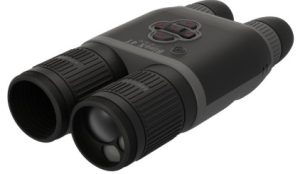
6) ATN BinoX 4T 384 2-8X
Check Price in Amazon
The ATN BinoX 4T 384 2-8X is a well rounded thermal binocular designed for users who want a balance between performance, smart features, and extended usability. Built with a 4th generation 384 × 288 thermal sensor, it provides reliable detection of heat signatures in complete darkness, fog, or dense vegetation. With a detection range of up to around 960 yards, it is particularly suited for mid range observation where clarity and responsiveness are more important than extreme distance capability.
One of its key strengths is the integration of digital features that go beyond basic thermal viewing. The binocular supports full HD video recording and image capture, allowing users to document their observations directly to a microSD card. Built in Wi Fi also enables streaming to mobile devices, making it easier to share or review footage in real time. These features make it appealing not only for hunting and surveillance but also for general outdoor exploration.
The inclusion of a built in laser rangefinder adds practical value by allowing users to measure distances up to about 1000 yards with good accuracy. This is useful in situations where distance estimation is critical for planning or tracking. Additional tools such as a compass, gyroscope, and barometer enhance situational awareness, while compatibility with ballistic systems allows data sharing with supported optics for more advanced use cases.
Battery performance is another area where this model performs well. With over 16 hours of continuous use on a single charge, it supports extended sessions without frequent interruptions. The ergonomic binocular design, combined with adjustable interpupillary distance and comfortable eye relief, makes it suitable for prolonged viewing. Its weather resistant construction adds durability, ensuring consistent performance in outdoor conditions.
Pros
- Long battery life supports extended use in the field
- Built in laser rangefinder improves distance measurement accuracy
- Video recording and Wi Fi streaming add useful functionality
- Comfortable binocular design reduces fatigue during long sessions
- Multiple thermal color modes improve viewing flexibility
- Good balance between performance and overall cost
Cons
- Thermal resolution is lower than higher end 640 sensor models
7) ATN BinoX 4T 384 4.5-18X

Check Price in Amazon
The ATN BinoX 4T 384 4.5-18X is built for users who need extended reach and flexible magnification, making it one of the most capable thermal binoculars for long distance observation. Equipped with a 4th generation 384 × 288 thermal sensor, it detects heat signatures clearly in total darkness, fog, dust, and other low visibility conditions. With a detection range of up to about 1800 yards, it offers a significant advantage when scanning wide landscapes or locating distant targets.
A key strength of this model is its wide magnification range from 4.5x to 18x. This allows users to scan larger areas at lower zoom levels and then focus in on distant subjects with higher magnification. While higher zoom narrows the field of view, it provides the ability to observe details at longer distances, which is especially useful for surveillance, hunting, and search tasks. The binocular also maintains smooth image performance with a clear 1280 × 720 display in each eyepiece and multiple viewing modes such as white hot, black hot, and color palettes.
The device also integrates a range of smart features that enhance functionality in the field. It includes a built in laser rangefinder capable of measuring distances up to about 1000 yards with good accuracy. Video recording and image capture allow users to document observations, while wireless connectivity supports streaming and sharing. Compatibility with ballistic systems adds another layer of utility for those using connected optics, making it more than just a viewing device.
Battery performance is strong, offering around 16 hours of continuous use on a single charge. This makes it suitable for extended sessions without frequent interruptions. The ergonomic binocular design supports comfortable viewing, with adjustable interpupillary distance and intuitive controls that are easy to operate in low light. Its weather resistant construction and tripod compatibility further improve usability in outdoor environments where stability and durability are important.
Pros
- Extended magnification range allows both wide scanning and detailed long distance viewing
- Detection range of up to about 1800 yards supports long range observation
- Built in laser rangefinder improves distance estimation accuracy
- Video recording and wireless connectivity add practical functionality
- Long battery life supports extended field use
- Comfortable binocular design reduces strain during prolonged viewing
Cons
- Narrower field of view at higher magnification levels
Factors to Consider When Choosing The Best Thermal Binoculars
Thermal Sensor Resolution
Thermal sensor resolution plays a major role in how much detail you can see in an image. Higher resolution sensors produce clearer, more defined visuals, making it easier to distinguish animals, objects, or terrain features. Lower resolution options can still detect heat sources effectively, but fine details may appear less sharp, especially at longer distances. Choosing the right resolution depends on how much clarity you need for identification versus simple detection.
Detection Range
Detection range determines how far away a thermal binocular can pick up a heat signature. Devices with longer detection ranges are ideal for scanning large open areas or spotting distant targets, while shorter ranges are more suited for closer observation. It is important to balance range with image clarity, since extreme distances may reduce detail even if detection is possible.
Magnification and Field of View
Magnification affects how close objects appear, while field of view determines how much area you can see at once. Higher magnification allows for detailed observation at a distance but often reduces the field of view, making it harder to scan wide areas. Lower magnification provides a broader view, which is useful for tracking movement or surveying terrain. A good balance between the two ensures both awareness and detail.
Image Processing and Display Quality
Advanced image processing enhances contrast, sharpness, and overall visibility of thermal images. Features such as noise reduction and edge enhancement can make a significant difference in challenging environments. Display quality also matters, as a clear and responsive screen ensures that the improved image is presented accurately. A smooth refresh rate helps maintain fluid motion when tracking moving targets.
Battery Life and Power Options
Battery performance is critical for extended use in the field. Longer battery life reduces interruptions and allows for continuous observation during long sessions. Some devices offer replaceable batteries or external power support, which adds flexibility when access to charging is limited. Since thermal binoculars rely entirely on power, efficient energy use is an important consideration.
Build Quality and Durability
Thermal binoculars are often used in demanding outdoor conditions, so durability is essential. A well built device with weather resistance can handle exposure to rain, dust, and temperature changes. Materials such as reinforced or alloy housings improve longevity and protect internal components. Reliable construction ensures the binocular performs consistently over time.
Additional Features and Technology
Modern thermal binoculars often include extra features that improve usability and functionality. These may include laser rangefinders for distance measurement, video recording for documentation, wireless connectivity for sharing, and multiple viewing modes. While not always necessary, these features can enhance the overall experience and provide added value depending on your needs.
Comfort and Ergonomics
Comfort plays a significant role during prolonged use. Binocular designs that support two eye viewing can reduce strain and improve depth perception compared to single lens devices. Adjustable settings, intuitive controls, and balanced weight distribution all contribute to ease of use. A comfortable device allows for longer observation periods without fatigue, which is especially important in field conditions.
Best Thermal Binoculars FAQs
How far can thermal binoculars detect objects?
Thermal binoculars can detect heat signatures at varying distances depending on their sensor quality and lens size. Some models are capable of spotting large heat sources well beyond a kilometer, while others are designed for mid range use. It is important to note that detection distance does not always mean clear identification, as image detail typically decreases at longer ranges.
Can thermal binoculars be used during the day?
Yes, thermal binoculars work just as effectively during the day as they do at night because they rely on heat differences rather than visible light. This allows them to detect objects in bright sunlight, shadows, or complete darkness. Some models also include optical or digital daytime viewing modes for added versatility.
What is the difference between thermal and night vision binoculars?
Thermal binoculars detect heat signatures, allowing users to see living beings and objects based on temperature differences, even through obstacles like light fog or smoke. Night vision binoculars rely on amplifying available light, which means they require some ambient light to function effectively. Thermal devices are generally better for detection, while night vision can provide more natural image detail in low light conditions.
Are thermal binoculars suitable for beginners?
Thermal binoculars can be suitable for beginners, but some models come with advanced features that may take time to learn. Simpler devices focus on basic detection and are easier to operate, while more advanced options include tools like rangefinding, recording, and multiple viewing modes. Choosing a model with intuitive controls and straightforward functionality can make the learning process much easier.
Conclusion
Thermal binoculars redefine what it means to truly “see” in the outdoors, offering a perspective that goes far beyond traditional optics.
Instead of relying on light, they reveal the hidden world of heat, turning darkness, fog, and dense cover into opportunities rather than obstacles.
What makes the best of them exceptional is not just their ability to detect movement, but how seamlessly they combine clarity, range, and real time responsiveness into a single, immersive viewing experience.
Whether scanning vast landscapes or focusing on subtle details, they provide a level of awareness that feels both precise and intuitive.
See Also: