
Finding the best binoculars for whale watching in Alaska means preparing for some of the most demanding viewing conditions you can encounter.
I have explored options that are built to handle vast distances, shifting light, and unpredictable coastal weather while still delivering sharp, stable images.
These binoculars are designed to help you follow distant whale activity with clarity, whether you are scanning icy coastlines or tracking movement across open water.
In this guide, I will cover the key features, share the top picks, provide a practical buying guide, and answer common questions to help you choose confidently.
See summary of the best binoculars for whale watching in Alaska:
- Best overall: ZEISS Terra ED 10×42
- Best premium option: Zeiss Victory SF 8×42
- Best value for money: Nikon Monarch 5 10×42
- Best durability and rugged use: Vortex Viper HD 8×42
- Best budget option: Occer 12×25 Compact Binoculars
- Best wide field of view: Athlon Optics Midas 8×42
- Best budget: Bushnell H2O Xtreme 10×42
7 Best Binoculars For Whale Watching In Alaska
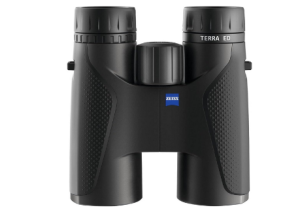
1) ZEISS Terra ED 10×42
Check Price in Amazon
The ZEISS Terra ED 10×42 is a reliable choice for whale watching in Alaska, where long distances, shifting light, and damp conditions can quickly expose weak optics. With 10x magnification and a 42 mm objective lens, it brings distant whales into clear view while maintaining enough brightness for early mornings and overcast coastal weather. The image quality feels crisp and natural, which is important when scanning wide ocean horizons for subtle movement.
One of its strongest qualities is the optical system. It uses extra low dispersion glass and multi coated lenses that deliver sharp detail with accurate colors and minimal distortion. This makes it easier to pick out whale fins or blows against reflective water. The binoculars also offer about 88 percent light transmission, helping maintain clarity even in dim or foggy conditions that are common along Alaska’s coastline.
Handling and usability are well suited for extended viewing sessions. The design is compact and relatively lightweight at around 725 grams, so it does not feel tiring during long periods of scanning. The large focus wheel is smooth and quick to adjust, allowing you to lock onto moving whales without delay.
Durability is another key advantage for harsh environments. The binoculars are nitrogen filled and waterproof, helping prevent internal fogging when temperatures shift or when exposed to sea spray. The hydrophobic coating also repels water from the lenses, keeping your view clearer in wet conditions.
The wide viewing angle and stable image help reduce the effects of hand movement, which is especially useful when watching from a boat. Combined with a comfortable grip and ergonomic build, the Terra ED performs consistently whether you are onshore or offshore.
Pros
- Sharp and clear image with accurate color reproduction
- Good performance in low light and cloudy conditions
- Lightweight and comfortable for long use
- Fast and smooth focusing system
- Waterproof and fog resistant for harsh weather
- Wide field of view helps track moving whales
Cons
- Slightly narrower field of view compared to some premium models
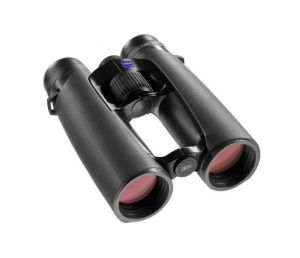
2) Zeiss Victory SF 8×42
Check Price in Amazon
The Zeiss Victory SF 8×42 is built for demanding environments, making it an excellent choice for whale watching in Alaska where visibility, comfort, and reliability all matter. With 8x magnification, it provides a steady and immersive view of distant whales without excessive shake, which is especially useful when observing from a boat or scanning wide ocean horizons. The large 42 mm objective lenses gather plenty of light, helping maintain bright and detailed images even under cloudy skies or during early morning outings.
Image quality is one of its strongest qualities. The binoculars use advanced fluoride glass and high performance coatings that deliver impressive clarity, contrast, and natural color reproduction. With light transmission reaching up to 92 percent, the view remains bright and sharp even in low light conditions such as fog or fading daylight. This makes it easier to spot subtle signs like whale blows or distant dorsal fins against reflective water.
The wide field of view is particularly useful for whale watching. At about 148 meters at 1,000 meters, it allows you to scan a larger portion of the ocean without constantly adjusting your position. This is valuable when whales surface unpredictably, giving you a better chance of tracking movement smoothly. The moderate magnification also helps maintain a stable image over long viewing sessions, reducing strain and making it easier to follow fast moving marine life.
Comfort and handling are carefully refined. The ergonomic design distributes weight evenly, reducing fatigue during extended use. The SmartFocus system allows quick and precise adjustments with minimal effort, even when wearing gloves in cold Alaskan weather. This responsiveness is important when trying to quickly lock onto a whale before it disappears beneath the surface.
Durability is well suited for harsh coastal conditions. The binoculars are nitrogen filled and feature protective coatings that repel water and dirt, ensuring a clear view even in rain or sea spray. The construction is designed to handle temperature extremes, which is essential when moving between cold air and moist marine environments.
Pros
- Exceptionally bright and clear image with excellent color accuracy
- Wide field of view makes it easier to track whales
- Smooth and fast focusing system for moving subjects
- Comfortable ergonomic design for long observation sessions
- Strong performance in low light and foggy conditions
- Durable and weather resistant for coastal environments
Cons
- Premium price may not suit all budgets
3) Nikon Monarch 5 10×42

Check Price in Amazon
The Nikon Monarch 5 10×42 is a well balanced option for whale watching in Alaska, offering a mix of clarity, reach, and durability without pushing into premium pricing. With 10x magnification and 42 mm objective lenses, it provides the power needed to observe whales at a distance while still maintaining a bright and usable image in changing coastal light. This makes it a practical companion whether you are scanning from shorelines or watching from a moving boat.
The optical performance is reliable and consistent. These binoculars use extra low dispersion glass to reduce color fringing and improve contrast, allowing you to distinguish details like fins and water movement more clearly. Fully multi coated lenses and dielectric coated prisms enhance light transmission, producing a bright and natural image even in dim or overcast conditions. This is especially useful in Alaska, where fog and low light are common during whale watching trips.
In terms of usability, the Monarch 5 10×42 is designed for comfort during extended viewing. It weighs around 640 grams, making it relatively lightweight for its class and easy to carry during long excursions. The central focus system is smooth and responsive, helping you quickly adjust when whales surface briefly and disappear again. The long eye relief also provides a comfortable viewing experience, particularly for those who wear glasses.
Durability is another strong point. The binoculars are waterproof and nitrogen filled, preventing internal fogging when moving between cold air and moist ocean environments. The rubber armored body offers a secure grip, which is helpful when handling optics in wet or windy conditions along Alaska’s coastline.
The field of view is decent for a 10x binocular, though slightly narrower compared to lower magnification models. Still, it offers enough coverage to scan the horizon effectively while maintaining the detail needed for long distance viewing. Overall, the Monarch 5 10×42 delivers dependable performance for whale watching, especially for those who want strong optics without stepping into higher price ranges.
Pros
- Clear and sharp image with good contrast
- Performs well in low light and cloudy conditions
- Lightweight and comfortable for extended use
- Smooth and responsive focusing system
- Waterproof and fog resistant construction
- Good value for the level of optical quality
Cons
- Field of view is narrower than some competing models
4) Vortex Viper HD 8×42

Check Price in Amazon
The Vortex Viper HD 8×42 is a strong performer for whale watching in Alaska, offering a balance of clarity, brightness, and durability that suits the region’s unpredictable coastal conditions. With 8x magnification, it provides a steady image that is easier to control when viewing from a boat or scanning open water. The 42 mm objective lenses gather enough light to keep the image bright during overcast days, early mornings, and misty conditions that are common along Alaska’s shoreline.
Optical quality is one of its key strengths. The binoculars use high density glass and advanced coatings that reduce light scatter and improve contrast, resulting in a bright and detailed image. Colors appear natural, and fine details remain visible even at longer distances. In testing, the image quality comes close to much more expensive models, which makes it a compelling option for serious wildlife observation without stepping into premium pricing.
The brightness performance is particularly useful for whale watching. These binoculars maintain strong light transmission, allowing you to clearly spot whale blows or dorsal fins even as lighting conditions change. This consistency helps when watching during sunrise, sunset, or in foggy weather where visibility can shift quickly.
The wide field of view is another advantage. With around 409 feet at 1000 yards, it allows you to scan large areas of ocean more efficiently and track moving whales with less effort. This wider perspective makes it easier to follow motion across the water without constantly repositioning your view.
In terms of handling, the binoculars feel solid and secure. The rubber armored body provides a reliable grip, which is important in wet and windy environments. The ergonomic design and adjustable eyecups support comfortable viewing, even during long sessions. The eye relief of about 18 mm also makes it easier for eyeglass users to maintain a full field of view.
Durability is well suited for Alaska’s rugged conditions. The binoculars are waterproof and fog resistant, helping prevent internal moisture buildup when temperatures shift or when exposed to sea spray. The construction is designed to handle regular outdoor use, making it a dependable choice for repeated whale watching trips.
Pros
- Bright and clear image with strong contrast
- Wide field of view makes tracking whales easier
- Good performance in low light and cloudy weather
- Solid and durable construction for outdoor use
- Comfortable for extended viewing sessions
- Image quality close to more expensive models
Cons
- Focus wheel can feel stiff during adjustments
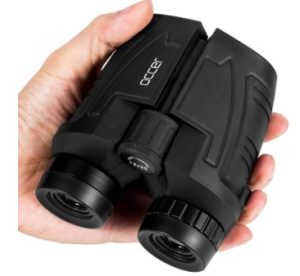
5) Occer 12×25 Compact Binoculars
Check Price in Amazon
The Occer 12×25 Compact Binoculars offer a simple and affordable option for whale watching in Alaska, especially for beginners or travelers who prioritize portability. With 12x magnification and a 25 mm objective lens, they provide enough reach to observe distant movement on the water, making them useful for casual viewing from shore or during short excursions. Their compact size makes them easy to carry in a pocket or small bag, which is ideal for long days exploring Alaska’s coastline.
One of the most appealing aspects of these binoculars is their lightweight and compact design. They are small enough to fit comfortably in one hand and can be easily stored when not in use. This makes them convenient for travelers who do not want to carry bulky gear. Despite their size, they feel reasonably solid and offer a textured grip that helps maintain control in outdoor conditions.
The optical system includes fully multi coated lenses and BAK4 prisms, which help deliver a clear and reasonably bright image for their size. Colors appear natural, and the central field of view is sharp enough for spotting whale blows or distant splashes during daylight. The binoculars also feature a wide viewing range of about 273 feet at 1000 yards, allowing you to scan the ocean surface with moderate ease.
Ease of use is another advantage. The focusing system is simple and quick to adjust, making it easier to track moving subjects. The adjustable eyecups provide flexibility for both eyeglass wearers and non eyeglass users, offering a comfortable viewing experience for short to moderate use.
However, due to the smaller 25 mm lenses, low light performance is limited. While they can handle daylight conditions reasonably well, image brightness drops in foggy weather or during early morning and evening viewing. This is an important consideration in Alaska, where lighting conditions often change quickly.
The build includes basic water resistance and a rubber coated exterior, which helps protect against light moisture and provides a secure grip. While they can handle light outdoor use, they are not as rugged or weather resistant as higher end binoculars designed for harsher environments.
Pros
- Compact and lightweight design for easy travel
- Affordable option for beginners
- Clear image quality in bright daylight
- Simple and easy to focus
- Comfortable grip with textured surface
- Adjustable eyecups for different users
Cons
- Limited performance in low light conditions
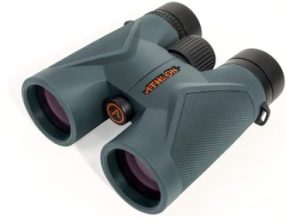
6) Athlon Optics Midas 8×42
Check Price in Amazon
The Athlon Optics Midas 8×42 is a strong mid range option that fits very well into the demands of whale watching in Alaska, where conditions are wet, visibility changes quickly, and subjects move unpredictably across wide open water.
One of the most important aspects for this environment is optical clarity and brightness, and this model performs impressively in that regard. It uses Extra Low Dispersion glass combined with fully multi coated lenses and dielectric coated prisms, which allows more than 99 percent of light to reach your eyes while keeping colors accurate and reducing distortion. When watching whales surface against reflective water or in low light conditions common in Alaska, this translates into a clear, high contrast image that makes details easier to pick out even at distance.
Another advantage is its wide field of view, which is especially useful when tracking moving whales. With a field of view around 426 feet at 1000 yards, it gives a broader viewing window than many competitors in the same class . This makes it easier to follow pods as they move or quickly relocate a whale after it dives and resurfaces elsewhere.
The build quality is well suited for harsh coastal environments. The magnesium chassis keeps the binoculars relatively lightweight while maintaining durability, and the waterproof and fog proof construction ensures reliable performance in cold, damp conditions. The rubber armor also improves grip, which matters when using binoculars on a moving boat where stability is already a challenge.
Comfort and usability are also well considered. The twist up eyecups and smooth focusing system make it easy to adjust quickly when a whale appears unexpectedly. The ergonomic design allows for extended viewing without strain, which is important during long excursions where you may be scanning the horizon for extended periods.
In real world use, these binoculars deliver bright, crisp images with strong contrast and minimal chromatic aberration, making them well suited for wildlife viewing and scenic observation. While not the lightest option in its category, the balance between optical performance and rugged construction makes it a dependable choice for demanding environments like Alaska’s coastline.
Pros
- Clear and bright image quality
- Wide field of view for tracking moving whales
- Durable waterproof and fog proof construction
- Good color accuracy with minimal distortion
- Comfortable grip and ergonomic design
Cons
- Not the best option for extreme low light compared to larger objective models
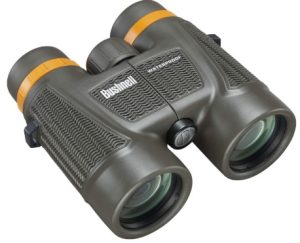
7) Bushnell H2O Xtreme 10×42
Check Price in Amazon
The Bushnell H2O Xtreme 10×42 is a practical and dependable choice for whale watching in Alaska, especially for users who need a balance between affordability and durability in wet coastal conditions. Designed with marine environments in mind, it handles spray, rain, and temperature shifts with confidence, making it well suited for boat based excursions and shoreline viewing.
Optically, this model delivers solid performance for its price range. It uses BaK 4 prisms and fully multi coated lenses, which help improve light transmission and produce a bright, clear image even in overcast or low light situations . This is particularly useful in Alaska, where lighting conditions can shift quickly and whales often surface against reflective water. The 10x magnification provides a closer look at distant activity, making it easier to observe breaches or tail movements from shore or a stable viewing deck.
Durability is one of the strongest aspects of this binocular. It features a fully waterproof construction with O ring sealing and nitrogen purging, preventing internal fogging and ensuring consistent performance in cold, damp environments . The rubber armored body adds another layer of protection while also improving grip, which is important when handling optics on a moving boat or with wet hands.
In terms of usability, the Bushnell H2O Xtreme is designed to be straightforward and comfortable. The non-slip grip and ergonomic design allow for steady handling, while the relatively compact build makes it easy to carry during long whale watching trips . The included accessories such as a carrying case and lens covers add convenience and protection when traveling between viewing locations.
When used for whale watching, this binocular performs best from stable platforms due to its 10x magnification. While it offers a narrower field of view compared to 8x models, it compensates with increased reach, which can be valuable when observing whales at a distance. Overall, it provides reliable image quality and rugged construction without pushing into premium pricing.
Pros
- Clear and bright image quality for the price
- Fully waterproof and fog proof for marine conditions
- Durable rubber armored body with secure grip
- Good magnification for distant whale viewing
- Comes with useful accessories for protection and transport
Cons
- Image stability can be harder to maintain on moving boats
Factors to Consider When Choosing The Best Binoculars For Whale Watching In Alaska
Magnification Power
Magnification determines how close distant whales will appear, which is crucial in Alaska where sightings can occur far offshore. A moderate range, typically between 8x and 10x, offers a good balance between detail and image stability. Higher magnification can bring subjects closer but often makes the image harder to hold steady, especially on a moving boat or in windy coastal conditions.
Objective Lens Size
The size of the objective lens affects how much light enters the binoculars. Larger lenses, such as 42 mm or 50 mm, provide brighter images, which is important in Alaska’s often cloudy and low light environments. A bigger lens also helps improve detail and visibility when viewing during early mornings, late evenings, or in foggy weather.
Image Quality and Glass Type
High quality optics play a major role in clarity, color accuracy, and contrast. Features such as extra low dispersion glass and multi coated lenses help reduce distortion and improve sharpness. This allows you to clearly distinguish whale movements, water sprays, and subtle details against reflective ocean surfaces.
Field of View
A wide field of view allows you to scan larger sections of the ocean more easily. This is particularly important because whales surface unpredictably and may move quickly. A broader viewing area helps you locate and track them without constantly adjusting your position or losing sight of the action.
Low Light Performance
Alaska’s weather often includes overcast skies, fog, and changing light conditions. Binoculars with good light transmission ensure that images remain bright and usable even when visibility is reduced. This makes a significant difference when trying to spot whales in dim or hazy conditions.
Durability and Weather Resistance
Whale watching in Alaska exposes binoculars to moisture, cold temperatures, and sea spray. Waterproof and fog resistant construction is essential to prevent internal damage and maintain clear visibility. A rugged exterior also helps protect against accidental drops and rough handling during outdoor use.
Comfort and Ergonomics
Comfort is important for long viewing sessions. Lightweight designs, well balanced construction, and easy to use focus controls reduce fatigue and improve the overall experience. Features like adjustable eyecups and sufficient eye relief also ensure comfortable viewing for both eyeglass and non eyeglass users.
Portability and Weight
Carrying binoculars for extended periods requires a balance between performance and portability. While larger models offer better brightness and detail, they can be heavier and more tiring to handle. Compact or mid sized options are easier to carry and manage, especially when traveling or moving between viewing locations.
Best Binoculars For Whale Watching In Alaska FAQs
What magnification is best for whale watching in Alaska?
A magnification range of 8x to 10x is generally the most effective for whale watching in Alaska. This range provides enough zoom to observe whales at a distance while maintaining a stable image. Higher magnification can make it harder to keep the view steady, especially when watching from a boat or in windy conditions.
Are waterproof binoculars necessary for Alaska whale watching?
Yes, waterproof binoculars are highly recommended. Alaska’s coastal environment often includes rain, fog, and sea spray, all of which can damage non sealed optics. Waterproof and fog resistant designs help ensure consistent performance and protect the internal components from moisture.
Do larger lenses make a difference when viewing whales?
Larger objective lenses allow more light into the binoculars, resulting in brighter and clearer images. This is especially helpful in Alaska, where lighting conditions can change quickly due to cloud cover or time of day. A brighter image makes it easier to spot whales and follow their movement on the water.
Can binoculars be used effectively from a moving boat?
Yes, but stability becomes more important when viewing from a moving boat. Lower magnification levels help reduce image shake, making it easier to track whales. A wide field of view and comfortable grip also improve control and allow smoother tracking of moving subjects.
Conclusion
In Alaska, whale watching is not just about spotting movement on the horizon, it is about capturing fleeting moments in a vast and often unpredictable seascape.
The right binoculars transform that experience from distant glimpses into vivid encounters, revealing the power and grace of whales as they surface, dive, and breach against dramatic backdrops.
What makes these binoculars truly exceptional is how they adapt to the environment itself, cutting through glare, mist, and shifting light to deliver a clear and immersive view.
They become more than just viewing tools, acting as a bridge between you and the wild, allowing you to stay locked into the moment, no matter how quickly it unfolds.
See Also: