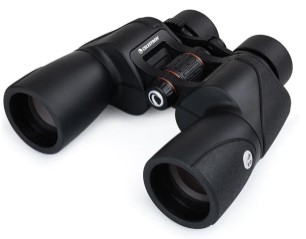
When it comes to stargazing, 7×50 binoculars remain a classic and highly effective choice, offering a balance of light-gathering ability and ease of use that appeals to both beginners and experienced observers.
The combination of 7x magnification and 50 mm objective lenses allows these binoculars to capture a large amount of light, making it easier to see faint stars, star clusters, and even some brighter deep sky objects under dark skies.
In this post, I’ll share detailed reviews of 7 of the best 7×50 binoculars for astronomy, focusing on real-world night-sky performance, optical clarity, and comfort during long stargazing sessions.
See summary of the best 7×50 Binoculars for Astronomy
- Celestron SkyMaster 7×50: best overall
- Nikon OceanPro 7×50: best for low light performance
- Fujinon Mariner 7×50 WPC-XL: best premium option
- Steiner Navigator Pro 7×50: best for durability
- Celestron Cometron 7×50: best budget
- Nikon Action EX 7×50: best for wide field viewing
- Pentax SP 7×50: best for optical clarity
7 Best 7×50 Binoculars for Astronomy
1) Celestron SkyMaster 7×50
Check Price in Amazon
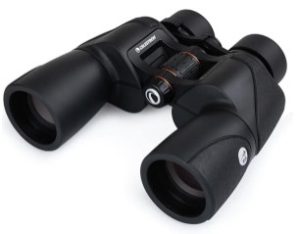
The Celestron SkyMaster 7×50 is a strong contender among the best 7×50 binoculars for astronomy, offering a combination of light gathering power, wide field viewing, and user-friendly design. It is particularly well suited for beginners and casual stargazers who want an easy way to explore the night sky without the complexity of a telescope.
A major strength of the Celestron SkyMaster 7×50 is its optical performance, which is tailored for low light observation. It features BaK 4 Porro prisms and fully multi coated optics, including Celestron’s XLT coatings, which enhance light transmission and reduce reflections. This results in brighter and more detailed views of celestial objects such as star clusters and the Milky Way. The addition of extra low dispersion glass helps reduce chromatic aberration, improving color accuracy and keeping stars sharp and well defined against the night sky.
The 7x magnification paired with 50 mm objective lenses makes this binocular especially effective for astronomy. It gathers a large amount of light, allowing you to see faint stars and wide sky regions more clearly. The wide field of view, around 7.8 degrees, makes it easy to scan large portions of the sky and locate objects without difficulty. This is ideal for sweeping across constellations or observing extended celestial features.
Another useful feature is its adaptability for more serious observation. The binoculars are tripod compatible, which can significantly improve stability during longer viewing sessions. They also include threaded eyepieces that accept 1.25 inch astronomical filters, allowing users to enhance contrast and reduce light pollution effects for better viewing of specific objects.
In terms of build quality, the SkyMaster 7×50 is designed to handle outdoor use. It is nitrogen filled and water resistant, helping to prevent internal fogging when observing under changing temperature conditions. The rubber armored body adds durability and provides a secure grip. The long eye relief also ensures comfortable viewing, even for those who wear glasses.
In real world use, the Celestron SkyMaster 7×50 delivers bright and immersive views of the night sky with minimal setup required. It is easy to use, versatile, and offers a great balance between performance and affordability. While it may not reach the precision of premium astronomical optics, it provides an excellent entry point into binocular astronomy.
Pros
- Bright and detailed image suitable for low light stargazing
- Extra low dispersion glass improves color accuracy
- Wide field of view for scanning constellations
- Tripod adaptable for more stable viewing
- Compatible with astronomical filters
- Comfortable eye relief for extended sessions
Cons
- Slightly heavy for prolonged handheld use
2) Nikon OceanPro 7×50
Check Price in Amazon
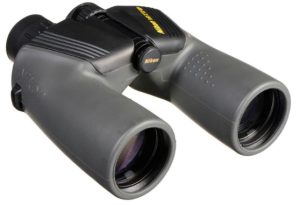
The Nikon OceanPro 7×50 is a versatile option among the best 7×50 binoculars for astronomy, offering strong light gathering ability and a comfortable viewing experience for casual stargazing. While originally designed for marine use, its bright optics and stable magnification translate well to night sky observation, making it a practical choice for beginners and those who want a dual purpose binocular.
One of the most important aspects of the Nikon OceanPro 7×50 for astronomy is its ability to collect light efficiently. With 7x magnification and large 50 mm objective lenses, it gathers enough light to reveal faint stars, star clusters, and portions of the Milky Way with good clarity. The multi coated optics enhance light transmission and reduce reflections, resulting in bright images with decent contrast and natural color reproduction. The 7.1 mm exit pupil further improves low light performance, making it easier to observe under dark skies or in dim conditions.
The wide field of view, around 7.2 degrees, makes it well suited for scanning large sections of the night sky. This allows users to comfortably explore constellations and locate celestial objects without difficulty. The relatively low magnification helps maintain a steady image when handheld, which is especially useful for astronomy since even small movements can make stars appear shaky. This makes the binocular accessible for extended sessions without requiring a tripod.
Another advantage is its comfortable viewing design. The long eye relief of about 22.7 mm allows for relaxed viewing and works well for eyeglass wearers. The central focus system is easy to use and allows quick adjustments when shifting between different viewing distances. While individual focus systems are more common in marine binoculars, the central focus here makes it more convenient for general use, including astronomy.
In terms of build quality, the Nikon OceanPro 7×50 is durable and reliable. It is nitrogen filled and O ring sealed, making it waterproof and fogproof, which helps prevent internal fogging during temperature changes. The rubber armored body provides a secure grip and protects against impacts. Although these features are designed for marine environments, they also make the binocular suitable for outdoor nighttime use in varying conditions.
In real world stargazing, the Nikon OceanPro 7×50 delivers bright and enjoyable views, especially for wide field observation. Stars appear sharp in the central field, and the overall viewing experience is relaxed and immersive. Some edge softness may be noticeable, but this is common in binoculars at this price level and does not significantly affect casual astronomy use.
Pros
- Bright and clear image with good low light performance
- Large exit pupil enhances visibility in dark conditions
- Wide field of view for scanning the night sky
- Stable magnification suitable for handheld use
- Comfortable eye relief for extended viewing
- Durable waterproof and fogproof construction
Cons
- Edge sharpness is not as refined as premium astronomy binoculars
3) Fujinon Mariner 7×50 WPC-XL
Check Price in Amazon
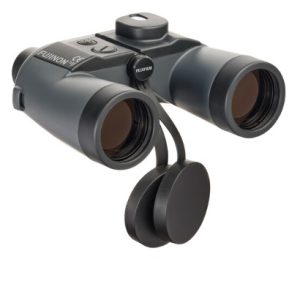
The Fujinon Mariner 7×50 WPC-XL is a capable and versatile option among the best 7×50 binoculars for astronomy, offering strong light gathering ability and a comfortable viewing experience for wide field stargazing. Although originally designed for marine use, its optical characteristics translate well to night sky observation, making it a solid choice for beginners and casual astronomy enthusiasts.
One of the most important strengths of the Fujinon Mariner 7×50 WPC-XL for astronomy is its ability to capture light effectively. With 7x magnification and large 50 mm objective lenses, it allows more light to enter the optics, helping reveal faint stars and broad celestial patterns. The fully multi coated lenses improve light transmission and reduce glare, resulting in brighter images with good contrast when observing the night sky. The 7.1 mm exit pupil further enhances low light viewing, making it easier to see dim objects under dark sky conditions.
The binocular also offers a wide field of view of about 7 degrees, which is particularly useful for astronomy. This allows users to scan large sections of the sky with ease, making it ideal for viewing constellations, star fields, and the Milky Way. The relatively low magnification helps maintain a stable image when handheld, which is important for astronomy since even small movements can disrupt the view.
Comfort is another strong point. The 18 mm eye relief provides a relaxed viewing experience and works well for eyeglass wearers, allowing full visibility of the field of view without strain. The individual focus system, while more common in marine binoculars, is effective for astronomy because once set, it keeps distant objects in focus without frequent adjustment.
In terms of build quality, the Fujinon Mariner 7×50 WPC-XL is lightweight compared to many binoculars in its class, thanks to its polycarbonate construction. It is nitrogen filled and resistant to water and fogging, which helps prevent internal condensation during temperature changes, a useful feature for nighttime observation. While features like the built in compass and floating design are intended for marine use, they do not interfere with its performance as an astronomy binocular.
In real world stargazing, the binocular delivers bright and immersive wide field views. It performs particularly well for sweeping the sky and observing large celestial objects, though it may not provide the fine detail or edge sharpness of higher end astronomy focused optics. Still, it offers strong overall value and usability for casual night sky exploration.
Pros
- Bright and clear image suitable for low light stargazing
- Large exit pupil enhances visibility in dark conditions
- Wide field of view for scanning constellations
- Lightweight design for a 7×50 binocular
- Comfortable eye relief for extended viewing
- Good value for beginners in astronomy
Cons
- Individual focus system is slower for quick adjustments
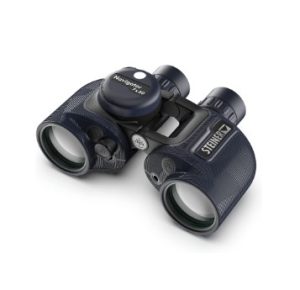
4) Steiner Navigator Pro 7×50
Check Price in Amazon
The Steiner Navigator Pro 7×50 is a strong contender among the best 7×50 binoculars for astronomy, offering excellent low light performance and a rugged design that translates well from marine use to night sky observation. While it is not specifically designed for astronomy, its optical characteristics and ease of use make it a practical choice for wide field stargazing and casual observation.
One of the most important qualities of the Steiner Navigator Pro 7×50 for astronomy is its light gathering ability. With 7x magnification and 50 mm objective lenses, it allows more light to enter the system, making it easier to observe faint stars and large celestial objects. The high contrast fully multicoated optics help deliver bright images with good color accuracy and contrast, which is useful when scanning star fields or observing the Milky Way. The large exit pupil of around 7.1 mm further enhances brightness and makes viewing more comfortable in dark conditions
The wide field of view is another advantage for astronomy. It allows users to take in large sections of the night sky at once, which is ideal for locating constellations and sweeping across dense star fields. The relatively low magnification helps maintain a steady image when handheld, reducing shake and making it easier to observe without a tripod.
A key feature that sets this binocular apart is the sports auto focus system. Each eyepiece is individually adjusted once, after which the binocular remains in focus from mid range distances to infinity. For astronomy, this can be particularly useful since most celestial objects are effectively at infinity, allowing users to focus once and then observe without constant adjustments.
Durability is another area where the Steiner Navigator Pro 7×50 excels. It uses a tough polycarbonate housing with rubber armoring that provides a secure grip and protects against impact. The binocular is nitrogen filled and fully sealed, making it waterproof and fogproof, which helps prevent internal condensation during temperature changes at night. While these features are designed for marine environments, they also ensure reliable performance during outdoor nighttime use.
In real world astronomy use, the binocular provides bright and immersive views, particularly for wide field observation. It performs well for scanning the sky and observing large celestial structures, though it may not offer the same level of fine detail or edge sharpness as higher end astronomy specific models. Its strength lies in ease of use, durability, and consistent performance.
Pros
- Bright and clear image with strong low light performance
- Large exit pupil improves comfort during night observation
- Wide field of view for scanning constellations
- Sports auto focus reduces need for frequent adjustments
- Very durable and weather resistant construction
- Stable magnification suitable for handheld stargazing
Cons
- Heavier and bulkier than some astronomy focused binoculars
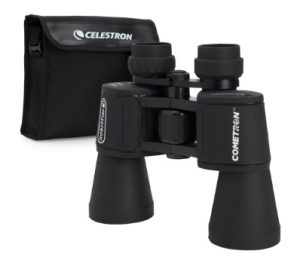
5) Celestron Cometron 7×50
Check Price in Amazon
The Celestron Cometron 7×50 is one of the best 7×50 binoculars for astronomy for those seeking an affordable and easy entry into stargazing. Designed with beginners in mind, it combines solid light gathering ability with a simple, lightweight build that makes it accessible for casual night sky observation without requiring a large investment.
One of the most important strengths of the Celestron Cometron 7×50 is its ability to perform in low light conditions. With 7x magnification and large 50 mm objective lenses, it gathers a significant amount of light, allowing users to see star clusters, the Milky Way, and brighter deep sky objects with improved clarity. The multi coated optics enhance light transmission, resulting in brighter images with decent contrast for nighttime viewing. The large exit pupil of about 7.1 mm further improves visibility, making it easier to observe under dark skies and maintain a comfortable viewing experience.
The wide field of view, around 6.6 to 6.8 degrees, is particularly useful for astronomy. It allows users to scan large areas of the sky and easily locate constellations and extended celestial objects. This makes the binocular well suited for sweeping observations rather than focusing on fine detail. Its Porro prism design supports good depth perception and a more immersive viewing experience, which is beneficial when exploring star fields.
Another advantage is its lightweight and portable design. Weighing under 800 grams, it is easy to hold for extended periods, making it ideal for handheld stargazing sessions. The binocular is also tripod adaptable, which can improve stability during longer observations. The aluminum housing provides durability while keeping the overall weight manageable, and the rubberized exterior improves grip during use.
In real world use, the Celestron Cometron 7×50 delivers enjoyable wide field views and is especially appealing for beginners. Reviews often highlight its excellent value, noting that it offers good optical performance for its price, even if it does not match the refinement of higher end binoculars. It performs best for general stargazing rather than detailed planetary observation, where higher magnification tools are more suitable.
Pros
- Bright and clear image suitable for low light astronomy
- Large exit pupil improves comfort in dark conditions
- Wide field of view for scanning the night sky
- Lightweight and easy to handle
- Tripod adaptable for more stable viewing
- Very affordable for beginners
Cons
- Uses BK7 prisms which are less refined than higher grade options
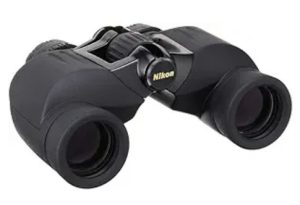
6) Nikon Action EX 7×50
Check Price in Amazon
The Nikon Action EX 7×50 is a well regarded choice among the best 7×50 binoculars for astronomy, offering a strong balance of brightness, comfort, and durability. Designed as part of Nikon’s classic Porro prism lineup, it provides a reliable and accessible option for stargazers who want clear wide field views without moving into premium pricing.
One of the most important strengths of the Nikon Action EX 7×50 for astronomy is its light gathering capability. With 7x magnification and large 50 mm objective lenses, it collects a significant amount of light, allowing users to observe faint stars, star clusters, and large sections of the Milky Way with good clarity. The multilayer coated lenses enhance light transmission and reduce reflections, producing bright images with decent contrast under dark skies . The large 7.1 mm exit pupil further improves low light performance and makes viewing more comfortable during extended sessions.
The field of view is another important aspect for astronomy. With a real field of view of about 6.4 degrees, the binocular allows users to scan wide portions of the night sky, making it easier to locate constellations and sweep across dense star fields. While not the widest in its class, it still provides an immersive experience for observing large celestial objects rather than fine planetary detail.
Comfort and usability are well addressed in this model. The high eyepoint design and long eye relief make it suitable for eyeglass wearers, allowing a full field of view without strain. The central focus system is smooth and easy to use, making it convenient when switching between different viewing distances. Adjustable eyecups help position the eyes correctly, improving overall viewing comfort during long stargazing sessions.
Build quality is another area where the Nikon Action EX 7×50 performs strongly. It is waterproof up to about 1 meter and nitrogen filled to prevent internal fogging, ensuring reliable performance in changing outdoor conditions. The rubber armored body provides shock resistance and a secure grip, while the aspherical eyepiece lens helps reduce distortion across the image. These features make it suitable for regular outdoor use, including nighttime observation.
In real world astronomy use, the binocular delivers bright and enjoyable views, especially when scanning large celestial regions. Observers can easily pick out star clusters, follow the Milky Way, and even glimpse details such as Jupiter’s moons under good conditions. While it does not offer the fine detail of higher magnification instruments, it excels in providing a relaxed and immersive wide field experience.
Pros
- Bright and clear image suitable for low light stargazing
- Large exit pupil improves comfort and visibility
- Wide field of view for scanning constellations
- Comfortable eye relief for eyeglass wearers
- Waterproof and fogproof construction
- Durable rubber armored body for outdoor use
Cons
- Field of view is narrower than some competing models
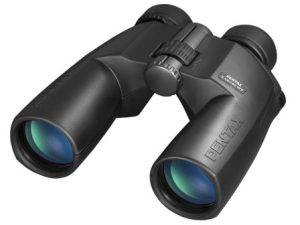
7) Pentax SP 7×50
Check Price in Amazon
The Pentax SP 7×50 is a solid performer among the best 7×50 binoculars for astronomy, offering strong optical clarity, wide field viewing, and a traditional Porro prism design that suits night sky observation. Built with simplicity and optical efficiency in mind, it appeals to users who want bright, immersive views of the sky without complex features.
One of the most important qualities of the Pentax SP 7×50 for astronomy is its excellent light gathering capability. With 7x magnification and 50 mm objective lenses, it allows a large amount of light to enter the optical system, making it easier to observe faint stars and extended celestial objects. The fully multi coated optics improve light transmission and reduce reflections, resulting in bright and clear images with good contrast in dark conditions. The large exit pupil of about 7.1 mm enhances visibility and provides a comfortable viewing experience during extended stargazing sessions.
The binocular uses BaK 4 prism glass, which helps produce a round exit pupil and improves overall image clarity. In astronomy, this contributes to sharper star points and better contrast across the field. The relatively low magnification helps maintain a stable image when handheld, allowing users to scan the night sky without excessive shake. This makes it particularly useful for wide field observation such as viewing constellations and the Milky Way.
Another advantage is its field of view and viewing comfort. With a wide viewing angle of around 6.7 degrees, it allows users to sweep across large areas of the sky and easily locate celestial objects. The eye relief of around 17 to 18 mm provides comfortable viewing, even for those who wear glasses, reducing strain during longer observation sessions. The central focusing system also makes it easy to fine tune focus when needed, although for astronomy, focus is typically set once and left unchanged.
In terms of construction, the Pentax SP 7×50 is built to handle outdoor conditions. It is nitrogen filled and O ring sealed, making it waterproof and resistant to internal fogging. The rubber armored body improves grip and protects the binocular from minor impacts. While these features are designed for marine use, they also ensure reliability during nighttime observation where temperature changes can cause condensation.
In real world astronomy use, the Pentax SP 7×50 provides bright, immersive views with good central sharpness. It performs well for scanning star fields and observing large celestial structures. While it may not deliver the fine detail of higher magnification instruments, it excels in providing a relaxed and natural stargazing experience.
Pros
- Bright and clear image with strong low light performance
- Large exit pupil enhances comfort in dark conditions
- Wide field of view for scanning the night sky
- Good optical contrast with BaK 4 prisms
- Comfortable eye relief for extended viewing
- Durable waterproof and fogproof construction
Cons
- Not ideal for detailed planetary observation
Factors to Consider When Choosing the Best 7×50 Binoculars for Astronomy
Magnification
Magnification affects how large celestial objects appear and how stable the image feels. A 7x magnification provides a steady view that is easy to hold without excessive shaking. This makes it ideal for scanning the night sky and locating objects without losing orientation. Lower magnification also helps maintain a wider view of the sky, which is important for astronomy
Objective Lens Size
The 50 mm objective lenses play a major role in light gathering. Larger lenses allow more light to enter, making faint stars, nebulae, and galaxies easier to see. This is especially useful in dark sky conditions where capturing as much light as possible improves visibility
Exit Pupil
Exit pupil determines how bright the image appears and how comfortable viewing feels. A 7×50 configuration produces a large exit pupil of about 7 mm, which allows more light to reach your eyes. This makes viewing easier and more forgiving, especially when observing for long periods or when eye alignment is not perfect
Field of View
A wide field of view allows you to see a larger portion of the sky at once. This is important for locating constellations, tracking objects, and enjoying large celestial formations. It also makes the overall experience more immersive, especially when scanning the Milky Way or star clusters
Optical Quality
High quality lenses and coatings improve contrast, sharpness, and color accuracy. Better optics reduce glare and help distinguish faint stars from the background sky. This leads to clearer and more detailed observations, especially in challenging lighting conditions
Weight and Comfort
Weight affects how long you can comfortably use the binoculars. Heavier models can cause fatigue during extended stargazing sessions, especially when looking upward. A well balanced design helps reduce strain and improves overall usability
Tripod Compatibility
While 7x binoculars are generally stable for handheld use, tripod compatibility can improve viewing during longer sessions. A tripod helps eliminate small movements, allowing for clearer and more detailed observations, particularly when focusing on faint objects
Build Quality and Durability
Durable construction ensures the binoculars perform well over time. A solid build protects internal components and maintains alignment of the optics. This is important for consistent performance, especially when using the binoculars outdoors under varying conditions
Best 7×50 Binoculars for Astronomy FAQs
Are 7×50 binoculars good for astronomy?
Yes, they are well suited for astronomy because they provide a bright image and a wide field of view. This makes it easier to observe large star fields, constellations, and objects like the Milky Way. Their lower magnification also helps keep the image steady during handheld use.
What can you see with 7×50 binoculars at night?
You can observe a wide range of celestial objects including star clusters, bright nebulae, the Moon, and even some galaxies under dark skies. While they are not ideal for detailed planetary viewing, they excel at showing large areas of the night sky.
Do you need a tripod for 7×50 binoculars?
A tripod is not always necessary since 7x magnification is relatively stable for handheld use. However, using a tripod can improve image steadiness and reduce fatigue during longer observation sessions.
Why are 7×50 binoculars better than higher magnification for stargazing?
Lower magnification provides a wider field of view and reduces image shake. This allows for more comfortable viewing and easier navigation across the night sky, especially when scanning for objects without losing orientation.
Conclusion
The best 7×50 binoculars for astronomy offer a unique way to explore the night sky with clarity and ease.
Their ability to gather light and present a wide, stable view makes them perfect for scanning star fields, following constellations, and enjoying the depth of the universe without complicated equipment.
They turn stargazing into a relaxed and immersive experience, where every glance reveals more detail and more wonder, making them a dependable companion for both beginners and experienced sky watchers.
See Also: