
Do you want to buy the best binoculars for whale watching from a ship that keep your view steady even as the boat moves?
I have explored options designed for marine conditions where stability, clarity, and comfort are essential for tracking whales across shifting waters.
The right binoculars help reduce image shake, maintain sharp visuals, and perform reliably in changing weather, allowing you to stay focused on every breach and surface moment.
In this guide, I will cover the key features, share the top picks, provide a practical buying guide, and answer common questions to help you choose with confidence.
See summary of the best binoculars for whale watching from a ship:
- Best overall: Nikon OceanPro 7×50 CF WP Global Compass
- Best premium option: Steiner Marine 7×50
- Best image stabilized: Canon 10×42 L IS WP
- Best for durability: Fujinon Mariner 7×50 WPC-XL
- Best budget: Bushnell H2O 7×50 Porro
- Best lightweight option: Celestron Nature DX 8×42
- Best mid range performance: Kite Optics Petrel II 8×42
- Best traditional marine design: BRAUN Marine 7×50
8 Best Binoculars For Whale Watching From Ship
1) Nikon OceanPro 7×50 CF WP Global Compass

Check Price in Amazon
The Nikon OceanPro 7×50 CF WP Global Compass stands out as a highly capable option for whale watching from land, especially when viewing conditions are unpredictable. Although originally designed for marine environments, its optical strengths translate extremely well to shoreline use, where distance, glare, and shifting light can make spotting whales difficult. With a balanced 7x magnification and large objective lenses, it delivers a stable, bright image that makes it easier to track whales even when they surface briefly in the distance.
One of its strongest advantages is the combination of 7x magnification and 50 mm objective lenses, which allows more light to enter the optics. This results in bright, clear views during early morning or late afternoon whale watching sessions when visibility is often at its best. The wide 7.1 mm exit pupil further improves viewing comfort by making it easier to maintain a full image without constant adjustment, even if your hands are not perfectly steady.
Optically, the binocular uses BAK4 Porro prisms and multi-coated lenses to produce high contrast images with accurate color and a strong sense of depth. This is particularly useful when scanning large ocean areas, as it helps distinguish whale blows, fins, and movement from waves and reflections. The generous field of view also makes it easier to locate whales and follow their movement along the horizon.
The built-in global compass with illuminated display adds another layer of functionality. While more relevant at sea, it can still be useful from land for tracking direction and estimating where whales are moving. The integrated reticle can also assist with judging distance and size, which can be helpful for more serious observers.
Durability is another area where this model performs well. The binocular is waterproof, fogproof, and nitrogen filled, ensuring reliable performance in coastal environments where moisture and temperature changes are common. Its rubber armored body provides a secure grip and added protection, while the corrosion-resistant construction helps it withstand salty air over time.
Comfort has also been carefully considered. With long eye relief and a large central focus wheel, it is easy to use for extended viewing sessions. This makes it a solid choice for whale watchers who spend hours scanning the ocean from cliffs, beaches, or observation points.
Pros
- Bright and clear image in low light conditions
- Stable 7x magnification suitable for long distance viewing
- Wide field of view makes tracking whales easier
- Durable waterproof and fogproof construction
- Built in compass and rangefinding reticle add functionality
- Comfortable for extended use with long eye relief
Cons
- Heavier than many standard binoculars
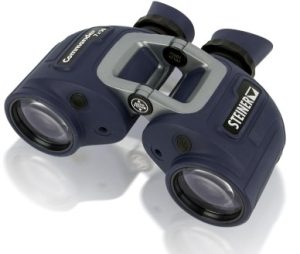
2) Steiner Marine 7×50
Check Price in Amazon
The Steiner Marine 7×50 is widely regarded as a dependable choice for whale watching from land, especially for those who regularly observe from coastal cliffs or open shorelines. Built with marine environments in mind, it delivers a steady and bright viewing experience that translates well to long-distance wildlife observation. Its 7x magnification helps reduce image shake, making it easier to keep whales in view even when scanning wide ocean horizons.
One of the most useful aspects of this binocular is its 50 mm objective lens combined with a large 7.1 mm exit pupil, which allows excellent light transmission. This makes it particularly effective during early morning or late afternoon viewing when whales are often most active. The image remains bright and clear even in hazy or low light coastal conditions, giving users a better chance of spotting distant blows or subtle surface movement.
Optical performance is further enhanced by high contrast coatings and a Porro prism design, which provide strong depth perception and natural color reproduction. This helps distinguish whales from waves and reflections, especially when scanning large areas of water. The wide field of view also makes it easier to locate and follow moving whales without constantly readjusting your position.
A defining characteristic of the Steiner Marine 7×50 is its Sports Auto Focus system, which allows you to set focus once for your eyes and then view objects clearly from mid distance to infinity without constant adjustments. This is particularly useful for whale watching from land, where subjects are often far away and moving unpredictably. It simplifies the viewing process and reduces the chance of missing key moments.
Durability is another strong point. The binocular features a Makrolon housing with rubber armoring, designed to withstand impact, temperature changes, and prolonged exposure to salty air. It is also waterproof and fogproof, ensuring reliable performance in coastal environments where moisture and weather shifts are common. This rugged build makes it a long lasting companion for regular shoreline observation.
Comfort during extended use is well addressed, with long eye relief and a balanced design that reduces strain during long scanning sessions. While it is not the lightest option available, its ergonomic shape and grip make it manageable for extended whale watching outings.
Pros
- Bright image quality in low light conditions
- Wide field of view for scanning large ocean areas
- Stable magnification that is easy to hold steady
- Durable waterproof and fogproof construction
- Auto focus system reduces need for constant adjustments
- Strong depth perception with Porro prism design
Cons
- Heavier than compact binocular models
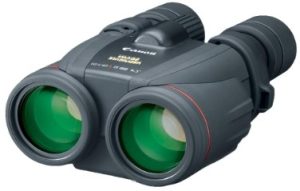
3) Canon 10×42 L IS WP
Check Price in Amazon
The Canon 10x42L IS WP is a premium binocular that brings advanced technology into whale watching from land, offering a viewing experience that feels noticeably more controlled and detailed than traditional optics. Designed with powerful magnification and built-in image stabilization, it helps reduce the challenge of hand shake, which is often a limiting factor when observing whales at long distances. This makes it especially useful when scanning wide ocean horizons where even slight movement can blur important details.
A key strength of this binocular is its 10x magnification paired with 42 mm objective lenses, delivering a strong balance between reach and brightness. The optics are built with high quality glass elements that reduce distortion and improve clarity, allowing users to see fine details such as whale blows, fins, and subtle movements on the water surface. The image remains sharp and color accurate, even in challenging lighting conditions near the coast.
What truly sets this model apart is its image stabilization system, which uses internal gyros and a vari angle prism to correct movement in real time. With the press of a button, the image becomes significantly steadier, making it easier to follow whales without constant refocusing or strain. This feature is particularly valuable for land based viewing where higher magnification can otherwise make images appear shaky.
The binocular is also built for demanding outdoor use. It features a waterproof and fogproof construction with O ring sealing, helping it perform reliably in coastal environments where moisture and changing temperatures are common. The durable body and rubberized exterior provide a secure grip, even in damp conditions, which adds confidence during extended observation sessions.
Comfort and usability are well considered, with 16 mm eye relief and a wide field of view that allows for easier tracking of moving whales. The design feels solid in hand, and while the weight contributes to stability, it can become noticeable during long viewing periods. The binocular also requires batteries to power the stabilization feature, which is an important factor for extended trips.
Pros
- Image stabilization provides a steady and clear view
- Strong 10x magnification for long distance whale spotting
- High quality optics with sharp detail and accurate color
- Waterproof and fogproof for coastal environments
- Wide field of view helps track moving subjects
- Comfortable eye relief for extended use
Cons
- Expensive compared to standard binoculars
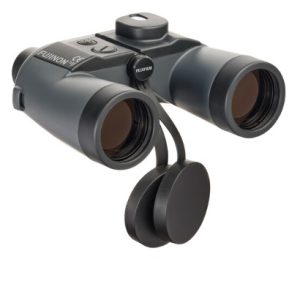
4) Fujinon Mariner 7×50 WPC-XL
Check Price in Amazon
The Fujinon Mariner 7×50 WPC-XL is a practical and well balanced choice for whale watching from land, particularly for those who want dependable performance without stepping into premium price ranges. Designed for marine use, it adapts well to shoreline observation where wide ocean views, changing light, and long viewing sessions are common. Its 7x magnification provides a steady image that makes it easier to scan the horizon and keep track of distant whale activity without excessive shake.
This binocular uses 50 mm objective lenses and multi coated optics, allowing it to gather a good amount of light for clear viewing in varying coastal conditions. Whether you are watching early in the morning or later in the day, the image remains bright enough to pick up whale blows and surface movement. The Porro prism design also enhances depth perception, which helps distinguish whales from waves and reflections across wide stretches of water.
A notable advantage is its lightweight polycarbonate construction, which makes it easier to hold for extended periods compared to many traditional 7×50 binoculars. This is especially useful for land based whale watching, where long sessions of scanning are common. Despite its lighter build, it remains durable, with rubber armoring that adds protection and usability in outdoor environments.
The binocular is also waterproof, fogproof, and nitrogen filled, ensuring it performs reliably in coastal environments where moisture and temperature changes are frequent. An added practical feature is its ability to float when used with the included strap, offering peace of mind when used near water. While more relevant for boating, it still reflects the rugged design quality that benefits shoreline users as well.
Another useful inclusion is the built in compass with LED illumination, which can assist in tracking direction when following whale movements along the coastline. Combined with long eye relief and individual focus adjustment, it offers a comfortable viewing experience, even for users who wear glasses.
Pros
- Lightweight design compared to most 7×50 binoculars
- Bright image with good light transmission
- Wide field of view for scanning large ocean areas
- Waterproof and fogproof construction
- Built in compass with illumination
- Long eye relief suitable for eyeglass wearers
- Floats with included strap for added security
Cons
- Image quality can drop slightly in very low light conditions
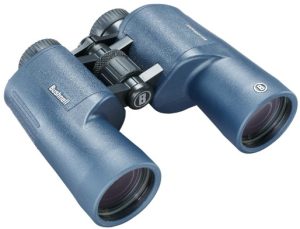
5) Bushnell H2O 7×50 Porro
Check Price in Amazon
The Bushnell H2O 7×50 Porro is a practical and affordable choice for whale watching from land, offering a solid mix of brightness, durability, and ease of use. Designed for wet and demanding environments, it performs well along coastlines where moisture, glare, and shifting light are common. Its 7x magnification helps maintain a steady image, making it easier to follow whales across the horizon without excessive hand shake.
This binocular features 7x magnification with 50 mm objective lenses, a combination that allows strong light gathering for clear viewing in early morning or late afternoon conditions. The large exit pupil further enhances brightness and makes it easier to maintain a full image without constant adjustment. This is especially useful when scanning large ocean areas for subtle signs like whale blows or surface movement.
Optical performance is supported by fully multi coated lenses and BAK4 Porro prisms, which improve contrast, clarity, and depth perception. This helps distinguish whales from waves and reflections, giving a more defined view of distant activity. The wide field of view also makes it easier to scan and track movement without constantly repositioning the binocular.
Durability is one of its strongest advantages. The binocular is waterproof with an IPX7 rating and nitrogen purged for fogproof performance, ensuring reliable use in coastal environments where humidity and sudden weather changes are common. The rubber armored exterior provides a secure grip and helps protect the internal components from impact during outdoor use.
Comfort and usability are also well considered. The binocular includes twist up eyecups and long eye relief, making it suitable for extended viewing sessions and for users who wear glasses. The central focus system allows for quick adjustments when tracking whales as they surface and dive. While it is not the lightest option available, its ergonomic design helps balance the weight during longer observation periods.
Pros
- Affordable option with solid overall performance
- Bright image suitable for low light coastal viewing
- Wide field of view for scanning large ocean areas
- Waterproof and fogproof construction for reliability
- Good grip with rubber armored body
- Comfortable eye relief for extended use
Cons
- Heavier than compact binoculars
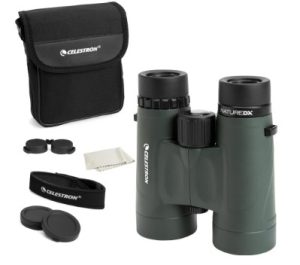
6) Celestron Nature DX 8×42
Check Price in Amazon
The Celestron Nature DX 8×42 is a well rounded and accessible option for whale watching from land, especially for those who want solid performance without a high price tag. Its design balances clarity, portability, and ease of use, making it ideal for scanning coastlines where whales may appear suddenly and at varying distances. With 8x magnification, it offers a stable viewing experience that is easier to control compared to higher magnification models, which is helpful during long observation sessions.
This binocular features 8x magnification with 42 mm objective lenses, providing a good mix of reach and brightness for daytime whale watching. The fully multi coated lenses and phase coated BaK4 prisms enhance light transmission, resulting in clear and detailed images even when lighting conditions are less than ideal. This allows users to pick up subtle movements on the water such as distant blows or fins breaking the surface.
The wide field of view of about 388 feet at 1000 yards makes it easier to scan large ocean areas and track moving whales without constantly shifting position. This is particularly useful from land, where whales may surface unpredictably across a wide horizon. The image quality is generally sharp and bright for its class, offering a satisfying viewing experience for beginners and intermediate users.
Durability is another strong point. The binocular is waterproof, nitrogen filled, and fogproof, ensuring it performs reliably in coastal environments where moisture and temperature changes are common. The rubber armored polycarbonate body provides protection while keeping the weight manageable, making it easier to carry and hold during extended viewing sessions.
Comfort and usability are well addressed with 17.5 mm eye relief and twist up eyecups, allowing comfortable viewing for both eyeglass wearers and non eyeglass users. The central focus system is smooth and responsive, helping users quickly adjust focus when whales surface and move across the water. Its relatively lightweight build compared to larger marine binoculars also reduces fatigue during long periods of use.
Pros
- Lightweight and easy to carry for long sessions
- Good image clarity and brightness for the price
- Wide field of view for scanning and tracking whales
- Waterproof and fogproof for coastal conditions
- Comfortable eye relief suitable for eyeglass wearers
- Smooth and quick focusing system
Cons
- Performance drops in very low light conditions
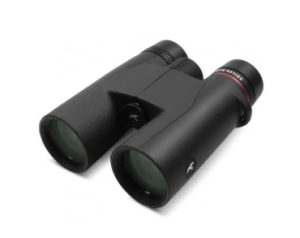
7) Kite Optics Petrel II 8×42
Check Price in Amazon
The Kite Optics Petrel II 8×42 is a refined and durable binocular that performs exceptionally well for whale watching from land. Designed for demanding outdoor use, it offers a strong balance of clarity, comfort, and ruggedness, making it well suited for scanning coastlines where whales may appear at varying distances. Its 8x magnification provides a stable image that is easy to control during extended viewing sessions, which is especially useful when tracking movement across the ocean.
This binocular features 8x magnification with 42 mm objective lenses, delivering a bright and clear image in most daylight conditions. With a light transmission of around 85 percent, it maintains good visibility even when lighting becomes less consistent near the coast. The 5.25 mm exit pupil further improves viewing comfort, allowing users to maintain a full image without constant repositioning.
Optical quality is enhanced by advanced coatings that improve brightness and clarity, helping to produce sharp images with natural color. This makes it easier to distinguish whales from surrounding waves and reflections, particularly when scanning large areas of water. The field of view of 114 meters at 1000 meters gives a wide perspective, which is important for locating and following whales as they surface and move.
Durability is one of the strongest aspects of this binocular. It is fully waterproof with an IPX7 rating and nitrogen filled, ensuring reliable performance in coastal environments where moisture and temperature changes are common. The robust construction is designed to handle frequent outdoor use, making it a dependable option for regular whale watchers.
Comfort is also a key strength. With 19.5 mm eye relief and ergonomic design, it allows for extended viewing without discomfort, even for eyeglass wearers. The relatively lightweight build at around 620 grams makes it easier to hold for long periods compared to heavier marine binoculars, which is a significant advantage during long observation sessions.
Another notable aspect is its long term reliability and build quality, supported by a 30 year warranty. This reflects confidence in its construction and makes it a strong investment for users who plan to spend a lot of time observing wildlife from coastal locations.
Pros
- Bright and clear image with good light transmission
- Wide field of view for scanning and tracking whales
- Lightweight design for extended use
- Durable construction suitable for harsh environments
- Waterproof and fog resistant performance
- Comfortable eye relief for eyeglass wearers
- Long warranty period adds long term value
Cons
- Not as bright as larger 50 mm objective binoculars in very low light
8) BRAUN Marine 7×50

Check Price in Amazon
The BRAUN Marine 7×50 is a classic marine style binocular that adapts well to whale watching from land, especially for users who want a simple and reliable viewing experience. Built around the trusted 7×50 configuration, it offers a steady image that is easy to control while scanning large ocean areas. This makes it particularly useful when watching for distant whale activity such as blows or surface movement along the horizon.
With 7x magnification and 50 mm objective lenses, this binocular provides strong light gathering القدرة, helping deliver bright and clear images in typical coastal conditions. The large exit pupil of over 7 mm enhances viewing comfort by making it easier to maintain a full image without constant adjustment. This is especially helpful during long observation sessions where eye strain can become an issue.
The optical system includes Porro prisms and fully multi coated lenses, which contribute to good contrast and depth perception. These qualities are important when trying to distinguish whales from waves and glare on the water. The field of view of around 132 meters at 1000 meters gives a broad viewing area, allowing users to scan efficiently and track movement without frequently repositioning the binocular.
A notable feature is the built in illuminated compass and reticle, which can assist with orientation and estimating distances. While this feature is more commonly used at sea, it can still be useful from land when following the direction of whale movement along the coastline. The illuminated display ensures visibility even in dim conditions.
Durability is well addressed with a waterproof and fogproof construction supported by nitrogen filling, ensuring reliable performance in coastal environments where moisture and temperature changes are common. The binocular is also designed to float, adding an extra layer of security when used near water. Its polycarbonate body and rubber elements provide a balance between strength and manageable weight.
Comfort is another strong point. With long eye relief of about 22 mm and individual eyepiece focusing, it allows for extended viewing sessions without discomfort, even for eyeglass wearers. Once properly adjusted, the individual focus system can reduce the need for constant refocusing when observing distant subjects.
Pros
- Bright and clear image in most lighting conditions
- Stable 7x magnification suitable for long distance viewing
- Wide field of view for scanning large ocean areas
- Waterproof and fogproof for coastal environments
- Built in compass and reticle for added functionality
- Comfortable eye relief for extended use
- Floating design adds security near water
Cons
- Bulkier than compact binocular models
Factors to Consider When Choosing The Best Binoculars For Whale Watching From Ship
Magnification and Stability
Choosing the right magnification is essential when watching whales from a ship. While higher magnification brings distant subjects closer, it also amplifies hand movement and the motion of the boat. A moderate range, typically around 7x to 10x, offers a better balance between detail and stability. Lower magnification is often easier to manage on moving water, helping you maintain a steady view without constant image shake.
Objective Lens Size and Brightness
The size of the objective lenses affects how much light the binoculars can gather. Larger lenses, such as 42 mm or 50 mm, provide brighter images, which is especially useful in early morning, late afternoon, or overcast conditions at sea. Brighter optics make it easier to spot subtle details like whale blows or dorsal fins against the reflective ocean surface.
Field of View
A wide field of view allows you to scan larger sections of the ocean more easily. This is important when whales surface unpredictably and may only be visible for a short time. A broader viewing area helps you locate movement faster and track whales smoothly without constantly repositioning your binoculars.
Image Stabilization
On a moving ship, image stabilization can significantly improve your viewing experience. This feature reduces the effects of hand shake and vessel motion, allowing for a clearer and more controlled image. It becomes particularly valuable when using higher magnification, where even small movements can disrupt your view.
Waterproof and Fogproof Design
Marine environments are harsh, with constant exposure to water, humidity, and changing temperatures. Binoculars designed to be waterproof and fogproof ensure reliable performance in these conditions. Sealed construction and internal gas filling help prevent moisture from entering the optics, maintaining clarity even in damp or misty weather.
Durability and Grip
A sturdy build is important for handling the challenges of being on a boat. Rubber armoring and impact resistant materials help protect the binoculars from accidental drops or bumps. A secure, non slip grip is also essential, especially when your hands are wet or the deck is unsteady.
Ease of Focus and Usability
Quick and simple focusing is crucial when whales appear suddenly and may disappear just as fast. Binoculars with smooth focus mechanisms or systems that reduce the need for constant adjustment can make a big difference. Easy handling and intuitive controls allow you to react quickly and stay focused on the moment.
Comfort for Extended Viewing
Whale watching often involves long periods of scanning the ocean, so comfort should not be overlooked. Features such as adequate eye relief, ergonomic design, and balanced weight help reduce fatigue during extended use. Comfortable binoculars allow you to enjoy the experience longer without strain, increasing your chances of spotting more wildlife.
Best Binoculars For Whale Watching From Ship FAQs
What magnification is best for whale watching from a ship?
A moderate magnification, typically between 7x and 10x, works best on a moving vessel. Lower magnification provides a steadier image and makes it easier to track whales without excessive shake, while still offering enough detail to clearly observe activity at a distance.
Do I need image stabilization for whale watching at sea?
Image stabilization is not essential, but it can greatly improve the viewing experience. On a rocking boat, it helps reduce motion blur and keeps the image steady, especially when using higher magnification. This makes it easier to follow whales as they surface and move.
Are waterproof binoculars necessary for use on a ship?
Yes, waterproof and fogproof construction is highly recommended. Marine environments expose binoculars to water, humidity, and sudden temperature changes. Proper sealing ensures the optics remain clear and functional even in wet or misty conditions.
What features help with spotting whales more easily?
A wide field of view, bright optics, and comfortable handling all play a key role. These features make it easier to scan large ocean areas, detect movement quickly, and maintain a clear view for longer periods without strain.
Conclusion
Out on open water, where the horizon stretches endlessly, and every ripple could signal something extraordinary, the right binoculars turn uncertainty into clarity.
They bring distant breaches into sharp focus, hold steady against the rhythm of the waves, and capture fleeting moments that would otherwise be lost to the vastness of the sea.
With the right pair in hand, every scan of the ocean carries a sense of anticipation, transforming a simple boat trip into something far more immersive and unforgettable.
See Also: