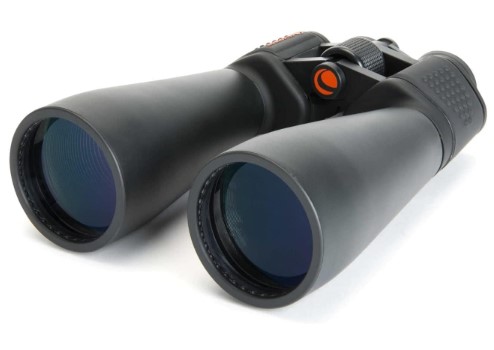
Finding the best binoculars for 1000 yards can be challenging when clarity and detail matter most at extreme distances. I have explored what it really takes to spot and identify targets clearly at that range, where standard optics often fall short.
The right binoculars combine powerful magnification with high-quality glass and strong light transmission, allowing you to distinguish fine details even in difficult conditions.
In this guide, I will break down the key features, share the top picks, provide a practical buying guide, and answer common questions to help you choose with confidence.
See summary of the best binoculars for 1000 yards:
- Best overall: Celestron SkyMaster Pro 20×80 Binoculars
- Best value for performance: Celestron SkyMaster 15×70 Binoculars
- Best for clarity at extreme distance: Nikon Monarch 5 20×56 Binoculars
- Best premium option: Zeiss Conquest HD 15×56 Binoculars
- Best optical quality and field of view: Swarovski NL Pure 12×42 Binoculars
- Best for extreme long-range detail: Vortex Kaibab HD 18×56 Binoculars
- Best mid-range performance: Vortex Diamondback HD 15×56 Binoculars
7 Best Binoculars For 1000 Yards
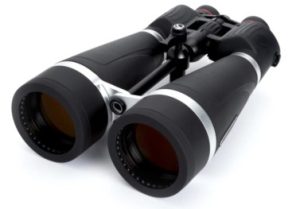
1) Celestron SkyMaster Pro 20×80
Check Price in Amazon
The Celestron SkyMaster Pro 20×80 stands out as a serious option for anyone trying to observe targets at 1000 yards or beyond. With 20x magnification and large 80mm objective lenses, it brings distant subjects much closer while maintaining a level of detail that smaller binoculars struggle to deliver. This combination makes it particularly effective for long-range viewing where clarity and reach are essential.
One of its strongest qualities is its ability to gather light. The oversized objective lenses allow more light to enter the optical system, which results in brighter images even in low-light conditions such as early morning or late evening. This is especially useful when viewing distant objects that would otherwise appear dim or washed out. The fully multi-coated optics with XLT coatings and BaK-4 prisms help improve light transmission and contrast, producing sharper and more detailed images at long distances.
Build quality is another area where this model performs well. The housing combines polycarbonate and aluminum with a rubberized exterior, giving it a durable feel while still keeping weight manageable for its size. It is also waterproof and nitrogen-filled, which helps prevent internal fogging when moving between different temperatures or using it in humid conditions. These features make it reliable for outdoor use where weather can change quickly.
In terms of usability, the binocular includes a built-in tripod adapter and a reflex sight rail, which can help with locating distant objects more quickly. However, due to its size and weight, handheld use is not practical for extended viewing. A tripod is almost essential to keep the image steady and fully benefit from the high magnification. Once stabilized, the binocular delivers impressive detail and a viewing experience that can feel close to using a small telescope.
Pros
- Excellent long-range performance with 20x magnification
- Bright and clear images due to large 80mm lenses
- Strong build quality with waterproof and fog-resistant design
- High contrast and sharpness from multi-coated optics and BaK-4 prisms
- Tripod adaptable for stable long-distance viewing
Cons
- Heavy and not suitable for handheld use
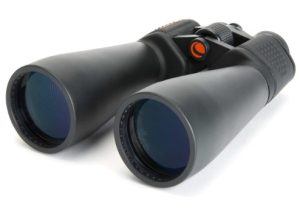
2) Celestron SkyMaster 15×70 Binoculars
Check Price in Amazon
The Celestron SkyMaster 15×70 is a strong choice for anyone looking to observe targets at 1000 yards without stepping into expensive premium optics. With 15x magnification, it provides enough reach to bring distant objects into clear view while still offering a wider and more manageable image compared to higher magnification models. This balance makes it useful for scanning large areas and identifying details at long distances.
A key strength of this binocular is its 70mm objective lenses, which allow a significant amount of light into the optical system. This results in brighter images, especially during low-light conditions such as early mornings or late afternoons. Combined with multi-coated optics and BaK-4 prisms, the binocular produces good contrast and clarity for its price range, making distant subjects easier to distinguish.
The optical performance is particularly noticeable when viewing large, distant scenes. The binocular offers a field of view of about 231 feet at 1000 yards, which helps you track movement and scan terrain more efficiently. While it is often associated with astronomy, this same light-gathering ability and magnification translate well into long-range terrestrial viewing where brightness and visibility are critical.
In terms of design, the SkyMaster 15×70 is built with a durable body that can handle regular outdoor use. It is relatively large and weighs around 1.36 kg, which affects how it is used in the field. While short periods of handheld viewing are possible, extended observation at 1000 yards benefits greatly from using a tripod. The included tripod adapter makes this easier and helps stabilize the image for better detail.
Despite its affordability, this binocular delivers a viewing experience that competes well within its category. It is especially appealing for users who want long-distance capability without investing heavily in premium glass. The trade-offs mainly come in optical refinement and handling, but for its price, it remains a practical and capable option.
Pros
- Strong 15x magnification for long-distance viewing
- Bright images due to large 70mm objective lenses
- Good light transmission with multi-coated optics and BaK-4 prisms
- Wide field of view helps with scanning distant areas
- Affordable compared to similar high-magnification binoculars
- Includes tripod adapter for stable viewing
Cons
- Large and heavy which affects portability
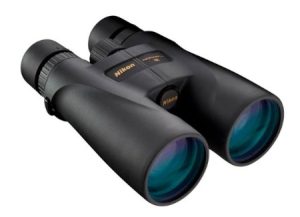
3) Nikon Monarch 5 20×56
Check Price in Amazon
The Nikon Monarch 5 20×56 is designed for users who need serious reach at distances like 1000 yards. With 20x magnification, it brings far-off subjects into clear focus, making it well suited for long-range observation where detail matters. This level of magnification allows you to pick out fine features that would otherwise be lost with lower-powered binoculars, especially when scanning open terrain or observing distant targets.
Optical quality is one of its strongest advantages. The binocular uses extra-low dispersion glass, which helps reduce color fringing and improves overall image sharpness. Combined with fully multi-coated lenses and dielectric-coated prisms, it delivers bright, high-contrast images with more natural color reproduction. This is particularly useful at long distances where image clarity can quickly degrade without proper optical design.
The 56mm objective lenses play a major role in brightness and visibility. They allow more light into the system, helping maintain a clear image even in low-light conditions such as dawn or dusk. This added light-gathering ability helps offset the dimming that often comes with high magnification, ensuring that distant subjects remain visible and detailed rather than dark or washed out.
Build quality is also well considered. The binocular is waterproof and nitrogen-filled to prevent internal fogging, which makes it reliable in changing weather conditions. The rubber-armored body provides a secure grip and added durability for outdoor use. It also includes long eye relief and adjustable eyecups, making it comfortable for extended viewing sessions and suitable for users who wear glasses.
In practical use, the Monarch 5 20×56 performs best when stabilized. Its size and magnification make handheld viewing challenging over long periods, so using a tripod is recommended to get the most out of its optical performance. Once stabilized, it delivers a steady and detailed image that makes long-distance observation far more effective.
Pros
- Powerful 20x magnification for long-distance viewing
- Sharp and clear images with ED glass
- Bright image quality supported by 56mm objective lenses
- High contrast and accurate color reproduction
- Waterproof and fog-resistant construction
- Comfortable for eyeglass users with long eye relief
Cons
- Requires stabilization for best results
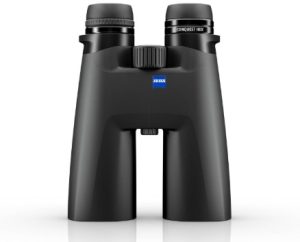
4) Zeiss Conquest HD 15×56 Binoculars
Check Price in Amazon
The Zeiss Conquest HD 15×56 is widely regarded as a premium option for long-distance viewing, especially at ranges like 1000 yards where clarity and consistency matter. With 15x magnification, it delivers strong reach while maintaining a more stable and usable image compared to higher-powered alternatives. This balance makes it effective for scanning wide areas and picking out fine details without overwhelming image shake when properly supported.
One of its defining qualities is the optical system based on Zeiss HD technology. The binocular delivers around 90 percent light transmission, which results in bright and vivid images even in difficult lighting conditions. Colors appear natural and accurate, and the image remains sharp from the center to the edges. This level of optical performance is especially important at long distances where poor glass can quickly reduce detail and contrast.
The 56mm objective lenses play a major role in low-light performance. They allow more light into the system, helping maintain image brightness during early morning or late evening use. At 1000 yards, this translates into better visibility and improved subject definition when lighting is less than ideal. The field of view, around 240 feet at 1000 yards, provides a good balance between magnification and situational awareness, making it easier to track movement across a wide area.
Build quality is another strong aspect of this binocular. It features a robust magnesium housing with rubber armoring, offering durability and a secure grip in different conditions. It is waterproof, nitrogen-filled, and designed to perform reliably in harsh environments, whether in rain, cold temperatures, or dusty terrain. These qualities make it a dependable option for extended outdoor use where equipment reliability is critical.
Comfort and usability are also well addressed. The ergonomic design allows for a natural grip, and the smooth focusing system helps fine-tune the image quickly. Adjustable eyecups and a generous eye relief make it suitable for extended viewing sessions, including for users who wear glasses. Like most binoculars in this magnification range, it performs best when mounted on a tripod, where the image becomes steady and fully detailed.
Pros
- Excellent clarity with high light transmission
- Sharp image quality across the entire field of view
- Strong low-light performance with 56mm lenses
- Durable construction with waterproof and fog-resistant design
- Comfortable ergonomics for extended use
- Reliable performance in harsh weather conditions
Cons
- Requires tripod support for stable viewing
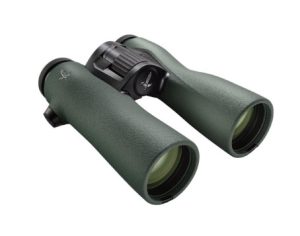
5) Swarovski NL Pure 12×42 Binoculars
Check Price in Amazon
The Swarovski NL Pure 12×42 is a premium binocular that approaches long-distance viewing differently, making it a compelling option for observing at 1000 yards. Instead of relying purely on extreme magnification, it balances 12x power with an exceptionally wide field of view. This allows you to scan large areas while still picking out fine details, which can be more practical in real-world situations where awareness and clarity matter just as much as reach.
Optically, this binocular delivers a very refined viewing experience. It uses advanced lens technology that produces sharp images from edge to edge, eliminating the need to constantly refocus as your eyes move across the scene. The image remains crisp, with accurate colors and strong contrast, which is especially useful when identifying distant subjects at 1000 yards. The large field of view, about 339 feet at 1000 yards, gives it a noticeable advantage when tracking movement or scanning terrain.
The 42mm objective lenses provide solid light-gathering ability while keeping the binocular relatively compact compared to larger models. This means you still get bright and clear images during early morning or late evening conditions without the added bulk of oversized optics. The light transmission and coating system help maintain image quality even when lighting is less than ideal.
Comfort and ergonomics are also a major part of its design. The unique shape allows it to sit naturally in the hands, reducing fatigue during extended use. An optional forehead rest can be added to improve stability, which is particularly helpful at 12x magnification where slight movements can affect image steadiness. Compared to heavier long-range binoculars, this model is easier to handle without always relying on a tripod.
In practical use, the NL Pure 12×42 offers a smooth and immersive viewing experience. It may not match the raw magnification of 15x or 20x models, but its combination of clarity, field of view, and comfort often results in more usable detail over time. This makes it a strong choice for users who want consistent performance at long distances without dealing with excessive weight or constant stabilization.
Pros
- Exceptional edge to edge sharpness with advanced lens design
- Wide field of view helps with scanning and tracking subjects
- Bright and clear images in varying light conditions
- Comfortable ergonomic design for extended use
- More stable handheld use compared to higher magnification binoculars
Cons
- Lower magnification compared to dedicated long-range models
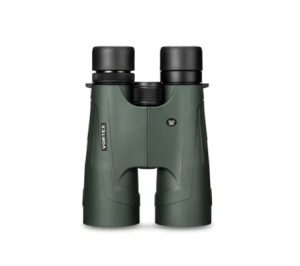
6) Vortex Kaibab HD 18×56 Binoculars
Check Price in Amazon
The Vortex Kaibab HD 18×56 is built for serious long-distance observation, making it one of the strongest performers for viewing at 1000 yards. With its 18x magnification, it offers a level of reach that allows you to pick out fine details across wide landscapes. This makes it especially useful for glassing large areas where subjects remain far away and require careful observation.
Optical performance is a major strength of this binocular. It uses high-density extra-low dispersion glass in an apochromatic configuration, which helps reduce color fringing and maintain sharpness across the image. Combined with fully multi-coated optics and dielectric-coated prisms, the result is a clear and detailed view with good contrast. These features are particularly important at long distances, where even small optical imperfections can affect visibility.
The 56mm objective lenses contribute to strong light-gathering ability, helping maintain brightness even during low-light conditions such as early morning or late evening. This ensures that distant subjects remain visible and well-defined rather than fading into the background. Despite the high magnification, the binocular is designed to retain good image quality in challenging lighting.
In terms of design, the Kaibab HD is built for durability and extended outdoor use. It features a rugged construction with protective coatings that guard against scratches, dirt, and moisture. The binocular is also argon-filled and sealed to prevent fogging, allowing it to perform reliably in different weather conditions. Its ergonomic design and adjustable eyecups add comfort during long viewing sessions.
Handling is an important consideration with this model. Due to its high magnification and weight, handheld use is limited. A tripod is strongly recommended to achieve a steady image and fully benefit from its optical capabilities. Once stabilized, it delivers a highly detailed and immersive viewing experience that can rival spotting scopes for certain applications.
Pros
- Powerful 18x magnification for detailed long-range viewing
- Sharp and clear images with ED glass and advanced coatings
- Bright performance supported by 56mm objective lenses
- Durable construction with weather-resistant design
- Good contrast and color accuracy for distant observation
Cons
- Requires tripod for stable viewing
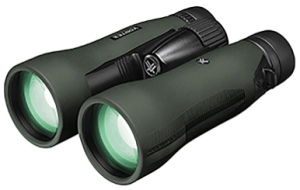
7) Vortex Diamondback HD 15×56 Binoculars
Check Price in Amazon
The Vortex Diamondback HD 15×56 is a well-balanced long-range binocular that performs reliably at distances like 1000 yards. With 15x magnification, it provides enough reach to clearly observe distant subjects while remaining more manageable than higher-powered models. This makes it a practical choice for extended observation where both clarity and control are important.
Its optical system is designed to deliver a clear and detailed image. The binocular uses high-definition glass with fully multi-coated lenses and dielectric-coated prisms, which help improve light transmission and color accuracy. These features work together to produce bright, crisp images with good contrast, allowing distant objects to remain well-defined even across large open areas.
The 56mm objective lenses enhance brightness, especially in low-light conditions such as early morning or late evening. This added light-gathering ability helps maintain image quality at longer distances where visibility can easily drop. With a field of view of about 230 feet at 1000 yards, it also provides a useful balance between magnification and situational awareness when scanning wide terrain.
In terms of construction, the Diamondback HD 15×56 is built for durability and outdoor use. It features a magnesium alloy chassis with rubber armor for a secure grip and added protection. The binocular is waterproof, fogproof, and shock-resistant, allowing it to perform consistently in different environments. Protective coatings on the lenses help resist scratches, dirt, and moisture, which contributes to long-term reliability.
Handling is well thought out for its size. The ergonomic design includes a central focus wheel, adjustable eyecups, and a comfortable grip that reduces fatigue during longer sessions. However, due to its magnification and weight, handheld use can introduce image shake. A tripod is recommended for stable viewing, especially when observing at 1000 yards where small movements can affect clarity.
Pros
- Strong 15x magnification for long-distance viewing
- Clear and bright images with HD optical system
- Good light transmission for low-light conditions
- Durable waterproof and fog-resistant construction
- Comfortable ergonomics with adjustable eyecups
- Good value for performance compared to premium models
Cons
- Requires tripod for steady long-range viewing
Factors to Consider When Choosing The Best Binoculars For 1000 Yards
Magnification
Magnification determines how close distant objects appear, and for 1000-yard viewing, higher power is essential. Options in the 12x to 20x range are commonly preferred because they provide enough reach to reveal fine details. However, higher magnification also increases image shake, so it is important to balance power with usability. Choosing the right level depends on whether you prioritize maximum detail or a steadier viewing experience.
Objective Lens Size
The size of the objective lens affects how much light enters the binocular. Larger lenses, such as 56mm or 70mm, gather more light and produce brighter images, which is especially useful at long distances. This becomes even more important in low-light conditions where smaller lenses may struggle to maintain clarity. The trade-off is increased size and weight, so it is important to find a balance that suits your needs.
Optical Quality and Glass Type
High-quality optics play a major role in how clearly you can see distant subjects. Features like extra-low dispersion glass and advanced coatings help reduce color fringing, improve contrast, and maintain sharpness. At 1000 yards, even small optical flaws can significantly affect what you see, so investing in better glass can make a noticeable difference in image detail and overall viewing quality.
Image Stability
Stability is critical when viewing at long distances. Higher magnification amplifies even the smallest hand movements, which can make the image appear shaky and reduce clarity. Many long-range binoculars benefit from tripod use or additional support to keep the image steady. Without proper stabilization, it becomes difficult to fully take advantage of the binocular’s magnification and optical capabilities.
Field of View
Field of view refers to how much of the scene you can see at a given distance. A wider field of view makes it easier to scan large areas and track moving subjects, which is useful when observing at 1000 yards. While higher magnification often narrows the field of view, some binoculars are designed to maintain a good balance between zoom and visibility, improving overall usability.
Low-Light Performance
Long-distance viewing often happens during early morning or late evening, making low-light performance an important factor. Binoculars with larger objective lenses and better coatings allow more light to pass through, resulting in brighter and clearer images. This helps you maintain visibility when lighting conditions are not ideal and ensures that distant objects remain distinguishable.
Build Quality and Durability
Outdoor use requires binoculars that can handle different environments. Durable construction with features like waterproofing, fog resistance, and protective coatings ensures reliable performance in changing weather conditions. A solid build also protects the internal optics from damage, which is especially important for long-term use in rugged settings.
Weight and Ergonomics
Comfort and handling are often overlooked but become important during extended use. Larger binoculars designed for 1000-yard viewing can be heavy, which affects portability and ease of use. Ergonomic design, including a comfortable grip and adjustable eyecups, helps reduce fatigue. Choosing a model that feels manageable in your hands or works well with a tripod can greatly improve the overall viewing experience.
Best Binoculars For 1000 Yards FAQs
What magnification is best for viewing at 1000 yards?
For 1000-yard viewing, magnification in the range of 12x to 20x is generally ideal. Lower magnification may not provide enough detail at that distance, while extremely high magnification can make the image difficult to stabilize. Many users find that 15x offers a good balance between clarity and control, especially when combined with proper support.
Do I need a tripod for binoculars at this distance?
In most cases, yes. As magnification increases, even small hand movements can cause noticeable image shake. Using a tripod or another form of stabilization helps keep the image steady, allowing you to see fine details more clearly. While some lower magnification options can be used handheld, support greatly improves performance at long distances.
Are larger objective lenses necessary for 1000-yard viewing?
Larger objective lenses are highly beneficial because they allow more light into the binocular. This results in brighter and clearer images, particularly in low-light conditions. While not strictly required, binoculars with larger lenses tend to perform better at long distances, especially during early morning or late evening use.
Can binoculars replace a spotting scope at 1000 yards?
Binoculars can be very effective at 1000 yards, especially high-powered models with good optical quality. However, they may not fully replace a spotting scope when maximum detail is required at extreme distances. That said, binoculars offer a wider field of view and a more comfortable viewing experience, making them a practical and versatile choice for many long-range situations.
Conclusion
At 1000 yards, the difference between simply seeing and truly observing comes down to the capability of your optics.
The best binoculars for this range transform distant scenes into something vivid and detailed, revealing textures, movement, and subtle contrasts that would otherwise disappear into the horizon.
They bring together power, brightness, and precision in a way that feels immersive rather than strained, allowing you to stay engaged with what you’re viewing instead of fighting the limitations of your equipment.
When everything works in harmony, long-distance viewing stops feeling like a challenge and starts feeling effortless, giving you a clear and confident connection to subjects that once seemed out of reach.
See Also: