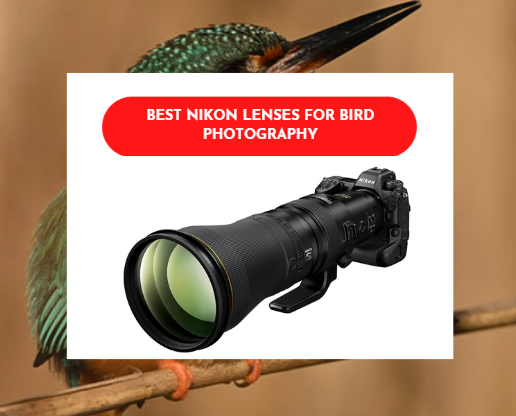
Best Nikon Lenses for Bird Photography are essential tools for capturing wildlife with clarity, detail, and impact. When I’m tracking fast‑moving birds or trying to fill the frame with distant subjects, I rely on lenses that offer powerful reach, dependable stabilization, and fast, accurate focusing. Nikon’s lineup of telephoto and super‑telephoto lenses delivers just that, giving photographers the flexibility to shoot in varied lighting and environmental conditions.
In this guide, I’ll explore the key features that make these lenses great for bird photography, share my top recommended lenses, walk through a practical buying guide, and answer common FAQs to help you choose the right lens for your needs. Whether you’re just starting out or refining your gear, this resource will help you make confident decisions and elevate your bird photography.
Here is a summary of the Best Nikon Lenses for Bird Photography :
- Nikon NIKKOR Z 180-600mm f/5.6-6.3 VR – Best Versatile Zoom
- Nikon AF-S FX NIKKOR 800mm f/5.6E FL ED VR – Best Extreme Reach
- Nikon AF-S FX NIKKOR 200-500mm f/5.6E ED VR – Best Long-Range Zoom
- Nikon NIKKOR Z 400mm f/4.5 VR S – Best Lightweight Telephoto
- Nikon NIKKOR Z 28-400mm f/4-8 VR – Best All-in-One Travel Lens
- Nikon NIKKOR Z 100-400mm f/4.5-5.6 VR S – Best Balanced Telephoto Zoom
- Nikon NIKKOR Z 800mm f/6.3 VR S – Best Mobile Super-Telephoto
- Nikon AF-S FX NIKKOR 800mm f/5.6E FL ED VR (with TC800-1.25E ED) – Best Ultra Long-Range Prime
Best Nikon Lenses for Bird Photography
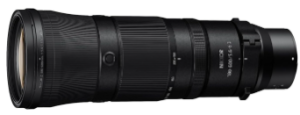
1) Nikon NIKKOR Z 180-600mm f/5.6-6.3 VR
Check Price in Amazon
The Nikon NIKKOR Z 180-600mm f/5.6-6.3 VR is one of the most versatile lenses for bird photography, designed to bring distant wildlife impressively close without sacrificing clarity. Its wide-to-telephoto range offers a combination of reach and flexibility that makes it suitable for both spotting and capturing fast-moving subjects in the wild. Beginners and seasoned photographers alike will appreciate how this lens balances performance, portability, and ease of use.
With a mere 70° turn of the zoom ring, this lens moves from 180mm to 600mm, giving you tight framing and excellent background compression while maintaining smooth operation. At the wider 180mm setting, it is easy to locate and track birds, making spontaneous shooting much more manageable. The internal zooming mechanism ensures the lens remains balanced in your hands, maintaining its center of gravity while minimizing dust intrusion, which is especially important for outdoor wildlife photography.
Handheld shooting is highly practical thanks to the built-in Vibration Reduction (VR). The stabilization system provides the equivalent of 5.5 stops faster shutter speed, significantly reducing camera shake even when panning to follow quick or unpredictable bird movements. This feature is essential for capturing sharp images of active wildlife without always relying on a tripod.
The lens is also capable of versatile close-range photography. Its minimum focus distance of 4.27 feet at 180mm and a large 0.25x reproduction ratio allow you to capture unexpected close encounters with remarkable detail. For those who need even more reach, it pairs seamlessly with Nikon Z teleconverters: the TC-1.4x extends the lens to 840mm, while the TC-2.0x pushes it to 1200mm, opening new possibilities for distant subjects.
Additional features enhance ease of use and handling. The lens comes with a quick-release tripod foot, a strap eyelet, a customizable control ring, and function buttons, allowing photographers to adapt it to their shooting style without interrupting their workflow. These thoughtful touches, combined with a robust construction, make the lens a reliable companion in varied outdoor conditions.
Pros
- Smooth and precise zoom from 180mm to 600mm
- Built-in VR provides stabilization equivalent to 5.5 stops faster shutter speed
- Internal zooming maintains balance and reduces dust intrusion
- Minimum focus distance of 4.27 feet for close encounters
- Compatible with Z teleconverters for extended reach (up to 1200mm)
- Feature-rich design with customizable controls, tripod foot, and strap eyelet
- Balanced handling and durable build for outdoor shooting
Cons
- Maximum aperture of f/5.6-6.3 may limit low-light performance
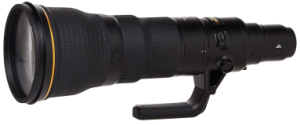
2) Nikon AF-S FX NIKKOR 800mm f/5.6E FL ED Vibration Reduction Fixed Zoom Lens with Auto Focus
Check Price in Amazon
The Nikon AF-S FX NIKKOR 800mm f/5.6E FL ED VR is a professional-grade super-telephoto lens built for bird photography and wildlife. Its extreme reach and optical quality make it ideal for capturing distant subjects with precision. It works well for sports and fast-moving wildlife, where sharp detail is essential.
This lens comes with the AF-S TELECONVERTER TC800-1.25E ED, extending the effective focal length to 1000mm. This lets you photograph shy or distant birds without disturbing them. Its FX-format 800mm prime design delivers exceptional sharpness and minimal distortion across the frame.
Handheld shooting is possible thanks to Vibration Reduction (VR). The system lets you shoot at shutter speeds up to four stops slower. This reduces blur and makes it easier to track moving birds or wildlife in natural settings.
The lens is built to professional standards. It remains stable despite its long focal length, and its optical design ensures high-quality images in a variety of outdoor conditions. Teleconverter compatibility adds versatility, making this lens capable of tackling even the most challenging bird photography scenarios.
Pros
- Focal length up to 1000mm with included teleconverter
- Exceptional sharpness and minimal distortion
- VR allows handheld shooting at slower shutter speeds
- FX-format compatibility for full-frame cameras
- Ideal for distant wildlife and birds
- Durable, professional-grade construction
Cons
- Large and heavy, may require support for extended use
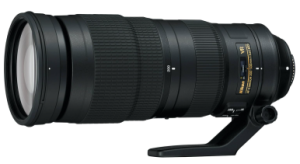
3) Nikon AF-S FX NIKKOR 200-500mm f/5.6E ED Vibration Reduction Zoom Lens with Auto Focus
Check Price in Amazon
The Nikon AF-S FX NIKKOR 200-500mm f/5.6E ED VR is a versatile super-telephoto zoom lens ideal for bird photography, wildlife, motorsports, and outdoor events. Its wide 200–500mm focal length offers flexibility, allowing you to capture subjects both near and far. On FX-format cameras, it reaches 500mm, while on DX-format DSLRs, it provides a 750mm equivalent, giving impressive reach for distant subjects.
The lens features a constant f/5.6 aperture, which delivers smooth background blur and strong low-light performance throughout the zoom range. This ensures birds and wildlife stand out against beautifully blurred backgrounds while allowing faster shutter speeds when light is limited.
Vibration Reduction (VR) is built into the lens, providing up to 4.5 stops of stabilization. A dedicated sports mode helps track fast-moving birds, wildlife, or athletes with minimal motion blur. Despite its long focal length, the lens remains compact for a super-telephoto zoom, weighing approximately 81.2 ounces and measuring 4.2 inches in diameter and 10.5 inches in length, making it practical for handheld shooting or fieldwork with a monopod or tripod.
Close focusing is possible with a minimum distance of 7.2 feet (2.2 meters), allowing for detailed shots of nearby subjects. The lens is also compatible with Nikon’s optional TC-14E series teleconverters, offering additional reach and versatility when paired with DSLRs that support f/8 autofocus. The Nikon F bayonet mount ensures secure attachment and reliable performance on FX and DX cameras.
Pros
- 200–500mm zoom range ideal for birds, wildlife, and sports
- Constant f/5.6 aperture for low-light shooting and smooth bokeh
- VR provides up to 4.5 stops of stabilization, sports mode included
- Compact design for a super-telephoto zoom lens
- Minimum focus distance of 7.2 feet allows closer subject shots
- Compatible with TC-14E teleconverters for extended reach
- F-mount ensures broad DSLR compatibility
Cons
- Maximum aperture of f/5.6 is less effective in very low light compared to faster lenses
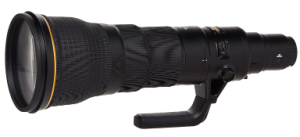
4)Nikon AF-S FX NIKKOR 800mm f/5.6E FL ED Vibration Reduction Fixed Zoom Lens with Auto Focus
Check Price in Amazon
The Nikon AF-S FX NIKKOR 800mm f/5.6E FL ED VR is a professional super-telephoto lens designed for photographers who need extreme reach and precision. It is perfect for bird photography, wildlife, and fast-action sports. This lens allows you to capture distant subjects with incredible clarity and detail, making it one of the best choices for serious wildlife enthusiasts.
The lens includes the AF-S TELECONVERTER TC800-1.25E ED, which extends the focal length from 800mm to 1000mm. This extra reach is ideal for photographing birds that are far away or elusive, allowing you to fill the frame without disturbing your subject. The lens is built on a groundbreaking FX-format 800mm f/5.6 prime design, ensuring excellent sharpness and minimal distortion across the entire image.
Vibration Reduction (VR) is built in, enabling handheld shooting at shutter speeds up to four stops slower than would normally be possible. This helps reduce blur when tracking fast-moving birds or wildlife, making handheld shooting practical even with such an extreme focal length. The lens is also designed for stability and balance, which is important when handling large super-telephoto lenses.
With professional-grade construction, this lens is built to perform in demanding outdoor conditions. Its optical design ensures high-quality images, while the included teleconverter adds flexibility for extreme reach. Photographers who need maximum focal length and uncompromising clarity will find this lens a reliable tool for capturing birds and wildlife in stunning detail.
Pros
- Focal length up to 1000mm with included teleconverter
- Exceptional sharpness and minimal distortion
- VR allows handheld shooting up to four stops slower
- FX-format design for full-frame cameras
- Ideal for distant birds and wildlife
- Durable professional-grade construction
Cons
- Large and heavy, requiring support for extended use
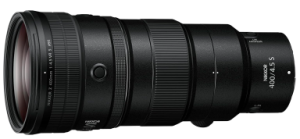
5)Nikon NIKKOR Z 400mm f/4.5 VR S
Check Price in Amazon
The Nikon NIKKOR Z 400mm f/4.5 VR S is a versatile telephoto lens designed for bird photography and wildlife enthusiasts. Its 400mm focal length provides a powerful reach while remaining manageable for handheld shooting. The lens balances optical quality, speed, and portability, making it ideal for capturing fast-moving or distant subjects with precision.
The lens features advanced Vibration Reduction (VR) that provides up to 6 stops of stabilization when paired with the Nikon Z 9. On other Z series cameras, VR delivers up to 5.5 stops, helping reduce camera shake during handheld shooting. This allows for sharper images even at slower shutter speeds or in challenging conditions, which is critical for photographing skittish or moving birds.
Autofocus is powered by Nikon’s STM stepping motor, offering precise, quiet, and fast focus. This is especially useful for wildlife photography, where sudden movements and unpredictable behavior are common. The silent operation also makes the lens suitable for video capture, ensuring minimal disturbance to sensitive wildlife.
The lens can be paired with Nikon Z teleconverters TC-1.4x and TC-2.0x to extend reach further, allowing you to fill the frame with distant birds without losing image quality. Its optical design emphasizes a smooth bokeh, enhancing the natural compression at 400mm and isolating subjects beautifully against blurred backgrounds. This makes your bird photographs appear more dynamic and professional.
Pros
- Advanced VR provides up to 6 stops of stabilization on Z 9
- STM autofocus delivers quiet, precise, and fast focusing
- Smooth bokeh for subject isolation and background separation
- Compatible with Z teleconverters for extended reach
- Lightweight and manageable for handheld shooting
- Ideal for bird photography and wildlife
Cons
- Maximum aperture of f/4.5 may limit low-light performance compared to faster primes
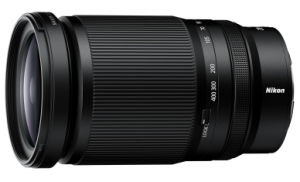
6)Nikon NIKKOR Z 28-400mm f/4-8 VR Mirrorless Lens
Check Price in Amazon
The Nikon NIKKOR Z 28-400mm f/4-8 VR is a highly versatile superzoom lens for bird photography and wildlife enthusiasts. Covering a broad focal range from 28mm to 400mm, it offers a 14.2x zoom, allowing you to capture wide landscapes, mid-range scenes, and distant birds without changing lenses. This flexibility makes it an excellent choice for travel and fieldwork.
Close-up shooting is easy with a minimum focus distance of 0.2 meters at the wide-angle end. Combined with a maximum reproduction ratio of 0.35x at 28mm, this lens lets you get closer to your subjects for more dynamic and detailed compositions. Whether capturing a bird perched nearby or a small scene in the environment, the lens provides impressive versatility.
The lens is lightweight and compact, weighing approximately 1.6 lbs (725 g) with a total length of 5.57 inches (141.5 mm). Its portability makes handheld shooting comfortable, even during long sessions in the field. This is particularly valuable for bird photographers who need to move quickly or track active wildlife.
Vibration Reduction (VR) ensures stable images even in low light or while shooting handheld. VR provides up to a 5-stop improvement in shutter speed, and when paired with compatible cameras, Synchro VR can achieve up to 5.5 stops by combining in-camera and in-lens stabilization. This keeps your bird and wildlife shots sharp, even in challenging lighting conditions.
The lens also supports linear manual focus (MF) drive, which allows for smooth and precise adjustments. This feature is useful for video shooting or when fine-tuning focus on fast-moving or unpredictable wildlife.
Pros
- Broad 28–400mm focal range with 14.2x zoom
- Close-focus capability with 0.2 m minimum distance and 0.35x reproduction ratio
- Lightweight and compact for easy handheld shooting
- VR provides up to 5.5 stops of stabilization with Synchro VR
- Linear MF drive allows smooth manual focusing for video
- Versatile for wide landscapes, medium-range subjects, and distant birds
Cons
- Variable maximum aperture f/4–8 may limit low-light performance at telephoto end
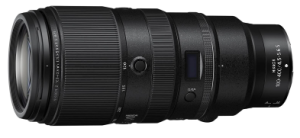
7)Nikon NIKKOR Z 100-400mm VR S
Check Price in Amazon
The Nikon NIKKOR Z 100-400mm f/4.5-5.6 VR S is a versatile telephoto zoom lens designed for bird photographers and wildlife enthusiasts. Its 100–400mm range on FX-format Z cameras (150–600mm equivalent on DX-format cameras) provides a powerful reach that is ideal for capturing both nearby and distant subjects. This lens combines flexibility, precision, and portability, making it suitable for a wide range of wildlife photography scenarios.
Vibration Reduction (VR) helps keep images sharp even when shooting handheld. On full-frame Z cameras like the Z 5, Z 6, Z 6II, Z 7, or Z 7II, it provides up to 5.5 stops of stabilization with 5-axis correction. On DX-format cameras like the Z 50 or Z fc, it offers 2-axis optical VR. This ensures sharp results in low light and when tracking fast-moving birds.
Autofocus is powered by two high-speed STM stepping motors that work in sync to provide precise and silent focusing. This allows for edge-to-edge sharpness, smooth close focusing, and minimal focus breathing or color bleeding. These features make it easier to capture birds in motion or skittish wildlife without disturbing the scene.
The lens is also compatible with Nikon Z teleconverters. Using the 1.4x or 2.0x teleconverter extends the reach to 560mm or 800mm respectively, with minimal impact on weight, length, or autofocus performance. This allows photographers to capture distant birds without sacrificing image quality or usability.
Pros
- 100–400mm zoom range (FX) with 150–600mm equivalent on DX
- VR provides up to 5.5 stops of stabilization on full-frame cameras
- Two STM motors for fast, precise, and silent autofocus
- Compatible with Z teleconverters for extended reach up to 800mm
- Maintains edge-to-edge sharpness and minimal focus breathing
- Lightweight and portable for handheld shooting
Cons
- Maximum aperture of f/4.5–5.6 may limit low-light performance
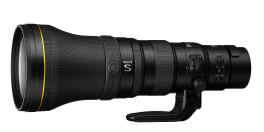
8) Nikon NIKKOR Z 800mm f/6.3 VR S
Check Price in Amazon
The Nikon NIKKOR Z 800mm f/6.3 VR S is a super-telephoto lens designed for bird photographers and wildlife enthusiasts who need extreme reach without compromising portability. Its 800mm focal length captures distant subjects with remarkable detail, making it ideal for birds in flight or elusive wildlife in their natural environment.
Vibration Reduction (VR) provides up to 5 stops of stabilization. When paired with the Nikon Z 9, Synchro VR combines in-lens and in-camera VR for up to 5.5 stops, delivering maximum stability for handheld shooting. This ensures sharper images even in challenging light or when tracking moving birds.
The lens is compatible with Nikon Z teleconverters TC-1.4x and TC-2.0x, extending the reach to 1120mm or 1600mm without losing focus points or image quality. This allows photographers to capture distant subjects without carrying additional accessories or compromising performance.
Despite its extreme focal length, the lens is lightweight and compact for an 800mm super-telephoto. Weighing only 5.25 pounds and measuring just over 15 inches, it is Nikon’s most mobile 800mm lens to date. Nikon’s Phase Fresnel element reduces size and weight while maintaining excellent optical quality. The center of gravity is positioned closer to the camera, allowing smooth and accurate panning on monopods or even handheld.
Ergonomics are designed for efficiency in the field. The lens includes two customizable Fn buttons, a Memory Set button for focus position, a control ring, manual focus ring, and a focus limit switch. All controls are easily accessible without taking your eye away from the viewfinder, enabling intuitive operation during fast-paced bird photography.
Pros
- 800mm focal length with teleconverter reach up to 1600mm
- VR provides up to 5.5 stops of stabilization with Synchro VR
- Lightweight and compact for an 800mm super-telephoto
- Phase Fresnel element maintains image quality with fewer elements
- Ergonomic controls including Fn buttons, Memory Set, and focus rings
- Balanced design for smooth panning on monopods or handheld
Cons
- Maximum aperture of f/6.3 limits low-light performance
You may also like to read : 9 Best Lenses for Nikon D850
Advantages of Nikon Lenses for Bird Photography
1. Exceptional Reach for Distant Subjects
Birds are often small, fast, and elusive, making it difficult to capture them up close. Nikon’s telephoto and super-telephoto lenses, such as the 800mm f/5.6E, 400mm f/4.5 VR S, and 100-400mm f/4.5-5.6 VR S, allow photographers to frame distant birds clearly without disturbing their natural behavior. The ability to extend reach further with teleconverters adds versatility, letting photographers fill the frame with distant subjects while maintaining sharpness and detail.
2. Advanced Vibration Reduction for Sharper Images
Bird photography often requires shooting handheld, tracking birds in motion, or capturing images in low-light conditions. Nikon lenses feature advanced Vibration Reduction (VR) systems, offering up to 6 stops of stabilization in some models. VR minimizes camera shake and motion blur, enabling photographers to produce crisp, detailed images even when shooting at slow shutter speeds or during fast panning to follow flying birds.
3. Fast and Precise Autofocus
Birds move quickly and unpredictably, so capturing them requires a lens with responsive autofocus. Nikon lenses employ high-speed STM stepping motors or advanced AF systems that deliver near-silent, precise focus. This allows photographers to lock onto small subjects in motion without lag or focus hunting. The smooth autofocus also benefits video shooting, ensuring clear, fluid tracking of birds in flight.
4. High Image Quality and Bokeh
Nikon birding lenses are engineered with high-quality optics, including ED glass elements and Phase Fresnel elements, to reduce chromatic aberration and enhance sharpness. Many lenses, such as the Z 400mm f/4.5 VR S, are optimized to produce smooth bokeh, isolating the subject from the background. This makes birds stand out, creating professional-looking images with natural background compression and pleasing aesthetic quality.
5. Versatility and Adaptability
Many Nikon lenses offer flexibility for a wide range of bird photography situations. Zoom lenses like the 28-400mm f/4-8 VR or the 180-600mm f/5.6-6.3 VR cover broad focal ranges, allowing you to photograph birds at varying distances without changing lenses. Compatibility with teleconverters extends focal length while maintaining autofocus and image quality. Lightweight and compact designs, such as the Z 800mm f/6.3 VR S, make long field sessions more comfortable, whether handheld or on a monopod.
6. Professional Handling and Ergonomics
Bird photography often involves long periods of shooting in the field. Nikon lenses are designed with ergonomic controls, balanced construction, and customizable buttons. Features like Memory Set, focus limit switches, and accessible control rings make operation smooth and efficient. Balanced design, particularly in super-telephoto lenses, allows fluid panning and reduces fatigue, helping photographers track fast-moving birds with accuracy over long sessions.
Factors to Consider When Choosing the Best Nikon Lenses for Bird Photography
Focal Length and Reach
Focal length is one of the most critical factors for bird photography. Birds are often small and distant, so lenses with longer focal lengths allow you to fill the frame without disturbing the subject. Consider the distance you plan to shoot from, the size of the birds, and whether you may need extra reach through teleconverters. Longer focal lengths provide tighter framing and better background compression, but they can also make the lens heavier and more challenging to handle for extended periods.
Aperture and Low-Light Performance
A lens’s maximum aperture affects how much light enters the camera, which is essential for shooting in varying light conditions. Wider apertures allow faster shutter speeds, reducing motion blur when capturing flying or fast-moving birds. They also create shallow depth of field for pleasing background separation and bokeh. Lenses with smaller maximum apertures may be lighter and more affordable, but they require more light or higher ISO settings to achieve the same shutter speeds.
Vibration Reduction (VR) and Stabilization
Bird photography often involves handheld shooting or tracking subjects in motion, making stabilization crucial. Built-in Vibration Reduction reduces camera shake, allowing you to use slower shutter speeds without introducing blur. This is especially important when shooting in low-light conditions, using long focal lengths, or panning to follow birds in flight. Lenses with advanced VR systems can significantly improve sharpness and ease of handheld operation.
Autofocus Speed and Accuracy
Fast and accurate autofocus is essential for capturing quick, unpredictable movements. The lens should be able to lock focus quickly and track moving subjects smoothly. Lenses with quiet and precise motors are also beneficial when photographing skittish wildlife or shooting video. Autofocus performance ensures you can capture sharp images consistently, even when birds change direction or move rapidly.
Close-Focusing Capability
While reach is important, the ability to focus at closer distances adds versatility. Close-focusing capability allows photographers to capture detailed shots of birds that are nearby, as well as small behaviors like feeding or preening. A good reproduction ratio also enhances macro-style compositions, making it possible to get more dynamic shots without needing additional extension equipment.
Weight and Portability
Bird photography often requires long periods of carrying or holding a lens, sometimes while hiking or moving through natural habitats. A lighter lens reduces fatigue and makes handheld shooting more practical. Compact designs improve maneuverability, allow for smoother panning, and make the lens easier to handle in fast-paced situations, even when using monopods or gimbals.
Lens Versatility and Zoom Range
A versatile lens with a broad zoom range can adapt to various situations, from photographing nearby perching birds to distant flying birds. Zoom lenses provide flexibility without the need to carry multiple lenses, while prime lenses often offer superior sharpness and wider apertures. Consider how adaptable the lens is to different types of bird photography and whether it can handle both wide and telephoto scenarios effectively.
Ergonomics and Handling Features
Ergonomics are vital for comfortable and efficient shooting in the field. Features like balanced weight distribution, customizable function buttons, memory focus settings, and well-positioned control rings help photographers maintain focus on their subjects without adjusting their grip repeatedly. Smooth panning, accessible controls, and comfortable handling can make a significant difference during extended sessions, especially when tracking birds in flight or in dense habitats.
FAQs
1. What focal length is ideal for bird photography?
The ideal focal length depends on how far you usually are from the birds. Telephoto and super-telephoto lenses are typically preferred because birds are often small and distant. Lenses in the 400mm to 800mm range allow you to capture detailed images without disturbing the subject. Zoom lenses with extended ranges also provide flexibility, letting you photograph both nearby and faraway birds with a single lens.
2. How important is Vibration Reduction (VR) in bird photography lenses?
Vibration Reduction is highly important for capturing sharp images, especially when using long focal lengths or shooting handheld. VR compensates for camera shake and allows slower shutter speeds without blur, which is useful in low-light conditions or when panning to track flying birds. Lenses with advanced VR systems, or ones that can combine in-lens and in-camera stabilization, offer even better results.
3. Can I use teleconverters with Nikon bird photography lenses?
Yes, many Nikon telephoto lenses are compatible with Z-series teleconverters, which extend focal length and increase reach without significant loss of image quality or autofocus performance. For example, using a 1.4x or 2.0x teleconverter can allow you to photograph birds at extreme distances while keeping the lens lightweight and manageable. Teleconverters are especially helpful for shy or distant wildlife.
Conclusion
The Best Nikon F Mount Lenses offer an exceptional combination of image quality, reliability, and versatility, making them ideal for photographers of all levels. Their sharp optics, fast and accurate autofocus, and advanced features like vibration reduction allow you to capture stunning photos in a variety of situations, from landscapes and portraits to wildlife and sports. Whether you prioritize reach, low-light performance, or compact design, these lenses provide consistent results while remaining compatible with Nikon’s extensive range of F-mount cameras. Overall, Nikon F Mount lenses stand out for their durability, performance, and ability to help photographers achieve professional-quality images with ease.