When it comes to the best high powered binoculars for astronomy, I have explored a range of models that deliver bright, sharp, and detailed views of the night sky. These binoculars are great for both beginners and experienced stargazers because they combine high magnification, large objective lenses, and durable construction, making celestial observation more immersive and enjoyable.
In this guide, I will walk you through their key features, highlight the top picks, provide a detailed buying guide, and answer common questions, helping you choose the ideal binoculars for your astronomy adventures.
See summary of the best high powered binoculars for astronomy:
- Fujinon LB150 15x80mm: Best overall
- Celestron SkyMaster Pro 20x80mm Porro Prism Binoculars: Best long-range
- Nikon AstroLuxe XL 18x70mm Porro Prism Binoculars: Best premium option
- Celestron Skymaster 15×70: Best value
- Barska Encounter Jumbo 20-40x100mm Porro Prism Binoculars: Best for extreme magnification
- Celestron Cometron 7×50 Astronomy Binoculars: Best beginner option
- Vortex Optics Razor UHD 18×56 Binoculars: Best high-definition optics
7 Best High Powered Binoculars For Astronomy
1) Fujinon LB150 15x80mm
Check Price in Amazon
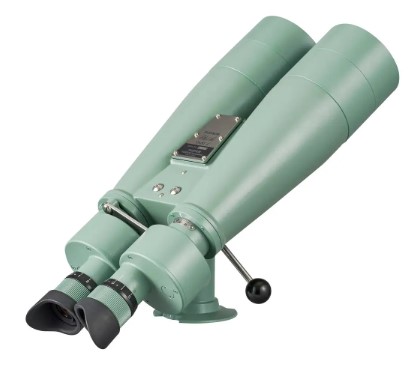
The Fujinon LB150 15x80mm MT binoculars are designed for observers who need serious reach and dependable optical clarity. Built for marine duty as well as night sky viewing, this model combines rugged construction with large 80 mm objective lenses that gather substantial light. The result is a bright, detailed image that remains usable at dusk, dawn, or under dark astronomical conditions. Weather resistant sealing and military oriented durability make the binoculars suitable for long sessions outdoors or permanent mounting on a vessel or observation platform.
Optically, the 15x fixed magnification provides strong enlargement for viewing lunar features, star clusters, and distant terrestrial subjects. The Porro prism design supports depth perception and contrast, while Fujinon’s electron beam coating across all optical surfaces helps reduce reflections and improve image sharpness. A 5.3 mm exit pupil contributes to comfortable viewing in low light, and the 4 degree angular field of view offers a balanced combination of magnification and sky coverage. These traits make the binoculars particularly effective for sweeping the Milky Way or tracking bright deep sky objects.
User adjustment is handled through individual eyepiece focusing rather than a central focus wheel. This approach is common in marine and astronomy optics because it maintains focus stability once set. A diopter adjustment range from negative to positive values allows observers to match the optics to their eyesight, while adjustable interpupillary distance ensures proper alignment for different users. Angled eyecups help block stray light, improving contrast during nighttime observation or when viewing across reflective water surfaces.
Physically, the binoculars are large and heavy, measuring over half a meter in length and weighing around seven kilograms. This size reflects their ship mount ready design and large glass elements. While not intended for handheld use over long periods, the sturdy build supports stable mounted observation, which is where high powered astronomy binoculars perform best. Included protective storage adds convenience for transport and long term care.
Pros
- Bright low light performance from 80 mm objective lenses
- Strong 15x magnification suited for astronomy and long distance viewing
- High quality multicoated optics that improve contrast and clarity
- Durable weather resistant construction for marine or outdoor environments
- Individual eyepiece focus that holds settings securely once adjusted
Cons
-
Very heavy and requires a stable mount for comfortable use
2) Celestron SkyMaster Pro 20x80mm Porro Prism Binoculars
Check Price in Amazon
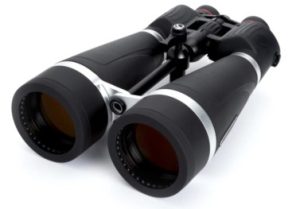
The Celestron SkyMaster Pro 20x80mm Porro Prism binoculars are built for observers who want powerful reach and bright astronomical views without stepping into telescope level complexity. Designed with amateur astronomy and long range terrestrial observation in mind, this model combines large 80 mm objective lenses with strong 20x magnification to reveal lunar detail, star clusters, and distant landscape features. The rugged housing blends polycarbonate and aluminum materials to keep weight manageable while maintaining durability for outdoor use, and the protective rubber armor supports confident handling during extended observing sessions.
Optical performance is a major strength of this binocular. Fully multi coated air to glass surfaces use proprietary XLT coating technology to improve light transmission and image contrast. Combined with BaK 4 Porro prisms, the system delivers crisp detail and strong brightness across the field of view. A 4 mm exit pupil and a twilight factor of 40 help maintain clarity in dim conditions, making the binocular effective for both night sky viewing and low light terrestrial observation. The 3.2 degree angular field of view balances sky coverage with the higher magnification needed to isolate deep sky objects.
Usability features further support astronomical viewing. A built in tripod adapter allows secure mounting for steady observation, which is essential at 20x power. The sliding balance rail improves stability, and the removable rail supports attachment of a red dot finder for faster object location once aligned. Center focus adjustment enables smoother focusing compared with individual eyepiece systems, while adjustable interpupillary distance and comfortable eye relief help accommodate different users. Nitrogen filling, fog resistance, and waterproof construction ensure reliable performance in changing weather conditions.
Physically, the binocular remains relatively portable for its class at just over five pounds, making it lighter than many large aperture astronomy binoculars while still substantial enough to feel stable on a tripod. Included accessories such as lens caps, rainguard, cleaning cloth, neck strap, and carrying case add convenience for storage and transport. These qualities make the SkyMaster Pro from Celestron a practical choice for observers seeking strong magnification, durable construction, and bright wide aperture performance in a dedicated astronomy binocular.
Pros
- Powerful 20x magnification suitable for lunar and deep sky observation
- Large 80 mm objective lenses that gather significant light
- Fully multi coated optics with BaK 4 prisms for sharp contrast and clarity
- Built in tripod adapter and reflex sight rail for stable and accurate viewing
- Waterproof and fog resistant construction for outdoor reliability
- Lighter weight than many binoculars in the same aperture class
Cons
-
Requires tripod support for steady viewing at high magnification
3) Nikon AstroLuxe XL 18x70mm Porro Prism Binoculars
Check Price in Amazon
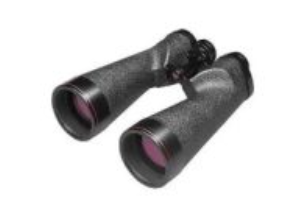
The Nikon AstroLuxe XL 18x70mm Porro Prism binoculars are crafted for serious astronomical observers who want refined optical performance in a dedicated high powered design. With 18x magnification and 70 mm objective lenses, this model delivers detailed views of the Moon, bright nebulae, and dense star fields while maintaining a manageable size compared with larger aperture binoculars. The solid all metal construction and waterproof sealing reflect a focus on durability, allowing the binoculars to perform reliably during extended outdoor observation sessions.
Optically, the system emphasizes clarity and precision. Fully multicoated lenses improve light transmission and contrast, while extra low dispersion glass helps control color fringing around bright celestial objects. Coma corrected optics maintain sharpness across the viewing field, which is especially valuable when scanning wide star clusters or the Milky Way. BaK 4 high index prisms further enhance brightness and resolution, and the 3.9 mm exit pupil supports comfortable viewing in low light night sky conditions.
User comfort and control are also carefully considered. Individual eye focus allows precise adjustment for each eye, helping maintain sharp focus during long observing periods. Turn and slide eyecups and generous eye relief support relaxed viewing, and the binoculars remain tripod adaptable for stable high magnification observation. Nitrogen filling with full waterproof and fogproof protection ensures consistent performance in changing temperatures or humid environments. These design choices reflect the optical engineering associated with Nikon and its long standing reputation in precision sport optics.
Despite strong optical capability, the binoculars remain relatively compact for their class, weighing just under eight pounds. This balance between portability and performance makes them suitable for travel to dark sky locations while still delivering the resolution expected from premium astronomy binoculars. The close focus distance also allows occasional terrestrial use, adding versatility beyond nighttime observation.
Pros
- High resolution optics with extra low dispersion glass for improved color control
- Fully multicoated lenses and BaK 4 prisms that enhance brightness and contrast
- Coma corrected field that maintains edge sharpness during wide sky scanning
- Durable all metal waterproof and fogproof construction
- Tripod adaptable design for steady high magnification viewing
- Manageable size compared with larger astronomy binoculars
Cons
-
Individual eye focus is slower to adjust for changing viewing distances
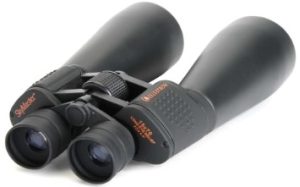
4) Celestron SkyMaster 15×70 Zoom Binoculars
Check Price in Amazon
The Celestron SkyMaster 15×70 binoculars are a popular choice for astronomy enthusiasts who want strong magnification, bright light gathering, and accessible pricing in one package. Built around large 70 mm objective lenses and adjustable zoom ranging from 15x to 35x, these binoculars provide flexibility for scanning wide star fields or zooming in on the Moon and brighter deep sky objects. Their design supports both nighttime observation and long distance terrestrial viewing, making them a versatile option for beginners and casual observers.
Optical performance focuses on brightness and clarity in dim conditions. BaK 4 prisms improve light transmission so celestial objects appear more detailed and easier to distinguish against the night sky. This makes the binoculars especially useful during dawn, dusk, or fully dark observing sessions. The large aperture also contributes to a more immersive viewing experience when exploring constellations or sweeping along the Milky Way.
Practical usability is another strength. Because of their size and magnification range, the binoculars are designed to pair easily with a standard photo tripod using the included adapter. Tripod mounting stabilizes the image and reduces hand fatigue during extended viewing. A rubber armored exterior improves grip and protects the housing from minor impacts, while water resistant construction allows observation in light rain or damp outdoor environments. These qualities reflect the long standing optics heritage of Celestron and its focus on accessible astronomy equipment.
The SkyMaster 15×70 balances capability with approachability. While not as specialized as premium astronomy binoculars, it offers meaningful magnification, solid brightness, and dependable durability for those beginning their journey into night sky observation or seeking an affordable upgrade from smaller handheld models.
Pros
- Adjustable zoom from 15x to 35x for flexible viewing
- Large 70 mm objective lenses that gather substantial light
- BaK 4 prisms that improve brightness and image detail
- Tripod adapter included for stable long duration observation
- Rubber armored and water resistant construction for outdoor use
- Strong warranty and customer support coverage
Cons
-
Image shake occurs without tripod support at higher magnification
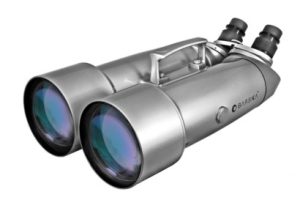
5) Barska Encounter Jumbo 20-40x100mm Porro Prism Binoculars
Check Price in Amazon
The Barska Encounter Jumbo 20 to 40x100mm Porro Prism binoculars are designed for observers who want maximum light gathering and flexible magnification for astronomy and long distance viewing. With massive 100 mm objective lenses and interchangeable 20x and 40x eyepieces, these binoculars provide the ability to scan wide celestial regions or move in closer to brighter deep sky objects and lunar detail. The large aperture supports bright, highly corrected images that remain visible even under challenging night sky conditions.
Optical construction emphasizes brightness and correction. Multi coated lenses work with BaK 4 Porro prisms to improve light transmission and contrast, while the semi apochromatic objective design helps control color fringing around bright stars and planets. Exit pupil values of 5 mm at 20x and 2.5 mm at 40x allow observers to balance brightness with higher magnification depending on the target. Field of view narrows as magnification increases, which is typical for powerful astronomy binoculars but still provides meaningful sky coverage for object tracking and scanning.
Build quality reflects the jumbo class design. An all metal waterproof body with nitrogen filling and fogproof sealing protects the optics in outdoor environments, and extendable sunshades help reduce glare during daytime use. Individual eyepiece focusing enables precise adjustment for each eye and maintains stable focus once set. Because of the substantial size and weight, tripod mounting is essential for steady viewing, and the included hard carrying case supports safe storage and transport. These characteristics position the model as a heavy duty observing instrument within the lineup from Barska.
The Encounter Jumbo binoculars are best suited for dedicated observation setups rather than casual handheld use. Their combination of very large objectives, interchangeable magnification, and rugged construction makes them appealing to astronomy enthusiasts who prioritize brightness and reach over portability.
Pros
- Very large 100 mm objective lenses for strong light gathering
- Interchangeable 20x and 40x eyepieces for flexible magnification
- Multi coated optics with BaK 4 prisms that enhance contrast and clarity
- Waterproof metal construction with fogproof protection
- Extendable sunshades and tripod adaptability for stable observation
- Hard carrying case included for storage and transport
Cons
-
Extremely heavy and requires a sturdy tripod for use
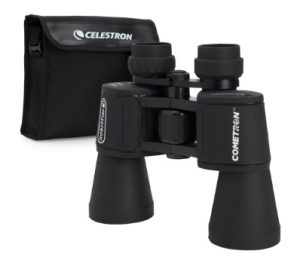
6) Celestron – Cometron 7×50 Astronomy Binoculars
Check Price in Amazon
The Celestron Cometron 7×50 astronomy binoculars are an excellent entry point for beginners looking to explore the night sky. With 7x magnification and 50 mm objective lenses, they provide a wide field of view that makes it easy to scan constellations, track comets, or observe large star clusters. The design focuses on usability and affordability, allowing new observers to start learning the night sky without investing in heavier or more complex equipment.
Optical performance is well suited for both daytime and nighttime use. Multi coated optics improve light transmission, resulting in brighter images with better contrast and resolution. The large objective lenses gather more light than typical compact binoculars, making dimmer stars and celestial objects easier to see. A wide 6.8 degree apparent angle of view ensures that sweeping across the Milky Way or tracking moving objects remains comfortable and intuitive.
Practical features further enhance the experience. The binoculars are built from durable aluminum and include a built-in tripod adapter socket, allowing users to mount them on a standard tripod for extended shake-free observation. The close focus distance of just over 26 feet adds versatility, making these binoculars useful for birdwatching, hiking, or scenic observation during the day. This combination of lightweight design, durability, and flexible use reflects the reliable quality of Celestron optics.
Overall, the Cometron 7×50 binoculars are ideal for newcomers who want to explore astronomy without complexity. They are easy to handle, provide bright and clear views of the night sky, and include features that support both casual and more dedicated observation sessions.
Pros
- Wide 6.8 degree field of view perfect for scanning constellations and large celestial objects
- 50 mm objective lenses with multi coated optics provide bright, detailed images
- Lightweight and easy to handle for beginners
- Close focus allows daytime terrestrial use
- Tripod adaptable for stable extended viewing
- Durable aluminum housing and reliable warranty
Cons
-
Limited 7x magnification may not show fine lunar or planetary detail
7) Vortex Optics Razor UHD 18×56 Binoculars

Check Price in Amazon
The Vortex Optics Razor UHD 18×56 binoculars deliver exceptional performance for serious astronomy enthusiasts seeking high magnification combined with clarity and brightness. With 18x magnification and 56 mm objective lenses, these binoculars allow detailed observation of lunar features, star clusters, and bright deep sky objects. The Abbe-Koenig prism design ensures superior optical quality, providing high resolution, sharpness, and accurate color across the entire visual spectrum. Ultra-low light performance makes them suitable for dawn, dusk, and night sky observation.
Optical engineering focuses on maximizing clarity and minimizing distortion. Index-matched lenses correct color across the visual field, while ultimate anti-reflective coatings on all air-to-glass surfaces optimize light transmission. The 56 mm objective lenses combined with a wide exit pupil deliver bright images even in low light conditions. The smooth center focus wheel allows rapid adjustments, while the right-eye diopter ensures precise individual eye correction. Twist-up eyecups provide comfortable viewing and customizable eye relief for extended observing sessions.
Build quality and ergonomics are designed for long-term use. The magnesium chassis reduces weight without sacrificing strength, and the open hinge design offers a comfortable grip. Durable rubber armor adds a secure hold and protection from impacts. Argon purging and O-ring seals make the binoculars waterproof and fogproof, while ultra-hard scratch-resistant coatings keep lenses clear from dirt, oil, and accidental scratches. Tripod compatibility allows steady observation during high magnification sessions. The package includes a GlassPak Pro harness and rangefinder pouch for secure carrying and easy access.
Vortex backs these binoculars with a fully transferable, lifetime VIP warranty, reflecting the confidence in durability and performance. The Razor UHD 18×56 is ideal for observers who prioritize clarity, brightness, and ergonomic handling in a premium astronomy binocular.
Pros
- 18x magnification with 56 mm objectives provides detailed night sky observation
- Abbe-Koenig prism design and index-matched lenses for high resolution and accurate color
- Ultimate anti-reflective coatings maximize light transmission and low-light performance
- Magnesium chassis and open hinge design reduce weight and improve ergonomics
- Waterproof, fogproof, and scratch-resistant for long-term durability
- Smooth center focus and diopter adjustment for precise viewing
- Tripod compatible for stable high magnification observation
Cons
-
High magnification can amplify hand shake without tripod support
Factors to Consider When Choosing The Best High Powered Binoculars For Astronomy
Magnification and Objective Lens Size
High powered binoculars for astronomy rely on a combination of magnification and objective lens diameter to deliver clear, bright images of celestial objects. Higher magnification allows for detailed views of the Moon, planets, and deep sky objects, while larger objective lenses gather more light, improving visibility in low-light conditions. Choosing the right balance between magnification and lens size ensures sharp images without excessive image shake or reduced brightness.
Prism Type and Optical Design
The prism system in binoculars plays a critical role in image quality. Porro prisms are often preferred for astronomy because they provide better depth perception and wider fields of view, while roof prisms offer a more compact design. The choice of prism and overall optical configuration affects color accuracy, sharpness, and the binocular’s ability to maintain detail across the visual field.
Lens Coatings and Light Transmission
Optical coatings enhance the performance of binoculars by increasing light transmission, reducing reflections, and improving contrast. Fully multi-coated lenses are ideal for astronomy because they deliver brighter, more detailed images, especially in low-light environments. Coatings also help reduce glare from bright objects, contributing to clearer observation of both celestial and terrestrial scenes.
Exit Pupil and Eye Relief
The exit pupil determines how much light reaches the eyes and affects image brightness, particularly in dim conditions. A larger exit pupil allows for more comfortable viewing over longer periods. Eye relief is equally important, especially for users who wear glasses, as it dictates the distance the eyes can be from the eyepieces while still seeing the full field of view. Proper exit pupil and eye relief values make long observing sessions more comfortable.
Focusing Mechanism
The focusing system affects ease of use and precision during observation. Individual eyepiece focus provides fine adjustment for each eye and is often preferred for high magnification astronomy binoculars, while center focus wheels allow faster adjustment for different targets. A smooth, responsive focus mechanism ensures that celestial objects remain sharp and clear throughout viewing sessions.
Build Quality and Durability
Astronomy binoculars are often used outdoors in varying weather conditions. Durable construction with waterproof, fogproof, and rugged housing materials protects internal optics and extends the lifespan of the binoculars. Rubber armor and metal or magnesium chassis offer additional protection against accidental drops or rough handling while providing a secure grip for comfortable observation.
Portability and Weight
Large binoculars can be heavy, making portability an important consideration. While bigger optics gather more light and offer higher magnification, they often require tripod support for steady viewing. A balance between weight, size, and portability ensures the binoculars can be transported to dark sky locations without excessive effort while still providing excellent optical performance.
Tripod Compatibility and Accessories
Tripod adaptability enhances the stability of high magnification binoculars, preventing image shake and improving viewing comfort. Additional accessories such as lens caps, carrying cases, and harnesses contribute to convenience and protection. Compatibility with tripods or mounts is essential for prolonged astronomy sessions, ensuring clear, stable observation of distant celestial objects.
Best High Powered Binoculars For Astronomy FAQs
What Magnification and Objective Lens Size Should I Choose for Astronomy?
For astronomy, it is important to select a combination that provides sufficient detail without making the image too dim or shaky. Moderate to high magnification paired with large objective lenses works well for observing the Moon, planets, and star clusters, while still remaining manageable in size and weight.
Why Are Lens Coatings Important for Night Sky Viewing?
Lens coatings increase light transmission, improve contrast, and reduce glare from bright celestial objects. Fully multi-coated optics are especially valuable for low-light conditions, enhancing the visibility of stars, nebulae, and galaxies.
Do I Need a Tripod for High Powered Binoculars?
Yes, high magnification binoculars often amplify hand shake, making a tripod necessary for steady observation. Tripod compatibility ensures stable viewing and allows longer, more comfortable observing sessions, particularly at high powers.
How Does Exit Pupil and Eye Relief Affect Viewing?
A larger exit pupil allows more light to reach the eyes, producing brighter images in low-light conditions. Proper eye relief ensures that users, including those who wear glasses, can see the full field of view comfortably without straining or losing clarity.
Conclusion
High powered binoculars for astronomy offer a versatile and accessible way to explore the night sky. With large objective lenses, high magnification, and advanced optical coatings, they provide bright, detailed views of celestial objects while maintaining portability and durability.
Rugged construction, tripod compatibility, and ergonomic designs make these binoculars suitable for long observing sessions in a variety of outdoor conditions.
They combine optical precision, comfort, and stability, giving astronomy enthusiasts of all levels a powerful tool to discover and enjoy the universe.
See Also: