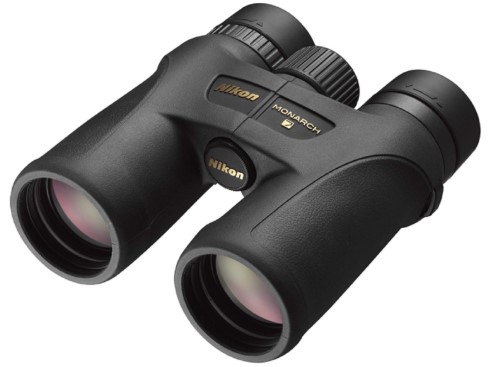
Have you ever wondered why some binoculars consistently rank at the top across expert reviews? The answer usually comes down to a refined balance of optical precision, build quality, and real-world usability. The best-rated binoculars for bird watching combine high-quality glass, advanced coatings, and thoughtful ergonomics that make long viewing sessions comfortable and rewarding. Whether you are tracking fast-moving birds or observing fine feather details, these models are designed to deliver clarity, brightness, and reliability in a wide range of environments.
See summary of the best-rated binoculars for bird watching:
- Nikon Monarch 7 8×42: best overall
- GPO Passion ED 8×42: best performance for the price
- Swarovski NL Pure 8×42: best premium option
- Vortex UHD 8×42: best for low light birding
- Celestron Nature DX 8×42: best budget option
- Nikon Prostaff P3 8×42: best for beginners
- Tasco Essentials 8×42: best ultra budget choice
- Vortex Diamondback HD 10×42: best mid range value
- Leica Noctivid 10×42: best for optical clarity
- Fujifilm Techno Stabi 16×40: best long range and stabilization
10 Best-Rated Binoculars For Bird Watching
1) Nikon Monarch 7 8×42
Check Price in Amazon
The Nikon Monarch 7 8×42 is widely regarded as one of the best compact binoculars for bird watching, offering a balance of portability and high-level optical performance. Its 8x magnification paired with 42mm objective lenses provides a bright and stable image, making it especially effective for tracking birds in motion or observing fine plumage details from a distance. The binoculars also deliver an impressively wide field of view, which helps birders quickly locate and follow subjects through dense foliage or open skies.
Image quality is a major strength of this model. The inclusion of extra-low dispersion glass minimizes chromatic aberration, resulting in sharper images with accurate, natural colors. Multilayer coatings on the lenses and prisms enhance light transmission, ensuring bright visuals even in low-light conditions such as early morning or late evening birding sessions. Many users note that the image remains crisp across the entire field, allowing for a more immersive viewing experience.
In terms of design, these binoculars maintain a compact and lightweight profile, making them easy to carry during long birding trips. The rubber-armored body provides a secure grip and added durability, while the waterproof and fogproof construction ensures reliable performance in changing weather conditions. The long eye relief and adjustable eyecups also make them comfortable for extended use, even for those who wear glasses.
Handling and usability are equally well thought out. The central focus knob allows for smooth adjustments, helping users quickly lock onto moving birds. A close focus distance of around 8 feet makes it possible to observe nearby subjects in fine detail, which is useful for backyard birding or spotting smaller species at close range.
Pros
- Excellent image clarity with minimal color fringing
- Wide field of view makes tracking birds easier
- Bright and vivid colors in different lighting conditions
- Compact and lightweight for a full-size binocular
- Durable build with waterproof and fogproof protection
Cons
- Focus wheel can feel slightly stiff at times
2) GPO Passion ED 8×42
Check Price in Amazon
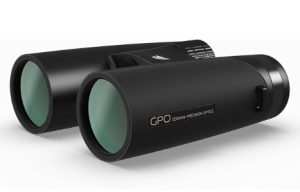
The GPO Passion ED 8×42 is widely considered one of the best rated binoculars for bird watching, combining strong optical performance with a price point that appeals to both intermediate and experienced birders. Its 8x magnification and 42mm objective lenses create a bright, steady image that works well across different environments, from open landscapes to dense woodland. The wide field of view makes it easier to locate and track fast-moving birds, which is a major advantage during active birding sessions.
Optically, this binocular delivers impressive clarity thanks to its extra-low dispersion glass, which reduces color fringing and improves overall sharpness. The fully multi-coated lenses and phase-corrected prisms enhance light transmission, allowing up to 90 percent of available light to pass through. This results in bright and vivid images even during low-light periods such as early mornings or dusk, when many bird species are most active.
Build quality is another strong point. The magnesium body keeps the binocular relatively lightweight while maintaining durability for outdoor use. It is nitrogen-filled and sealed to resist water and fog, making it reliable in changing weather conditions. Additional features such as hydrophobic lens coatings help repel water and dirt, ensuring a clearer view in less-than-ideal environments.
In practical use, the binocular feels well balanced in the hands and offers smooth focusing, allowing users to quickly adjust when shifting between near and distant subjects. The long eye relief also makes it comfortable for extended viewing sessions, including for those who wear glasses. Birding enthusiasts often describe the image as sharp across most of the field with natural color reproduction, contributing to a more immersive experience.
Pros
- Excellent brightness and clarity in various lighting conditions
- Wide field of view for tracking birds in motion
- Durable and weather-resistant construction
- Comfortable handling with smooth focus control
- Strong optical performance for the price
Cons
- Slight softness near the edges at extreme viewing areas
3) Swarovski NL Pure 8×42
Check Price in Amazon
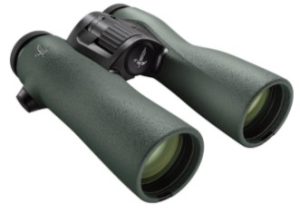
The Swarovski NL Pure 8×42 is widely recognized as one of the best rated binoculars for bird watching, delivering a level of optical performance that appeals to serious enthusiasts and professionals alike. With its 8x magnification and 42mm objective lenses, it provides a bright, stable image that makes it easy to observe birds in motion while preserving fine detail. What truly sets this model apart is its exceptionally wide field of view, allowing users to take in more of the surrounding environment and track birds with remarkable ease.
Image quality is where this binocular truly excels. Swarovski’s advanced lens system, often referred to as SWAROVISION technology, ensures sharpness across the entire image, including the edges. This creates a seamless viewing experience where there is no noticeable drop in clarity as your eyes move across the field. Color reproduction is highly accurate, and contrast remains strong even in challenging lighting conditions, making it ideal for early morning or late evening birding sessions.
The design is equally refined. The distinctive ergonomic shape allows the binocular to sit naturally in the hands, reducing fatigue during long periods of use. Despite its robust construction, it maintains a relatively compact profile for a full-size binocular. The build is both waterproof and fogproof, ensuring reliable performance in varying weather conditions. An optional forehead rest can be added to improve stability during extended viewing, which is particularly useful when observing distant or stationary birds.
In practical use, the viewing experience feels immersive. The combination of a wide field of view and edge-to-edge sharpness gives the impression of being closer to the subject without sacrificing clarity. Focusing is smooth and precise, allowing quick adjustments when shifting between near and distant subjects. Many experienced birders appreciate how effortlessly this binocular handles both open landscapes and dense habitats.
Pros
- Exceptional edge-to-edge sharpness
- Extremely wide field of view for immersive viewing
- Outstanding color accuracy and contrast
- Ergonomic design for comfortable long-term use
- Excellent performance in low-light conditions
Cons
- Very high price compared to most binoculars
4) Vortex UHD 8×42

Check Price in Amazon
The Vortex Razor UHD 8×42 stands among the best rated binoculars for bird watching, offering a premium viewing experience designed for serious enthusiasts. With its 8x magnification and 42mm objective lenses, it delivers a steady and bright image that works well across a wide range of birding environments. The wide field of view, measuring about 420 feet at 1000 yards, makes it easier to scan large areas and track fast-moving birds without losing sight of them.
Optical performance is a major strength of this model. The use of ultra high definition glass and apochromatic lens design helps reduce chromatic aberration and improves color accuracy. Images appear sharp, vibrant, and highly detailed, even when observing distant subjects. Advanced coatings such as XR Plus fully multi-coated optics enhance light transmission, resulting in bright and clear visuals in low-light conditions like early morning or late evening birding.
The build quality reflects its premium status. A magnesium chassis keeps the binocular durable while maintaining a manageable weight, and the rubber-armored exterior provides a secure grip during use. It is both waterproof and fogproof, thanks to argon purging and O-ring sealing, making it reliable in varying weather conditions. Protective coatings on the lenses help resist scratches, dirt, and moisture, which is especially useful for outdoor use.
In practical use, the binocular feels well balanced and comfortable, especially when paired with the included harness for extended sessions. The close focus distance of around 4.5 feet allows for detailed viewing of nearby birds, while the smooth central focus system makes it easier to adjust quickly between distances. The viewing experience is immersive, with strong central sharpness and excellent contrast, though slight softness may appear at the extreme edges.
Pros
- Exceptional clarity with minimal color fringing
- Bright and vivid image even in low light
- Wide field of view for tracking birds
- Durable construction with weather resistance
- High-quality coatings protect lenses and improve performance
Cons
- Heavier than many competing binoculars
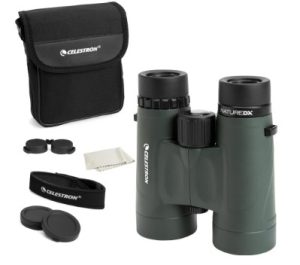
5) Celestron Nature DX 8×42
Check Price in Amazon
The Celestron Nature DX 8×42 is widely regarded as one of the best rated binoculars for bird watching, especially for those looking for strong performance without a high price. With its 8x magnification and 42mm objective lenses, it provides a balanced viewing experience that makes it easy to follow birds in motion while still capturing useful detail. The field of view is wide enough to help users quickly locate birds, whether in open spaces or dense vegetation, making it a practical choice for beginners and casual birders.
Optically, this model performs well for its class. It uses fully multi coated lenses and phase coated BaK 4 prisms to improve light transmission and enhance image clarity. This results in bright and reasonably sharp visuals in most daylight conditions, allowing users to distinguish colors and markings with confidence. While it does not match premium binoculars, it still offers enough detail to make bird identification enjoyable and accessible.
The design focuses on practicality and durability. The rubber armored polycarbonate body helps protect against everyday bumps while keeping the weight manageable for extended use. It is also waterproof and nitrogen filled, which prevents internal fogging and allows it to perform reliably in changing weather conditions. The twist up eyecups and generous eye relief make it comfortable for both eyeglass wearers and non eyeglass users during long birding sessions.
In real world use, the binocular offers smooth focusing and a close focus distance of about 6.5 feet, which is useful for observing nearby birds and small wildlife. Handling is generally comfortable, though some users may notice that the balance is slightly front heavy. Image quality remains strong in good lighting, though performance drops in very low light where finer details can become harder to see.
Pros
- Affordable price with strong overall value
- Good clarity and brightness for daytime birding
- Wide field of view for easier tracking
- Durable and weather resistant construction
- Comfortable for beginners and casual users
Cons
- Low light performance is limited compared to premium models
6) Nikon Prostaff P3 8×42

Check Price in Amazon
The Nikon Prostaff P3 8×42 is widely regarded as one of the best rated binoculars for bird watching, particularly for beginners and casual users who want dependable performance without stretching their budget. With its 8x magnification and 42mm objective lenses, it offers a steady and bright image that works well for tracking birds in motion. The wide field of view, measuring about 377 feet at 1000 yards, makes it easier to locate and follow birds across open areas or through dense vegetation.
Optical performance is solid for its category. The binocular uses multilayer-coated lenses and high-reflectivity prism coatings to improve light transmission, producing a bright and clear image in most lighting conditions. Colors appear natural, and detail is sharp enough for reliable bird identification. While it does not reach premium levels of clarity, it performs impressively well for its price range and is often noted for offering optics that compete with more expensive models.
The design focuses on comfort and usability. Its lightweight construction, around 20.3 ounces, makes it easy to carry for long birding sessions without fatigue. The rubber-armored body provides a secure grip and added durability, while the waterproof and fogproof construction ensures it can handle changing weather conditions. Long eye relief and adjustable eyecups make it comfortable for extended viewing, including for those who wear glasses.
In real-world use, the Prostaff P3 feels simple and reliable. The central focus system allows smooth adjustments, helping users quickly switch between near and distant subjects. With a close focus distance of about 9.8 feet, it is suitable for observing birds at moderate distances, though it is less effective for very close subjects. Many users appreciate its balance of performance and ease of use, making it a practical choice for everyday birding and outdoor activities.
Pros
- Lightweight and comfortable for extended use
- Bright and clear image for the price range
- Wide field of view helps track moving birds
- Durable and weather resistant construction
- Good choice for beginners and casual birders
Cons
- Not as sharp or bright as higher-end models
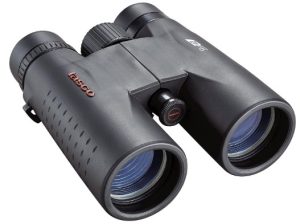
7) Tasco Essentials 8×42
Check Price in Amazon
The Tasco Essentials 8×42 is often considered one of the most accessible entry points into bird watching, especially for beginners looking for a simple and affordable option. With its 8x magnification and 42mm objective lenses, it provides a usable balance between image stability and brightness, making it suitable for general outdoor observation. The field of view is adequate for scanning open areas, though it is narrower than higher-end models, which can make tracking fast-moving birds slightly more challenging.
Optical performance is modest but functional for its price range. The fully coated optics help improve light transmission and contrast, producing a reasonably clear image in good lighting conditions. Colors are acceptable for basic identification, though fine details and sharpness are not as refined as in mid-range or premium binoculars. In bright daylight, the viewing experience is satisfactory, but image quality tends to drop in low-light situations where clarity and brightness become limited.
The design focuses on simplicity and ease of use. A lightweight plastic chassis keeps the binocular easy to carry, while the rubber armor provides a secure grip during handling. The large central focus wheel allows for quick adjustments, and the twist-up eyecups make it usable for both eyeglass and non-eyeglass wearers. While the build is practical for casual use, it is not as robust as more expensive models and may require careful handling over time.
In real-world use, the Tasco Essentials 8×42 performs best as a beginner tool. It allows new birders to explore the hobby without a significant investment and offers enough functionality to identify common bird species. However, limitations in sharpness, edge clarity, and durability become more noticeable with extended use or in demanding conditions. It is best suited for casual outings rather than intensive birding sessions.
Pros
- Affordable and accessible for beginners
- Lightweight and easy to carry
- Simple controls with smooth central focusing
- Decent clarity in good lighting conditions
- Comfortable to use with or without glasses
Cons
- Performance drops in low-light conditions
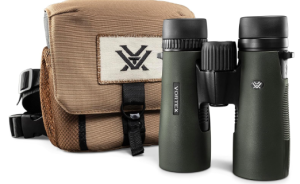
8) Vortex Diamondback HD 10×42
Check Price in Amazon
The Vortex Diamondback HD 10×42 is widely regarded as one of the best rated binoculars for bird watching in the mid-range category, offering a combination of solid optical performance and rugged durability. With its 10x magnification and 42mm objective lenses, it provides a closer view of distant birds, making it particularly useful for open landscapes and long-range observation. While the field of view is slightly narrower than 8x models, it still offers enough coverage for general birding and scanning large areas.
Optically, the binocular delivers clear and detailed images thanks to its HD optical system, which helps improve resolution and reduce chromatic aberration. Fully multi-coated lenses enhance light transmission, resulting in brighter images and better contrast in varying lighting conditions. Dielectric-coated prisms further improve color accuracy and overall image quality, allowing birders to distinguish subtle plumage details with greater ease.
The build quality is designed for outdoor use. A rubber-armored body provides a secure grip and protection against impacts, while the waterproof and fogproof construction ensures reliable performance in changing weather conditions. The addition of ArmorTek coating helps protect the lenses from scratches, dirt, and moisture, which is especially useful during field use. These features make it a dependable choice for birders who frequently explore rugged environments.
In practical use, the Diamondback HD 10×42 feels well balanced and comfortable, with a smooth central focus wheel that allows quick adjustments between distances. The close focus distance of around 5 feet adds versatility for observing nearby birds and wildlife. Image quality is generally sharp in the center with good contrast, though some softness and distortion can appear toward the edges of the field.
Pros
- Good clarity and contrast for the price
- Strong magnification for long-distance birding
- Durable and weather-resistant construction
- Comfortable grip with solid handling
- Reliable performance across different environments
Cons
- Narrower field of view compared to 8x models
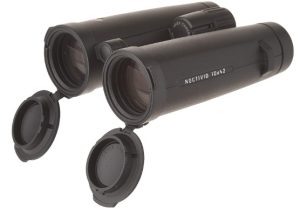
9) Leica Noctivid 10×42
Check Price in Amazon
The Leica Noctivid 10×42 is widely regarded as one of the best rated binoculars for bird watching, offering a premium viewing experience built for enthusiasts who demand exceptional image quality. With its 10x magnification and 42mm objective lenses, it brings distant birds into sharp focus while maintaining impressive detail and contrast. This makes it particularly effective for long-range observation in open habitats such as wetlands, grasslands, and coastal areas.
Optical performance is where this binocular truly excels. It uses high-quality glass and advanced prism coatings to deliver extremely sharp images with remarkable resolution. Color reproduction is highly accurate, and chromatic aberration is virtually absent, allowing birders to observe fine feather details without distracting color fringing. The clarity extends across most of the field, creating a clean and immersive viewing experience that rivals other top-tier models.
Brightness is also strong, providing clear and vivid images in a range of lighting conditions. While it performs well in low light, some competing premium models may transmit slightly more light. Even so, the Noctivid remains highly capable during early morning and late afternoon birding sessions, where consistent brightness and contrast are essential.
The build quality reflects Leica’s reputation for precision engineering. The binocular features a robust yet refined design that feels solid in the hands. It is fully waterproof and fogproof, ensuring reliable performance in changing weather conditions. The focusing system is smooth and precise, and the integrated diopter adjustment mechanism is cleverly built into the focus wheel, allowing for easy fine-tuning without disrupting use.
In practical use, the Noctivid offers a highly detailed and stable viewing experience, though it is slightly heavier than some alternatives and has a narrower field of view compared to competing models in the same category. Comfort is generally good, but some users may find the ergonomics less refined than other premium binoculars during extended sessions.
Pros
- Exceptional clarity and sharpness across the image
- Accurate color reproduction with no noticeable color fringing
- Strong and durable construction for outdoor use
- Smooth and precise focusing system
- Reliable performance in various weather conditions
Cons
- Very expensive compared to most binoculars
10) Fujifilm Techno-Stabi 16×40
Check Price in Amazon
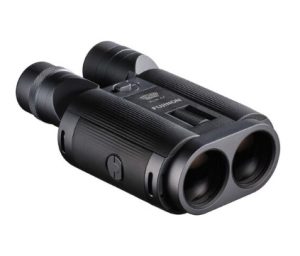
The Fujifilm Techno-Stabi 16×40 is one of the best rated binoculars for bird watching when it comes to long-distance viewing. Unlike traditional birding binoculars, this model pushes magnification up to 16x, allowing users to observe distant birds with impressive detail. What makes this possible without excessive hand shake is its built-in electronic image stabilization system, which compensates for movement and delivers a steady, controlled view even at high magnification.
Optically, the binocular performs at a high level. It uses extra-low dispersion glass to reduce chromatic aberration, resulting in clearer and more accurate color reproduction. The EBC multi-coated lenses improve light transmission and reduce glare, while phase-corrected prisms enhance contrast and sharpness. Together, these features produce a crisp and detailed image that remains usable even when observing birds at long distances or in slightly challenging lighting conditions.
One of the defining features is the ±3° image stabilization system. This technology actively corrects hand movement, allowing birders to enjoy a stable image without needing a tripod, which is typically required for binoculars above 10x magnification. This makes it particularly useful for scanning open landscapes, wetlands, or coastal environments where birds are often far away. The stabilization is powered by AAA batteries and can run for up to 30 hours, making it practical for extended outdoor use.
The design balances performance with usability. Despite its advanced technology, it remains relatively portable for its class, though it is heavier than standard birding binoculars. The 40mm objective lenses provide a bright image, while the ergonomic build allows for steady handling during prolonged viewing. It is also water resistant and fogproof, ensuring reliability in changing weather conditions.
In real-world birding, this binocular offers a unique experience. The combination of high magnification and stabilization allows users to see fine details that are often missed with lower-powered models. However, the narrower field of view and higher weight mean it is better suited for focused, long-range observation rather than fast-paced tracking in dense environments.
Pros
- Powerful 16x magnification for long-distance birding
- Effective image stabilization reduces hand shake
- Sharp and detailed image with good color accuracy
- No tripod needed despite high magnification
- Long battery life supports extended use
Cons
- Heavier than standard birding binoculars
Factors to Consider When Choosing The Best Rated Binoculars For Bird Watching
Magnification and Objective Lens Size
Choosing the right balance between magnification and objective lens size is essential for bird watching. Moderate magnification such as 8x provides a steady image and a wider view, making it easier to follow moving birds. Larger objective lenses like 42mm allow more light to enter, producing brighter images. This combination works well in varied environments, especially when lighting conditions change throughout the day.
Field of View
A wide field of view allows you to see more of the landscape at once, which is especially useful when tracking birds in flight or scanning dense foliage. Binoculars with a broader view make it easier to locate subjects quickly and keep them in sight. A narrower field can feel restrictive and may slow down your ability to react to sudden movement.
Optical Quality and Glass Type
The quality of the glass and coatings used in binoculars has a direct impact on image clarity, sharpness, and color accuracy. High-quality glass reduces distortion and color fringing, while advanced coatings improve contrast and brightness. This becomes particularly important when identifying subtle markings on birds or observing in challenging lighting conditions.
Low Light Performance
Bird activity often peaks during early morning and late evening, so good low-light performance is important. Binoculars that transmit more light will produce clearer and brighter images in dim conditions. Larger lenses and efficient coatings help maintain visibility when natural light is limited, allowing you to continue birding beyond midday hours.
Weight and Ergonomics
Comfort plays a major role during extended bird watching sessions. Lightweight binoculars reduce fatigue, while a well-designed shape ensures a secure and natural grip. Ergonomic features such as balanced weight distribution and comfortable eyecups can make long periods of use much more enjoyable and less tiring.
Durability and Weather Resistance
Bird watching often takes place outdoors in unpredictable conditions, so durability is key. Binoculars that are waterproof and fogproof can handle rain, humidity, and sudden temperature changes. A sturdy outer coating also protects against drops and rough handling, ensuring reliable performance over time.
Focus System and Close Focus Distance
A smooth and responsive focus system allows you to quickly adjust between near and distant subjects. This is important when birds move unpredictably or when switching from scanning landscapes to observing nearby details. A shorter close focus distance is useful for watching birds at feeders or in close habitats where fine detail matters.
Price and Overall Value
Budget is always a consideration, but value goes beyond just cost. The best choice is one that offers a strong balance between performance, durability, and features within your price range. Investing in better optics can improve your overall experience, but even more affordable options can provide satisfying results if they meet your specific birding needs.
Best Rated Binoculars For Bird Watching FAQs
What magnification is best for bird watching?
A magnification of around 8x is often considered ideal for bird watching because it provides a stable image and a wide field of view. This makes it easier to track moving birds and scan environments quickly. Higher magnification such as 10x can bring distant birds closer, but it may reduce stability and narrow the viewing area.
Are more expensive binoculars always better for bird watching?
Higher-priced binoculars usually offer better image clarity, improved brightness, and more durable construction. However, they are not always necessary for everyone. Many mid-range options provide excellent performance for most birding situations. The best choice depends on how often you bird watch and the level of detail you want to observe.
Why is a wide field of view important?
A wide field of view allows you to see a larger area, making it easier to locate and follow birds, especially those that move quickly or fly across open spaces. It reduces the need for constant adjustments and helps create a more natural and immersive viewing experience.
Can binoculars be used in all weather conditions?
Most quality binoculars are designed to handle outdoor conditions, including rain and humidity. Waterproof and fogproof features help maintain clear visibility and protect internal components. If you plan to bird watch in different environments, choosing a model with weather resistance will ensure more reliable performance.
Conclusion
The best rated binoculars for bird watching all share one defining quality: they make the experience feel effortless and immersive. The moment you raise them to your eyes, the world sharpens into vivid detail, colors appear true, and even the smallest movements become easy to follow.
Whether observing a distant silhouette or a nearby flutter of wings, these binoculars create a sense of connection that draws you deeper into the moment. They are not just tools for seeing birds, but instruments that enhance awareness, patience, and appreciation of nature.
With the right pair in hand, every outing becomes more engaging, turning ordinary sightings into memorable encounters.
See Also: