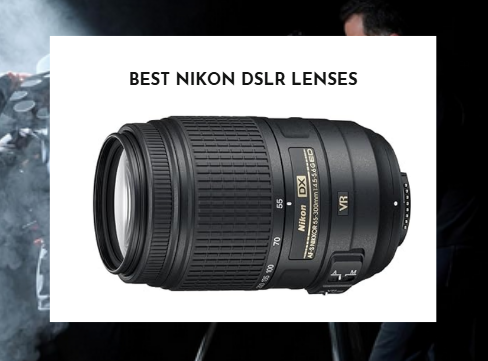
The best Nikon lenses are essential tools for photographers who want sharp, clear, and professional-quality images. I have explored a wide range of these lenses, from ultra-wide angles to super-telephoto zooms, and I can confidently say they deliver excellent performance in every situation.
In this guide, I will cover the key features that make Nikon DSLR lenses great, highlight my top picks for different types of photography, provide a clear buying guide to help you choose the right lens, and answer frequently asked questions. By the end, you will have everything you need to select the best Nikon DSLR lens for your photography needs
Here is a summary of the Best Nikon DSLR Lenses :
- Nikon AF-S FX NIKKOR 50mm f/1.8G – Best Budget Prime
- Nikon AF-S FX NIKKOR 24–70mm f/2.8E ED VR – Best All-Around Zoom
- Nikon AF-S DX NIKKOR 55–300mm f/4.5–5.6G ED VR – Best Telephoto Zoom for DX Cameras
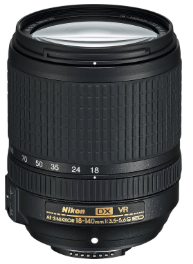
- Nikon AF-S DX NIKKOR 18–140mm f/3.5–5.6G ED VR – Best General-Purpose DX Zoom
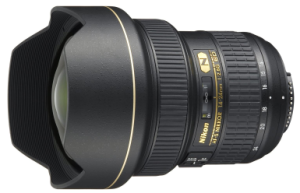
- Nikon AF-S NIKKOR 14–24mm f/2.8G ED – Best Ultra-Wide Angle
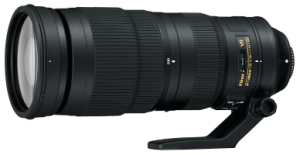
- Nikon AF-S FX NIKKOR 200–500mm f/5.6E ED VR – Best Long-Range Telephoto
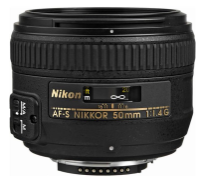
- Nikon AF-S FX NIKKOR 50mm f/1.4G – Best Premium Prime
- Nikon AF-S DX NIKKOR 18–300mm f/3.5–6.3G ED VR – Best All-in-One Travel Lens
- Nikon AF-S NIKKOR 70–200mm f/2.8E FL ED VR – Best Professional Telephoto Zoom
Best Nikon DSLR Lenses
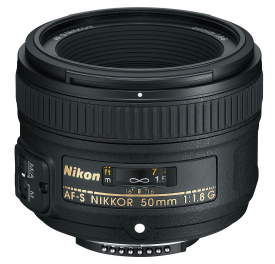
1)Nikon AF-S FX NIKKOR 50mm f/1.8G Lens with Auto Focus
Check Price in Amazon
The Nikon AF-S FX NIKKOR 50mm f/1.8G Lens with Auto Focus is a highly regarded prime lens for photographers seeking strong image quality in a compact and affordable design. It delivers natural-looking images, fast performance, and dependable autofocus, making it suitable for both beginners and experienced users.
This lens features a fast f/1.8 maximum aperture, allowing more light into the camera. This is especially helpful when shooting indoors or in low-light conditions. The wide aperture also creates a smooth background blur, helping your subjects stand out clearly. With a 47-degree picture angle on FX cameras, it produces images that closely resemble human vision.
The 50mm focal length is versatile and works well for portraits, street photography, travel, and everyday shooting. Its minimum focus distance of 1.48 feet allows you to move closer to subjects for detailed compositions. A maximum reproduction ratio of 0.15X adds flexibility for simple close-up shots.
Image quality benefits from a newly developed optical system that includes an aspherical lens element. This reduces distortion and improves sharpness and clarity across the frame. The lens performs well on both FX and DX Nikon DSLR cameras, ensuring consistent results.
Autofocus is powered by Nikon’s Silent Wave Motor, which provides fast, smooth, and quiet focusing. The M/A focus mode switch allows easy switching between autofocus and manual focus for precise control.
Compact and lightweight, the lens measures approximately 2.83 inches in diameter and 2.01 inches in length. It is easy to carry and comfortable for extended shooting. The 58mm filter thread supports common filters, adding convenience for everyday photography.
Pros
- Fast f/1.8 aperture for low-light shooting and background blur
- Sharp image quality across the frame
- Quiet and reliable autofocus
- Compact and lightweight
- Works well on both FX and DX Nikon DSLR cameras
Cons
- Lens is not zoomable
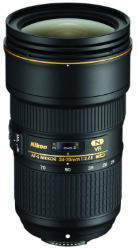
2)Nikon AF-S FX NIKKOR 24-70mm f/2.8E ED Vibration Reduction Zoom Lens with Auto Focus
Check Price in Amazon
The Nikon AF-S FX NIKKOR 24–70mm f/2.8E ED Vibration Reduction Zoom Lens with Auto Focus is a professional-grade lens designed for serious enthusiasts. It offers consistent performance, exceptional image quality, and reliable handling across a wide range of shooting situations.
This zoom lens features a constant f/2.8 aperture across the entire focal length range. The electromagnetic diaphragm ensures precise exposure control, even during continuous shooting or video recording. From 24mm wide-angle shots to 70mm standard perspectives, the lens maintains excellent brightness and depth-of-field control, making it suitable for landscapes, portraits, weddings, and events.
The lens contains 20 optical elements, producing sharp images with rich contrast and minimal distortion. Details remain crisp across the frame, even at wide apertures, while colors are natural and well-balanced. The focal length range offers excellent versatility, allowing photographers to move seamlessly from wide scenes to tighter compositions without changing lenses.
Close focusing is impressive, with a minimum focus distance of 1.2 feet at mid-range focal lengths and 1.3 feet at 24, 28, and 70mm. This allows for dynamic close-up compositions while maintaining sharp detail.
Built-in Vibration Reduction provides up to four stops of stabilization. This makes handheld shooting easier in low light and reduces camera shake when using slower shutter speeds. A nonstick glass coating helps wipe away water, dust, and smudges, which is particularly useful for outdoor shooting.
Physically, the lens is solid and professional, measuring 88mm in diameter and 154.5mm in length. It balances well on full-frame Nikon DSLR bodies. Autofocus is fast, accurate, and reliable, supporting demanding shooting environments.
Pros
- Constant f/2.8 aperture across zoom range
- Excellent sharpness and minimal distortion
- Effective Vibration Reduction for handheld shooting
- Versatile 24–70mm focal length
- Durable build with easy-to-clean glass coating
Cons
- Large and heavy compared to variable aperture zoom lenses
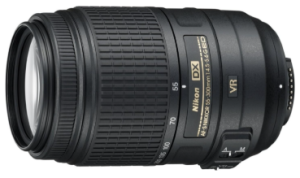
3)Nikon AF-S DX NIKKOR 55-300mm f/4.5-5.6G ED Vibration Reduction Zoom Lens with Auto Focus
Check Price in Amazon
The Nikon AF-S DX NIKKOR 55–300mm f/4.5–5.6G ED Vibration Reduction Zoom Lens with Auto Focus is designed for photographers who need extended reach in a compact, affordable DX-format design. It is ideal for wildlife, sports, travel, and outdoor photography where flexibility and stabilization are important.
This lens offers a powerful 5.5x telephoto zoom, covering focal lengths from 55 to 300mm. Photographers can capture distant subjects without changing lenses, making it perfect for fast-moving scenes. The minimum focus distance of 4.6 feet allows you to frame closer subjects with good detail while maintaining a comfortable working distance.
A refined optical design, including a High Refractive Index lens element and two Extra-low Dispersion (ED) elements, helps reduce chromatic aberration and improves clarity. Images show good contrast and accurate colors across the zoom range, particularly in well-lit conditions.
Nikon’s Vibration Reduction system minimizes camera shake, allowing slower shutter speeds and steadier handheld shots. A Tripod Detection Mode automatically adjusts stabilization when the lens is mounted on a tripod.
Autofocus is driven by Nikon’s Silent Wave Motor, providing fast, smooth, and quiet focusing. This makes it suitable for wildlife photography and candid video capture.
The lens remains relatively compact for its range. A 58mm filter thread allows affordable filters, and the snap-on lens cap protects the lens when not in use.
Pros
- Long 55–300mm telephoto zoom range
- Effective Vibration Reduction with tripod detection
- Good image quality with reduced chromatic aberration
- Quiet and reliable autofocus
- Compact and lightweight for a telephoto lens
Cons
- Variable aperture limits low-light performance at longer focal lengths
4)Nikon AF-S DX NIKKOR 18-140mm f/3.5-5.6G ED Vibration Reduction Zoom Lens with Auto Focus
Check Price in Amazon
5)Nikon Lens Nikkor AF-S 14-24mm f/2.8G ED
Check Price in Amazon
The Nikon NIKKOR AF-S 14–24mm f/2.8G ED Lens is a professional ultra-wide zoom designed for landscapes, architecture, interiors, and astrophotography. It provides expansive perspectives and exceptional optical quality.
With a 14–24mm focal length, this lens captures sweeping scenes with remarkable clarity. On DX cameras, the equivalent focal length is 21–36mm, offering versatility across sensor formats. A constant f/2.8 aperture allows excellent low-light performance and creative depth-of-field control.
Nano Crystal Coating significantly reduces ghosting and reflections, keeping images clean and sharp in challenging lighting conditions, such as bright skies or reflective surfaces. Chromatic aberration is minimized, producing vibrant and accurate colors across the frame.
Autofocus is powered by Nikon’s Silent Wave Motor, offering fast, smooth, and nearly silent operation. Photographers can rely on precise focus for stills or video without distractions.
The lens is built for professional use, with a robust construction and included semi-rigid case (CL-M3) for transport and storage. It integrates seamlessly with Nikon F-mount DSLRs.
Pros
- Ultra-wide 14–24mm zoom for expansive perspectives
- Constant f/2.8 aperture for low-light and depth-of-field control
- Nano Crystal Coating reduces ghosting and reflections
- Fast and quiet autofocus
- Durable build with carrying case
Cons
- High price point may be challenging for casual photographers
6)Nikon AF-S FX NIKKOR 200-500mm f/5.6E ED Vibration Reduction Zoom Lens with Auto Focus
Check Price in Amazon
The Nikon AF-S FX NIKKOR 200–500mm f/5.6E ED Vibration Reduction Zoom Lens is a super-telephoto lens ideal for wildlife, birding, motorsports, and distant action. It offers long reach without sacrificing mobility.
With a 200–500mm focal length, it delivers exceptional zoom. On DX cameras, the equivalent reach is 750mm. A minimum focus distance of 7.2 feet allows closer framing of distant subjects while keeping sharp detail.
The fast f/5.6 aperture isolates subjects with smooth background blur and supports low-light shooting in early morning or late evening. Vibration Reduction provides 4.5 stops of stabilization, with Sports Mode helping stabilize moving subjects.
Autofocus is precise and flexible, compatible with teleconverters and DSLRs that support f/8 autofocus. This makes it excellent for wildlife or fast-paced sports photography.
Physically, the lens is compact for a super-telephoto design, measuring 4.2 inches in diameter and 10.5 inches long, weighing approximately 81.2 ounces. The Nikon F-mount ensures smooth integration with compatible DSLRs.
Pros
- Long 200–500mm zoom range for wildlife and sports
- Fast f/5.6 aperture for background blur and low-light performance
- 4.5 stops of VR with Sports Mode
- Compatible with teleconverters
- Relatively compact for a super-telephoto lens
Cons
- Heavy for extended handheld use
7) Nikon AF-S FX NIKKOR 50mm f/1.4G Lens with Auto Focus
Check Price in Amazon
The Nikon AF-S FX NIKKOR 50mm f/1.4G Lens is a classic prime lens for photographers seeking professional image quality, excellent low-light performance, and creative control. Its fast f/1.4 maximum aperture allows more light into the camera, making it ideal for dimly lit environments. It also produces beautiful background blur, helping subjects stand out.
Autofocus is powered by an ultrasonic motor, offering fast, accurate, and quiet operation. Full-time manual focus control allows precise adjustments without changing modes. With a minimum focus distance of 0.45 meters (17.72 inches), this lens can capture detailed close-ups with sharp clarity, adding versatility for portraits and creative compositions.
Designed for Nikon F-mount DSLRs, the lens is compatible with both FX and DX cameras. The included HB-47 lens hood helps reduce flare and protects the front element. Standard 58mm filters can be attached for additional effects or protection. Despite its professional performance, the lens remains compact and easy to carry for everyday shooting.
Pros
- Fast f/1.4 aperture for low light and shallow depth of field
- Sharp and clear image quality across the frame
- Quiet and accurate autofocus with ultrasonic motor
- Full-time manual focus for precise control
- Compact and compatible with both FX and DX Nikon DSLRs
Cons
- Fixed focal length requires lens changes for different perspectives
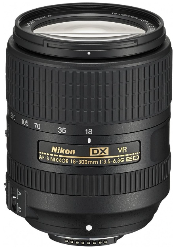
8)Nikon AF-S DX NIKKOR 18-300mm f/3.5-6.3G ED Vibration Reduction Zoom Lens with Auto Focus
Check Price in Amazon
The Nikon AF-S DX NIKKOR 18–300mm f/3.5–6.3G ED Vibration Reduction Zoom Lens is designed for photographers who want a single lens to cover nearly every shooting situation. Its extremely wide focal length range allows users to go from wide-angle landscapes to distant telephoto subjects without changing lenses, making it perfect for travel, events, and everyday photography.
The lens covers 18–300mm, offering flexibility from wide-angle to super-telephoto perspectives. On DX-format cameras, this enables photographers to capture landscapes, group shots, portraits, and distant subjects with one lens. The angle of view ranges from 76 degrees at 18mm to 5 degrees 20 minutes at 300mm. The minimum focus distance is 0.48 meters (1.6 feet), allowing relatively close-up compositions.
Maximum magnification reaches 0.32x, useful for capturing smaller details without switching to a dedicated macro lens. Aperture ranges from f/3.5 to f/22, offering control over depth of field and exposure. Vibration Reduction helps reduce camera shake when shooting handheld, especially at telephoto distances. Autofocus is smooth and reliable, ensuring subjects remain in focus even at longer zooms.
The lens is built for DX-format DSLRs and delivers convenience and versatility in a single package. Its practical build makes it ideal for travel and outdoor use, giving photographers the ability to carry one lens for most situations.
Pros
- Extensive 18–300mm zoom range covers most photography needs
- Vibration Reduction for sharper handheld shots
- Maximum magnification of 0.32x allows close-up detail shots
- Versatile angle of view from 76 degrees to 5 degrees 20 minutes
- Suitable for travel, events, and general photography
Cons
- Slight loss of sharpness at the longest zoom position
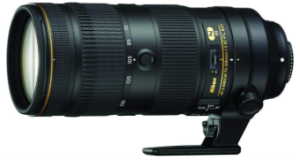
9)Nikon AF-S NIKKOR 70-200mm f/2.8E FL ED VR Lens
Check Price in Amazon
The Nikon AF-S NIKKOR 70–200mm f/2.8E FL ED VR Lens is recognized as one of the Best Nikon DSLR Lenses for professional photographers who need versatility, speed, and outstanding image quality. Its telephoto zoom range, bright aperture, and advanced features make it ideal for portraits, sports, wildlife, and event photography.
The lens offers a focal length range of 70 to 200 millimeter, covering short to medium telephoto perspectives. The minimum focus distance of 3.6 feet (1.1 meter) allows photographers to capture subjects up close while maintaining sharp detail. A 9-blade diaphragm produces smooth and natural background blur, enhancing subject separation in both portraits and close-up shots.
Optically, the lens is designed for FX-format cameras and provides precise focus with a focus distance indicator ranging from 1.1 meters to infinity. It is compatible with over 360 F-mount Nikkor lenses as well as new Z-mount Nikkor lenses via adapters. This compatibility, combined with support for a variety of Nikon system accessories, ensures seamless integration across Nikon camera systems.
The lens accepts screw-on filters, which adds flexibility for creative photography, including polarizers and neutral density filters. Its f/2.8 maximum aperture ensures excellent low-light performance and control over depth of field, while the minimum aperture of f/22 allows for greater depth when needed.
Vibration Reduction helps reduce camera shake when shooting handheld, especially at longer focal lengths. This ensures sharp images even in challenging lighting conditions or fast-paced action scenes. The lens is built for professional use, balancing performance, durability, and versatility.
Pros
- Versatile 70 to 200 millimeter zoom range for portraits, sports, and wildlife
- Fast f/2.8 aperture for low-light shooting and creative background blur
- Minimum focus distance of 3.6 feet allows close-up compositions
- Smooth 9-blade diaphragm for natural bokeh
- Compatible with FX DSLRs, F-mount lenses, Z Nikkor adapters, and Nikon accessories
Cons
- Large and heavy, requiring careful handling
You may also like to read: 7 Best Red Dots For Glock 43
Advantages of Nikon DSLR Lenses
Exceptional Image Quality
Nikon DSLR lenses deliver sharp and clear images. Advanced optics, including Extra-low Dispersion glass, aspherical elements, and Nano Crystal Coatings, reduce distortion, chromatic aberration, and flare. Colors remain accurate and natural. These lenses capture fine details from edge to edge. Photographers can rely on their images without heavy post-processing.
Wide Range of Focal Lengths and Flexibility
Nikon offers lenses for almost every situation. Ultra-wide lenses capture landscapes and interiors. Telephoto lenses reach distant wildlife and sports action. Zoom lenses like the 18–300mm or 24–70mm cover multiple perspectives in one lens. Prime lenses, such as the 50mm f/1.4, provide sharp low-light performance and creative control. This range allows photographers to choose the right lens for any style or subject.
Fast and Reliable Autofocus
Most Nikon DSLR lenses use Silent Wave Motors. These motors provide fast, precise, and quiet autofocus. Full-time manual focus allows fine adjustments without switching modes. Whether capturing fast sports, moving wildlife, or recording video, the autofocus is reliable. Photographers can focus confidently on important moments.
Outstanding Low-Light Performance
Many Nikon lenses have wide apertures, such as f/1.4, f/1.8, or f/2.8. Wide apertures let more light into the camera. This allows shooting in dim conditions, like indoor events or night scenes, without a flash. Wide apertures also produce smooth background blur or bokeh, making subjects stand out. Lenses like the 50mm f/1.4 and 70–200mm f/2.8 excel in low-light photography.
Vibration Reduction and Image Stabilization
Vibration Reduction (VR) technology reduces camera shake. Photographers can shoot handheld at slower shutter speeds. Long telephoto lenses remain sharp even when subjects are moving. Sports Mode or advanced VR helps capture action shots clearly. This reduces the need for a tripod and improves sharpness in challenging conditions.
Durable and Professional Build Quality
Nikon lenses are built to last. Many feature weather sealing, robust materials, and reliable lens hoods or filters. Lenses like the 14–24mm f/2.8 and 70–200mm f/2.8E FL ED perform well in demanding outdoor conditions. Professional build quality ensures consistent performance and protects the investment over time.
Wide Compatibility Across Nikon Systems
Nikon lenses work with many DSLR and mirrorless cameras. They are compatible with FX and DX formats. Many lenses integrate with over 360 F-mount Nikkor lenses and Nikon accessories. Some lenses also work with Z-mount cameras via adapters. This compatibility makes it easy to expand a lens collection without worrying about system limitations.
Factors to Consider When Choosing the Best Nikon DSLR Lenses
Focal Length
Focal length determines how much of a scene the lens can capture. Wide-angle lenses cover more of the scene, making them ideal for landscapes and interiors. Telephoto lenses bring distant subjects closer, which is useful for wildlife and sports photography. Choosing the right focal length ensures your lens fits the type of photography you plan to do.
Maximum Aperture
The maximum aperture controls how much light the lens lets into the camera. Lenses with wide apertures, such as f/1.4 or f/2.8, perform better in low-light situations. They also allow for shallow depth of field, creating smooth background blur. A fast aperture is essential for night photography, portraits, and indoor shooting.
Lens Type (Prime or Zoom)
Prime lenses have a fixed focal length, providing sharper images and better low-light performance. Zoom lenses offer variable focal lengths, giving more flexibility to capture different perspectives without changing lenses. Choosing between prime and zoom depends on whether you prioritize image quality or versatility.
Image Stabilization
Vibration Reduction or image stabilization reduces blur caused by camera shake. This is particularly important for handheld shooting, telephoto lenses, and low-light conditions. A lens with stabilization allows you to use slower shutter speeds while keeping images sharp. It also helps capture moving subjects more clearly.
Autofocus Performance
Fast and accurate autofocus ensures that your subjects remain sharp, even in fast-paced situations. Quiet autofocus is important for video recording and wildlife photography to avoid disturbing subjects. Lenses with reliable autofocus allow you to focus quickly and capture decisive moments with confidence.
Optical Quality
High-quality optics improve sharpness, color accuracy, and contrast. Elements such as Extra-low Dispersion glass and aspherical lenses reduce distortion and chromatic aberration. Coatings on lens elements reduce flare and ghosting. Good optical quality ensures that your images are clear, vibrant, and professional-looking.
Build Quality and Durability
Lenses with strong construction can withstand frequent use and harsh conditions. Weather-sealed lenses protect against dust, moisture, and light rain. Durable materials prevent damage from everyday handling. A well-built lens ensures consistent performance and longevity, making it a reliable tool for photographers.
Compatibility
Lens compatibility with your camera system is crucial. Check that the lens mounts correctly and supports your camera’s sensor format. Some lenses work with both full-frame and crop sensors. Compatibility also affects whether accessories like filters or teleconverters can be used. Ensuring proper compatibility avoids frustration and allows full use of your equipment.
FAQs About the Best Nikon DSLR Lenses
1. What makes a Nikon DSLR lens suitable for low-light photography?
A lens suitable for low-light photography usually has a wide maximum aperture, such as f/1.4, f/1.8, or f/2.8. Wide apertures allow more light into the camera, which helps capture sharp images in dim conditions without using a flash. Lenses with reliable autofocus and vibration reduction further improve performance in low-light situations.
2. Should I choose a prime lens or a zoom lens?
Prime lenses have a fixed focal length and generally offer sharper images, better low-light performance, and smoother background blur. Zoom lenses provide a range of focal lengths, giving flexibility to capture both wide-angle and telephoto shots without changing lenses. The choice depends on whether you prioritize image quality or versatility for different shooting situations.
3. How important is vibration reduction in Nikon DSLR lenses?
Vibration Reduction (VR) or image stabilization is very important for handheld shooting, especially at longer focal lengths or slower shutter speeds. It reduces blur caused by camera shake and makes it easier to capture sharp images in low-light or action photography. VR allows photographers to rely less on tripods while maintaining image clarity.
Conclusion
The best Nikon DSLR lenses combine exceptional image quality, reliable autofocus, and versatile focal lengths to meet the needs of every photographer. They excel in low-light conditions, provide smooth background blur, and offer advanced stabilization for sharp handheld shots. With options ranging from wide-angle to super-telephoto and from budget-friendly primes to professional-grade zooms, Nikon lenses deliver both performance and durability.
Their compatibility with a wide range of cameras and accessories ensures flexibility for any shooting situation. Whether you are a beginner, enthusiast, or professional, Nikon DSLR lenses provide the tools to capture stunning images with clarity, precision, and creative control.