A loose lug or an overloaded breaker rarely gives any warning until something trips or fails. That is why I believe a thermal camera belongs in every electrician’s kit. The best FLIR Cameras for Electrical work turn hidden heat into a clear picture, so faults show up before they become emergencies. Better still, they let you scan panels, connections and motors without touching live parts.
A few features matter most here. You need clear thermal resolution, a temperature range that suits your equipment and visual detail that helps you name the faulty component. Easy ways to save and share results also make a big difference.
In this guide, I’ll share my top picks, break down the key features of each camera, walk you through a practical buying guide and answer common questions so you can choose with confidence.
Our Top Picks at a Glance
- FLIR TG165-X Thermal Imaging Camera with Bullseye Laser – Best Entry-Level Option
- FLIR C8 Compact Thermal Imaging Camera – Best Overall
- FLIR One Pro Thermal Imaging Camera for iOS Smartphones – Best Smartphone Attachment
- FLIR C5 Compact Thermal Imaging Camera – Best Rugged Compact Pick
- FLIR E5 Pro Thermal Imaging Camera – Best for Detailed Inspection Notes
Best FLIR Cameras for Electrical
1. Flir TG165-X Thermal Imaging Camera with Bullseye Laser
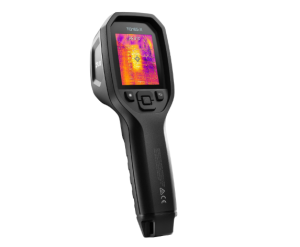
The FLIR TG165-X earns a spot among the best FLIR Cameras for Electrical work because it gives technicians a full thermal view instead of a single spot reading. Its 4,800 pixel infrared sensor maps hot and cold areas across a scene, so an overloaded breaker, a loose connection or a struggling motor shows up as a clear temperature difference on screen. In addition, it reads from -25°C to 300°C (-13°F to 572°F), which covers the heat levels found in most panels, outlets and wiring runs.
To make those readings easier to interpret, FLIR adds its MSX technology. It lays visible edges and outlines over the thermal picture in real time, so you can tell one component from the next and even read breaker labels. As a result, you can confirm which part is running hot much faster before you write it up or start a repair.
The bullseye laser handles precision by marking the measurement area, so the reading on screen belongs to the component you’re aiming at. Readings stay within ±1.5°C (±3°F), and the camera works from 1 foot out to about 5 feet. Meanwhile, the wide 51° × 66° field of view lets you take in a whole panel at a glance.
The build also holds up to daily site work. Its housing is rated IP54 against dust, dirt and oil, and it has been drop tested from 6.5 feet. Beyond that, it stores up to 50,000 images and runs on a rechargeable lithium ion battery, so it’s ready to use straight out of the box. FLIR covers the camera for 2 years on parts and labor and the detector for 10 years.
Since the buttons and settings are simple, I’d point this camera at electricians, maintenance staff and homeowners who need quick fault checks on panels, outlets and motors. That said, its modest resolution suits close range troubleshooting better than detailed inspection reports.
Specifications
- Thermal resolution: 4,800 pixels
- Temperature range: -25°C to 300°C (-13°F to 572°F)
- Accuracy: ±1.5°C (±3°F)
- Field of view: 51° × 66°
- Target distance: 1 to 5 feet
- Image enhancement: MSX
- Storage: up to 50,000 images
- Durability: IP54, drop tested from 6.5 feet
- Warranty: 2 years camera, 10 years detector
Pros
- MSX detail makes components and labels easy to identify
- Laser confirms the exact measurement spot
- Wide field of view covers a full panel
- Tough build for daily site use
- Generous image storage
Cons
- 300°C ceiling rules out very hot equipment
2. Flir C8 Compact Thermal Imaging Camera
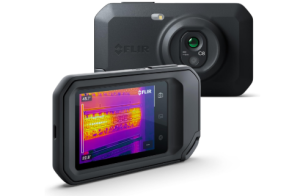
Electrical contractors who document their findings for clients will find a strong partner in the FLIR C8. It packs 320 × 240 thermal resolution, or 76,800 pixels, into a compact handheld body. Paired with a 35° horizontal field of view, that pixel count puts more detail on each target, so a warm lug or an overheating fuse stands out even when components sit tightly together inside a panel.
Heat capacity is generous as well. The C8 measures objects up to 842°F (450°C), so you have room to check heavily loaded connections and equipment that runs hotter than ordinary outlets. On top of that, you can isolate and highlight specific temperature ranges, which pulls the hottest spots out from the rest of the scene.
MSX enhancement adds visible edges and outlines to the thermal image in real time. Because the camera also carries a visual camera and an LED flashlight, you can see exactly what you’re inspecting inside a dim enclosure.
Reporting is where this model serves electrical service work especially well. After an inspection, images upload directly to FLIR Ignite cloud storage, where you can edit, organize and back them up from any device. From there, you can build simple reports in Ignite or more detailed ones in FLIR Thermal Studio, then email the results to customers. Likewise, the camera checks for updates and new features automatically whenever it connects to WiFi.
For specialized sites, the C8 is ATEX certified, so it can be used for inspections in environments with explosive risks, such as chemical plants or dusty facilities. FLIR backs it with 2 years of parts and labor coverage and 10 years on the detector.
Specifications
- Thermal resolution: 320 × 240 (76,800 pixels)
- Field of view: 35° horizontal
- Maximum object temperature: 842°F (450°C)
- Image enhancement: MSX
- Extras: visual camera and LED flashlight
- Connectivity: FLIR Ignite cloud, automatic WiFi updates
- Certification: ATEX
- Warranty: 2 years camera, 10 years detector
Pros
- Sharp resolution shows detail in crowded panels
- Cloud uploads speed up client reporting
- Temperature range highlighting isolates hot spots
- Flashlight helps in dark enclosures
- Approved for explosive environments
Cons
- Advanced reports need separate desktop software
- 35° view may take more passes on large switchgear
3. Flir One Pro Thermal Imaging Camera for iOS Smartphones
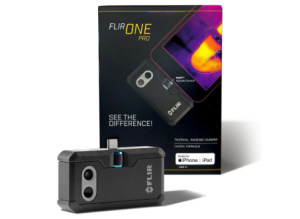
If your phone is always in your pocket, the FLIR One Pro turns it into a thermal imager. It plugs straight into the charging port of USB-C iPhones, starting with the iPhone 15. Thanks to the adjustable OneFit connector, it also works with most phone cases, so you don’t have to strip your phone down before checking a panel.
Image quality comes from two FLIR technologies working together. First, VividIR combines multiple frames and upscales the native 160 × 120 thermal image to 480 × 360, which reduces blur and sharpens detail. Then MSX adds visible edges and outlines in real time without diluting the thermal data. Together, they make it easier to trace a warm conductor back to the breaker or terminal feeding it.
Accuracy sits within ±3°C or ±5%. However, that figure applies when the unit is between 15°C and 35°C and the scene falls between 5°C and 120°C. In practice, this range fits routine checks on outlets, panels and light circuits better than very hot industrial equipment.
The FLIR One app adds real value for electrical maintenance. You can scan for faults, capture photos and videos, adjust settings and upload images to FLIR Ignite cloud storage from one place. It also links to compatible apps built for tasks such as electrical maintenance and energy efficiency. For general home checks, the built in inspection guides walk you through finding air leaks and moisture buildup.
Durability holds up well for a phone accessory, since it is rated to survive a 1.5 meter drop on a jobsite. I’d recommend it to electricians, property managers and homeowners who already carry a recent iPhone and want a portable thermal tool for quick inspections and verifying repairs.
Specifications
- Compatibility: USB-C iPhones (iPhone 15 and newer)
- Native thermal resolution: 160 × 120
- Enhanced output: 480 × 360 with VividIR
- Image enhancement: MSX
- Accuracy: ±3°C or ±5% (within stated conditions)
- Drop rating: 1.5 meters
- Connector: adjustable OneFit for most cases
- Cloud: FLIR Ignite through the FLIR One app
Pros
- Uses a phone you already carry
- VividIR and MSX sharpen fine detail
- Fits over most phone cases
- App guides and cloud uploads in one place
- Survives drops up to 1.5 meters
Cons
- Works only with USB-C iPhones
4. Flir C5 Compact Thermal Imaging Camera
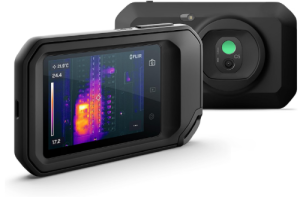
Work sites can be hard on tools, so the FLIR C5 starts with toughness. Its compact body carries an IP54 rating and has passed drop safe testing at 6 feet. That means it can ride in a work bag from one service call to the next and still be ready when a customer reports a breaker that keeps tripping.
Once you power it on, the 160 × 120 sensor (19,200 pixels) shows heat patterns across a full panel. MSX then adds visible outlines to that thermal view, so you can match each warm spot to a specific fuse, terminal or cable. In addition, a visual camera and an LED flashlight help when you’re working in poorly lit utility rooms.
The temperature range is another reason it holds a place among the best FLIR cameras for electrical troubleshooting. It reads from -20°C to 400°C (-4°F to 752°F), giving you plenty of headroom for loaded connections and motor housings. Equally useful are the pro tools packed into this small frame, including video streaming, zoom and 1-Touch Level/Span, which quickly adjusts the image contrast to bring the hottest areas forward.
When the inspection ends, the paperwork gets easier too. Images upload directly to FLIR Ignite, where you can organize, back up and share them. You can then create simple reports there or professional ones in FLIR Thermal Studio and email them to clients. The camera also searches for updates automatically over WiFi, while FLIR covers it for 2 years and the detector for 10 years.
This camera suits electricians and maintenance technicians who move between many jobs a day and want a durable, compact imager with solid reporting tools.
Specifications
- Thermal resolution: 160 × 120 (19,200 pixels)
- Temperature range: -20°C to 400°C (-4°F to 752°F)
- Image enhancement: MSX
- Durability: IP54, drop tested at 6 feet
- Extras: visual camera, LED flashlight, zoom, video streaming
- Contrast control: 1-Touch Level/Span
- Connectivity: FLIR Ignite cloud, automatic WiFi updates
- Warranty: 2 years camera, 10 years detector
Pros
- Rugged build handles daily travel between jobs
- Wide temperature range for loaded circuits
- One touch contrast brings hot spots forward
- Direct cloud uploads and client reports
- Flashlight and visual camera for dim spaces
Cons
- Advanced reports need separate desktop software
5. Flir E5 Pro Thermal Imaging Camera
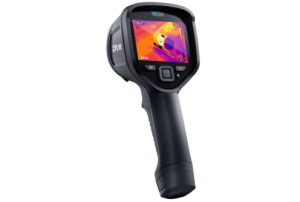
With the FLIR E5 Pro, you can capture a hot spot, type a note beside it and send both to the cloud before you leave the panel. That workflow centers on a 3.5 inch touchscreen, which lets you add detailed notes to each image and organize your files right on the camera.
For this reason, it fits inspectors, facility technicians and electrical contractors who handle compliance checks or recurring maintenance records. It also extends to building and HVAC inspections when a job calls for it.
On the imaging side, a 160 × 120 sensor (19,200 pixels) works with MSX enhancement to lay visible outlines over the thermal picture. Consequently, you can tell which terminal, conductor or breaker is running warm and point it out clearly in your records. The camera measures from -20°C to 400°C (-4°F to 752°F), so it can handle both everyday panels and hotter systems such as boilers and kilns.
Another helpful addition is the built in delta T tool. Instead of working out temperature differences by hand, you get the comparison between two points directly on the camera. This saves time when you need to compare phases or judge how serious a fault is.
Sharing is just as smooth. Images and notes upload straight from the camera to FLIR Ignite, where you can edit, store and share them or build quick reports from any device. For deeper analysis, FLIR Thermal Studio produces professional inspection reports. Meanwhile, over the air updates keep the camera current, and FLIR covers it for 2 years with 10 years on the detector.
Specifications
- Thermal resolution: 160 × 120 (19,200 pixels)
- Temperature range: -20°C to 400°C (-4°F to 752°F)
- Display: 3.5 inch touchscreen
- Image enhancement: MSX
- Measurement tools: built in delta T
- Connectivity: FLIR Ignite cloud, over the air updates
- Software support: FLIR Thermal Studio
- Warranty: 2 years camera, 10 years detector
Pros
- Touchscreen notes attach context to each image
- Delta T tool speeds up fault comparisons
- Direct uploads of images and notes
- Handles hot systems up to 752°F
- Suits compliance and maintenance records
Cons
- Resolution is modest for fine component detail
- Advanced reports need separate desktop software
Advantages of FLIR Cameras for Electrical Applications
Early Fault Detection
Most electrical problems produce heat long before they cause an outage. A loose connection, a worn breaker or an unbalanced load warms up gradually, and a thermal camera makes that change visible. As a result, you can plan a repair during normal hours instead of reacting to a sudden failure.
Safer Inspections
Thermal imaging measures heat from a distance, so you never have to touch energized parts to find the problem. This keeps your hands away from live conductors while you scan an entire panel. It also lets you check equipment while it runs under real load, which is when faults are easiest to see.
Faster Troubleshooting
Rather than testing one point at a time, you see the whole scene at once. The warmest component stands out immediately, so you can go straight to the source of the trouble. Consequently, service calls take less time, and customers spend less time waiting with power off.
Clear Identification of Faulty Parts
Visual detail layered over the thermal image shows edges, outlines and even printed labels. That makes it simple to tell one breaker or terminal from its neighbor. In turn, you replace the right part the first time and avoid unnecessary work.
Proof for Clients and Records
A saved thermal image shows exactly what you found and where. You can share it with a customer to explain why a repair is needed, then capture another image to confirm the fix worked. Over time, these records also build a useful maintenance history for each site.
Preventive Maintenance Planning
Regular thermal scans let you compare readings from one visit to the next. When a connection grows warmer each time, you know it needs attention soon. This approach helps facility teams schedule upkeep, reduce downtime and extend the life of their electrical equipment.
Factors to Consider When Choosing the Best FLIR Cameras for Electrical Work
Thermal Resolution
Resolution decides how much detail you see on each component. A lower pixel count works for quick checks on outlets and small panels at close range. However, crowded switchboards and distant targets call for a higher resolution, since every breaker and lug needs enough pixels to show its true temperature.
Temperature Range
Think about the hottest equipment you inspect. Household panels and outlets rarely need a very high ceiling, while heavily loaded connections, motors and industrial systems can run much hotter. Choose a range that leaves comfortable headroom above your typical readings so you never hit the limit mid inspection.
Measurement Accuracy
Accurate readings help you judge how serious a fault is and whether it needs urgent action. Check the stated accuracy along with the conditions it applies to, because some ratings hold only within certain ambient and target temperatures.
Visual Detail Enhancement
A plain thermal image can make neighboring components look alike. Cameras that overlay visible edges and outlines help you read labels and pinpoint the exact part at fault. This feature becomes especially valuable when you need to explain findings to someone else.
Field of View and Working Distance
A wide field of view lets you capture a full panel in one shot, whereas a narrower one focuses detail on smaller areas. Also consider how close you can safely stand to the equipment you inspect, then match the camera’s working distance to that space.
Reporting and Connectivity
If you document jobs for clients or compliance, look for cloud uploads, onscreen notes and report software. These tools cut down on paperwork and keep records organized. On the other hand, a basic camera with internal storage may be enough for occasional personal use.
Form Factor and Durability
Handheld cameras suit frequent fieldwork, while smartphone attachments appeal to anyone who wants a lighter kit. In either case, check the drop rating and dust protection, especially if the camera will travel between job sites every day.
Warranty Coverage
The detector is the most important part of any thermal camera. A long warranty on it, along with solid coverage on the camera body, protects your investment for years of regular use.
Best FLIR Cameras for Electrical FAQs
What electrical problems can a thermal camera find?
A thermal camera reveals heat from loose or corroded connections, overloaded circuits, failing breakers, blown or overheating fuses and unbalanced loads. It also helps spot struggling motors and other equipment that runs hotter than normal.
Is it safe to inspect live panels with a thermal camera?
The camera itself measures heat without contact, so you can keep your distance from energized parts. Still, you should follow standard electrical safety practices and wear proper protective equipment whenever panels are open.
Why does visual image enhancement matter?
Thermal images alone can blur the lines between neighboring parts. Enhancement adds edges, outlines and readable labels, so you can identify the exact breaker or terminal at fault and share clearer findings with clients.
Do I need cloud connectivity?
It depends on how you work. The best FLIR cameras for electrical contractors who report to clients often include cloud uploads, because they make sharing and storing images much faster. If you only inspect your own property, internal storage is usually enough.
Conclusion
Heat is often the first sign that something in an electrical system is going wrong, and the best FLIR Cameras for Electrical work put that sign in plain view.
Each pick on this list turns invisible problems into clear images, helping you find faults faster, inspect without touching live parts and back up every repair with proof.
Some lean toward simple spot checks, while others offer sharper detail, onscreen notes or cloud reporting for client work. So start with how often you inspect, the equipment you handle and how you share results.
Once you match those needs to the right features, you’ll have a dependable tool that keeps systems running and clients confident in your work.
More from Us: