Our Top Picks at a Glance
- FLIR TG165-X Thermal Imaging Camera — Best for Basic Leak Detection
- TOPDON TC005 3.5″ Dual-Lens Thermal Imaging Camera — Best for Professional Inspections
- HSFTOOLS F2VW Thermal Camera — Best for AI-Enhanced Thermal Imaging
- Thermal Master Thor002 Handheld Thermal Camera — Best for Extended-Range Inspections
- TOPDON TC004 3.5″ Thermal Imaging Camera — Best Overall
- FLIR C3-X Compact Thermal Imaging Camera — Best Compact Option
- HSFTOOLS P2W WiFi Thermal Camera — Best for Advanced Features and Documentation
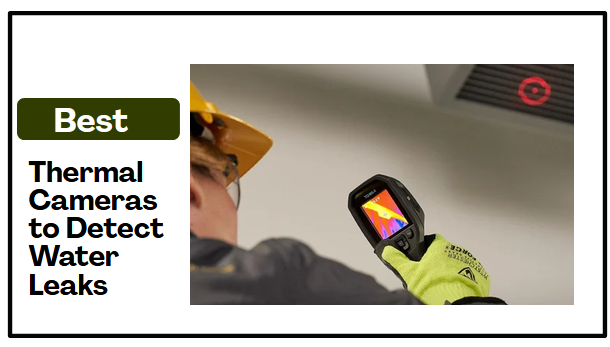
Best Thermal Cameras to Detect Water Leaks
1)Flir TG165-X Thermal Imaging Camera
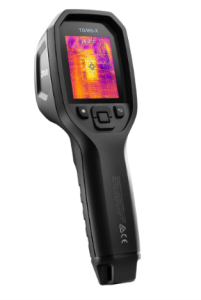
The FLIR TG165-X Thermal Imaging Camera is an entry level thermal camera that can help you find water leaks when conditions are right. Its 80 × 60 infrared sensor captures 4,800 pixels and measures temperatures from minus 25°C to 300°C. That range covers plumbing, HVAC, and general household inspection tasks.
MSX image enhancement embosses visible details onto the thermal view, which makes it easier to see where a warm or cool patch sits on a wall or ceiling. However, some owners report that the overlay does not line up well and produces a double image. The low resolution can also make distant details look blocky, so you get the clearest view by holding the camera close to the surface.
A built in laser pointer shows the size of the measurement area, which should speed up targeting. Unfortunately, many buyers say the laser sits off center and cannot be adjusted. So the thermal image is the safer guide.
The body carries an IP54 rating against dust, dirt, and oil, and FLIR drop tested the design. The camera weighs 13.9 ounces, charges through USB-C, and stores up to 50,000 images. FLIR backs it with two years of parts and labor coverage and ten years on the detector. Some reviewers report battery or power failures within the first year, so keep your proof of purchase.
For leak detection, the camera works best when water creates a clear temperature gap with the surrounding surface, such as cold rain on a warm day or warm water on a cool wall. It reads surface temperatures only. It cannot see through drywall, insulation, or metal roofs, and it will not find buried pipes without a strong temperature contrast.
Best Suited For:Homeowners, inspectors, and maintenance staff will get the most from it, especially for quick surface checks of ceiling stains, exposed walls, and accessible pipes. It is a poor match for anyone who needs to find hidden or underground leaks.
Specifications
- Infrared resolution: 80 × 60 pixels (4,800 total)
- Temperature range: minus 25°C to 300°C
- Accuracy: ±1.5°C
- Enclosure rating: IP54
- Weight: 13.9 oz
- Charging: USB-C
- Image storage: Up to 50,000 images
- Warranty: 2 years parts and labor, 10 years detector
Pros
- Works straight out of the box with simple setup
- MSX embossing helps locate warm and cool areas
- Detects hot or cold leaks when the temperature contrast is clear
- Wide temperature range suits home, HVAC, and electrical checks
- Compact and light enough for attics and ladders
- Ten year detector warranty
Cons
- Laser often sits off center and cannot be calibrated
2)TOPDON TC005 3.5″ Dual-Lens Thermal Imaging Camera
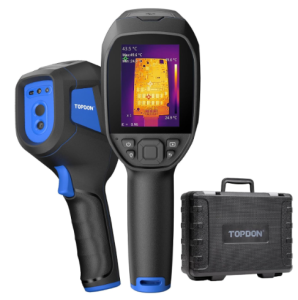
The TOPDON TC005 3.5″ Dual-Lens Thermal Imaging Camera is a handheld thermal camera that suits water leak inspections well. Its 256 × 192 infrared sensor captures 49,152 pixels, and image processing upscales the view to 512 × 384. A thermal sensitivity of 40 mK or better helps it pick up the small temperature gaps that wet material creates. Customers report that it finds floor leaks and water infiltration in drywall, where damp areas show up as cooler patches.
A second lens adds a 2MP visible light image to the thermal view. You can switch between four modes: visible light, thermal, fusion, and picture in picture. This makes it easier to match a cold patch to a real spot on the wall. The 3.5 inch display gives you a larger view, so you can check findings on site. You can also adjust emissivity and color palettes, which helps when you inspect different materials.
A built in laser measures distance up to 4 meters and gives you a reliable reference point. The camera records at 30 Hz, so the live view stays smooth as you scan a room. It stores images on 64 GB of internal memory, and a 16 GB microSD card comes included. The TopInfrared app connects over WiFi, and TopView software on a PC helps you analyze images and build inspection reports.
Battery life runs up to 8 hours, and a full recharge takes about 2 hours. The housing carries an IP54 rating, survives 2 meter drops, and includes an LED light. A carrying case comes in the box.
The TC005 works on surfaces only. It cannot see through opaque walls, and it will not detect buried pipes or leaks inside sealed lines. Slow or dormant leaks may not create a visible temperature gap. Glass and metal also reflect heat, which makes readings harder. Beginners may need time to learn emissivity and the software.
Best Suited For:Plumbers, home inspectors, and maintenance teams will get the most from it, especially for finding moisture in drywall, floors, and ceilings. Serious DIY users who inspect often and want documented reports will also benefit.
Specifications
- Infrared resolution: 256 × 192 pixels
- Enhanced resolution: 512 × 384 pixels
- Temperature range: -20°C to 550°C
- Thermal sensitivity: 40 mK or better
- Accuracy: ±2%
- Display: 3.5 inch touchscreen
- Laser distance range: Up to 4 meters
- Storage: 64 GB internal plus 16 GB microSD
- Battery life: Up to 8 hours
Pros
- Finds water infiltration in drywall and floors
- Dual lens view makes leak locations easy to match
- Four imaging modes and adjustable emissivity
- Built in laser for distance reference
- Large storage for detailed documentation
- WiFi app and PC software for reports
- Long battery life with fast charging
- IP54 housing with 2 meter drop resistance
Cons
- Detects surface temperatures only
3)HSFTOOLS F2VW Thermal Camera
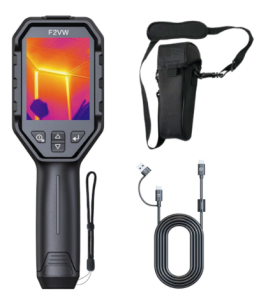
The HSFTOOLS F2VW Thermal Camera is a handheld thermal camera that gives leak hunters a lot of detail for the price. Its 256 × 192 infrared detector feeds a live AI Super Resolution function that enhances the view to 640 × 480. Thermal sensitivity sits at 40 mK or better, so it can pick up temperature gaps as small as 0.04°C. A 25 Hz frame rate keeps the picture smooth as you scan walls and floors.
A second camera adds a 2MP visible image. You can switch between visual, thermal, fusion, and picture in picture views with one button. Another button cycles through seven color palettes. This makes it easier to place a cold patch on a real surface. One home inspector reported that it picked up a water line behind a wall, even with the line 3.5 inches from the sheetrock. Others said they could see studs and radiant heating lines through finished surfaces.
The temperature range runs from minus 20°C to 550°C. You can set high, low, center, and custom measurement points, plus alarms for high and low readings. IntellFault and Pro Scene use AI to flag suspicious areas automatically. You can also adjust emissivity and distance, which helps on materials like wood and brick. Stated accuracy is ±2% or ±3.6°F.
Capture is simple. You pull the trigger to save a thermal and visible image together. WiFi sends images to a phone or tablet, and PC software handles deeper analysis. A built in LED light helps in dim attics, and a tripod mount supports steady inspections. The camera comes with a carrying case and lens cover.
Keep some limits in mind. The camera reads surface temperatures, so it works best when a leak creates a clear temperature contrast. Slow or dormant leaks may not show up. It will not find leaks in concrete slabs or underground, and metal surfaces reflect heat. The enhanced image is upscaled from the native sensor. Some buyers also reported a blurred unit, a weak carry bag, and slow support replies.
Best Suited For:Home inspectors, plumbers, and HVAC technicians will get the most from it. Serious homeowners who inspect often will also find it useful, especially for checking walls, floors, and ceilings for hidden moisture.
Specifications
- Native infrared resolution: 256 × 192 pixels
- Enhanced resolution: 640 × 480 pixels
- Thermal sensitivity: 40 mK or better
- Frame rate: 25 Hz
- Temperature range: minus 20°C to 550°C
- Accuracy: ±2% or ±3.6°F
- Display: 3.2 inch LCD
- Visible camera: 2MP
- Storage: 16 GB
Pros
- Detailed thermal view with live AI enhancement
- IntellFault flags suspicious areas automatically
- Adjustable emissivity and distance settings
- WiFi sharing and PC software for analysis
- Built in LED light and tripod mount
- Carrying case and lens cover included
Cons
- Needs a clear temperature difference to work well
4)Thermal Master Thor002 Handheld Thermal Camera
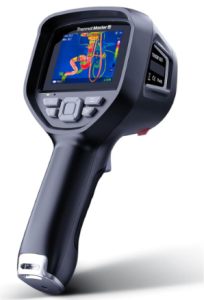
The Thermal Master Thor002 Handheld Thermal Camera is a handheld thermal camera that gives leak inspectors a large screen and plenty of detail. A 256 × 192 infrared sensor feeds X³ IR technology, which raises the thermal image to 512 × 384. Sensitivity of 40 mK helps it show faint temperature gaps. One owner used it to find very small water leaks in motor homes, and others say it quickly picks out hot and cold spots.
A 2MP visible camera pairs with a 3.5 inch, 640 × 480 IPS display. The screen refreshes at 25 Hz, so the picture stays smooth as you scan walls, floors, and ceilings. You can measure six points at once: the center, the hottest spot, the coldest spot, and three spots you choose. Emissivity settings let you adjust readings for different materials, and automatic alarms warn you about high and low temperatures. The range runs from minus 20°C to 550°C, with accuracy of ±3.6°F.
A 4.3mm lens extends detection range by 34.4%, and 4X digital zoom helps with distant checks. A laser pointer helps you aim. The camera also records photos and video, saves voice notes, and organizes files with QR codes. This makes reporting simpler after a job.
WiFi pairs the camera with a phone or iPad, and a USB link sends live thermal views to a PC. It has 8GB of RAM and 32GB of storage. The 5000mAh battery runs up to 10.5 hours, and 18W fast charging shortens downtime. The housing meets IP54 standards and survives drops from 2 meters.
Some limits apply. Like other thermal cameras, it reads surface temperatures, so a leak needs a clear temperature contrast to show up. Glass and metal reflect heat and weaken results. The enhanced image is upscaled from the native sensor. A few buyers received units that failed at startup, and some questioned temperature readings or screen sharpness. Running the screen at full brightness drains the battery faster.
Best Suited For:Home inspectors, plumbers, HVAC technicians, and electricians will get the most from the Thor002. It also suits frequent users who want a big screen and documented reports for moisture checks in homes, RVs, and other buildings.
Specifications
- Native infrared resolution: 256 × 192 pixels
- Enhanced resolution: 512 × 384 pixels
- Thermal sensitivity: 40 mK
- Temperature range: minus 20°C to 550°C
- Accuracy: ±3.6°F
- Display: 3.5 inch 640 × 480 IPS
- Storage: 32 GB
- Battery life: Up to 10.5 hours
- Weight: 3.12 lbs
Pros
- Finds small leaks and temperature gaps
- Large, clear IPS display
- Six point measurement with emissivity control
- Laser pointer and temperature alarms
- Voice notes and QR code file management
- WiFi and USB connections for review and reports
Cons
- Glass and metal surfaces reduce results
5)TOPDON TC004 3.5″ Thermal Imaging Camera
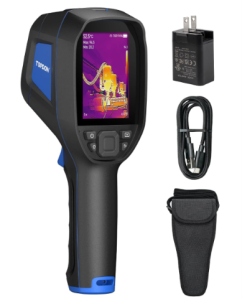
The TOPDON TC004 3.5″ Thermal Imaging Camera is a handheld thermal camera that suits water leak inspections well. Its 256 × 192 infrared sensor uses TISR technology to raise the image to 512 × 384. Sensitivity of 40 mK or better lets it show temperature gaps as small as 0.04°C. Owners report that it found a large basement leak and showed which pipe carried hot water and which carried cold, without turning on a valve.
The 3.5 inch display makes hot and cold spots easier to read during daily checks. Four viewing modes cover thermal, visual, fusion, and picture in picture, so you can match an odd patch to a real spot on a wall. A built in red laser pointer shows the measurement area. The camera also finds the hottest and coldest points automatically. In addition, you can adjust emissivity and distance to improve readings on wood, brick, metal, and concrete. Accuracy is stated at ±2% or ±3.6°F.
Customers say the camera starts up quickly and gives live feedback with no lag. It refreshes at 25 Hz, so the picture stays smooth as you scan. Several users could see studs behind walls because of the fine sensitivity, although it reads surface temperatures and does not truly see through them. TOPDON states that it can help locate leaks in concrete walls when a surface temperature difference exists.
Documentation is simple. The camera saves photos and video, and it holds 64 GB of internal storage plus a 16 GB microSD card. WiFi sends files to the TopInfrared app for analysis and reports, and a USB link supports PC review. A battery life of up to 12 hours means you can finish several inspections on one charge.
The housing meets IP54 standards and survives drops from 2 meters. An LED light helps in dark or tight spaces, and a carrying case comes in the box. At 2.11 pounds, it stays easy to carry.
Keep the limits in mind. A leak needs a clear surface temperature difference to show up. The enhanced image is upscaled from the native sensor, so fine detail has limits.
Best Suited For:Plumbers, home inspectors, HVAC technicians, and serious homeowners will get the most from it, especially for checking basements, walls, and floors for moisture.
Specifications
- Native infrared resolution: 256 × 192 pixels
- Enhanced resolution: 512 × 384 pixels
- Thermal sensitivity: 40 mK or better
- Temperature range: minus 20°C to 550°C
- Accuracy: ±2% or ±3.6°F
- Display: 3.5 inch screen
- Storage: 64 GB plus 16 GB microSD
- Battery life: Up to 12 hours
- Weight: 2.11 lbs
Pros
- Adjustable emissivity and distance settings
- Fast startup with smooth live view
- Photo and video recording with generous storage
- WiFi app and PC software for reports
- Long battery life
- IP54 housing with 2 meter drop resistance
Cons
- Needs a clear temperature difference to show leaks
6)Flir C3-X Compact Thermal Imaging Camera
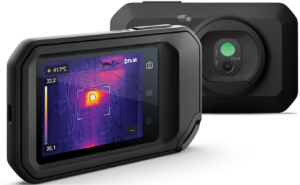
The FLIR C3-X Compact Thermal Imaging Camera is a compact thermal camera that can help with water leak checks, but it works best as a light duty tool. Its 128 × 96 infrared sensor captures 12,288 pixels and reads temperatures from minus 20°C to 300°C. That range covers plumbing and general building work. Owners report that it can spot hot water pipes behind drywall when the pipe gives off heat.
MSX technology embosses visible details onto the thermal image, which makes it easier to see where a warm or cool patch sits. A 5MP visual camera supports the view, and you can switch between thermal, visual, MSX, and picture in picture modes. The 3 inch screen is small, and the camera refreshes at 9 Hz or less, so quick scans look slower than they do on faster cameras.
FLIR Ignite cloud connectivity lets you upload images directly, build reports, and email them to customers. WiFi links the camera to a mobile app, although some users find the app basic. A built in LED light helps in dim spaces, and the camera ships with a pouch, USB cable, and wrist strap. At 6.7 ounces, it slips easily into a tool bag. Two AA batteries power it, and typical runtime is about two to three hours.
FLIR covers the camera with two years of parts and labor protection and ten years on the detector. Even so, you should plan around some limits. The low resolution makes small leaks hard to pinpoint, and several buyers called the images unclear. Some also reported slow or stuck startups. The camera reads surface temperatures only, so a leak must create a clear temperature difference to appear. Subtle differences take practice to read, and slow or dry stains may not show.
Best Suited For:Home inspectors and technicians who need a pocket sized camera for quick surface checks will get the most from it. It suits spotting warm pipes, damp wall surfaces, and air leaks at close range, and it fits users who want FLIR reporting tools at an entry level price. It does not suit anyone who needs to find small, hidden, or distant leaks with precision.
Specifications
- Infrared resolution: 128 × 96 pixels
- Temperature range: minus 20°C to 300°C
- Accuracy: ±5°F or ±3%
- Frame rate: 9 Hz or less
- Display: 3 inch screen
- Visual camera: 5MP
- Battery: 2 AA batteries
- Weight: 6.7 oz
- Warranty: 2 years parts and labor, 10 years detector
Pros
- Compact and light for tool bags
- MSX adds visible detail to thermal images
- Detects hot water pipes behind drywall
- FLIR Ignite cloud upload and report sharing
- Built in LED light
- Strong detector warranty
- Includes pouch, USB cable, and wrist strap
Cons
- Low resolution makes small leaks hard to pinpoint
7)HSFTOOLS P2W WiFi Thermal Camera
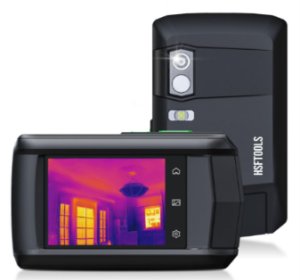
The HSFTOOLS P2W WiFi Thermal Camera is a pocket sized thermal camera that suits water leak inspections well. Its 256 × 192 detector feeds a live Super Resolution function that outputs a 640 × 480 image. A 3.5 inch touchscreen shows the view at 25 Hz, so the picture stays smooth as you scan. Sensitivity of 40 mK or better helps it pick up temperature gaps as small as 0.04°C, which is useful when damp material sits only slightly cooler than its surroundings.
The feature most relevant to leak work is IntellFault, paired with the Pro Scene Color Alarm. HSFTOOLS says this deep learning tool analyzes the scene and alerts you to possible water leaks, abnormal moisture, and insulation voids. That makes inspections easier for beginners, while experienced users can still check the flagged areas themselves.
An 8MP visual camera sits beside the thermal sensor. You can choose from five image modes: visual, thermal, fusion, picture in picture, and blending. Eight color palettes are available, and the phone style touchscreen makes switching simple. The camera records live video with audio, so you can note findings as you go. Temperature readings run from minus 20°C to 400°C. The camera tracks the hottest, coldest, and center points automatically. You can set high and low alerts that appear as on screen text, an LED flash, or a buzzer. Emissivity and distance settings help with accuracy on wood, brick, and other materials, and stated accuracy is ±2% or ±3.6°F.
WiFi pairs the camera with the HSFTOOLS app for sharing images and reports. Windows software adds screen projection, real time monitoring, and 3D plotting. The 16GB of storage holds up to 60,000 images or 54 hours of video. A lithium ion battery runs up to 4 hours, and power saving settings stretch that time. The camera has an IP54 rating and survives 6.6 foot drops. It also includes an LED light, tripod mount, carrying case, lifetime firmware updates, and technical support.
Like other thermal cameras, it reads surface temperatures, so a leak needs a clear temperature contrast to show up. The 640 × 480 image is upscaled from the native sensor.
Best Suited For:Home inspectors, plumbers, and facility technicians will get the most from it, especially for checking walls, ceilings, and floors for hidden moisture. Homeowners who want guided alerts will also find it useful.
Specifications
- Native infrared resolution: 256 × 192 pixels
- Enhanced resolution: 640 × 480 pixels
- Thermal sensitivity: 40 mK or better
- Temperature range: minus 20°C to 400°C
- Accuracy: ±2% or ±3.6°F
- Display: 3.5 inch touchscreen
- Visual camera: 8MP
- Storage: 16 GB
- Battery life: Up to 4 hours
Pros
- Five image modes and eight color palettes
- Automatic hot, cold, and center point tracking
- High and low alerts through text, light, or sound
- Video and audio recording
- WiFi app and PC software for analysis and reports
- IP54 housing with 6.6 foot drop resistance
Cons
- Reads surface temperatures only
Advantages of Using Thermal Cameras to Detect Water Leaks
Finds Moisture Without Opening Walls
A thermal camera lets you scan walls, ceilings, and floors without cutting into them. Wet material usually sits at a different temperature from dry material around it, so the camera shows a damp patch as a color change. This helps you find the likely source before you start repairs. As a result, you can limit damage to finished surfaces and focus on the right spot.
Shows Temperature Differences Quickly
Thermal cameras turn invisible heat patterns into a clear picture. You can scan a whole room in minutes and spot cold patches, warm pipes, or uneven surfac,es. This beats checking each area by touch or by eye. Quick scans also save time on large jobs, because you can rule out dry areas fast.
Combines Thermal and Visible Views
Many models pair a thermal sensor with a visible light camera. Fusion and picture in picture modes lay the heat pattern over a normal photo. So you can see exactly where a cold patch sits on a wall, a ceiling, or a pipe run. This context also makes it easier to explain your findings to a client or a plumber.
Picks Up Subtle Temperature Gaps
High thermal sensitivity lets a camera detect very small temperature changes. That matters for leaks, because damp material often differs from dry material by only a fraction of a degree. A sensitive camera can reveal early moisture before it grows into a bigger problem. It can also help you trace warm and cool pipes without opening a valve.
Gives Helpful Measurement Tools
Many cameras track the hottest, coldest, and center points on their own. Some let you set custom points and high or low alarms. Emissivity and distance settings also help you adjust readings for different materials. Together, these tools turn a colorful picture into usable data. They also help beginners and experienced users judge what they see.
Supports Clear Documentation and Reporting
Large storage lets you save thousands of photos and long videos during a job. WiFi and USB links move files to a phone or computer for review. Report software then helps you build records for clients, insurers, or your own files. This proof makes it easier to show where a problem started and what you found.
Works Well in Real Field Conditions
Thermal cameras for inspections come in compact, portable bodies. Many include a built in light, a tripod mount, and a carrying case. Dust and splash protection and drop resistance add durability for attics, basements, and job sites. Battery life ranges from a few hours to a full day, so you can plan around the length of your work.
Factors to Consider When Choosing the Best Thermal Cameras to Detect Water Leaks
Native Thermal Resolution
Native resolution tells you how many real thermal pixels the sensor captures. A higher count gives a sharper picture and makes small leaks easier to pinpoint. Lower resolution can still work for close, simple checks. However, it may leave you guessing at a distance. Check the native figure first, because it matters more than the enhanced output.
Image Enhancement and Upscaling
Many cameras use software to raise the displayed resolution. This can make edges look cleaner and improve readability. Still, upscaled images do not add true sensor detail. Treat enhancement as a helpful bonus rather than a replacement for a better sensor. Read the specifications carefully so you know which number is native and which is processed.
Thermal Sensitivity
Sensitivity shows how small a temperature difference the camera can detect. A lower millikelvin number means finer detail. This matters for leak work, because damp areas often show only slight temperature changes. A more sensitive camera helps you spot early moisture and faint pipe lines. It also helps in rooms where the temperature contrast is weak.
Temperature Range and Accuracy
Check the range against the jobs you expect. Plumbing and moisture checks need only a moderate range, but electrical and equipment checks may need more headroom. Accuracy figures also depend on conditions, so read the details. Remember that emissivity affects readings on different surfaces. A camera with adjustable settings gives you more control.
Display Size and Frame Rate
A larger screen makes it easier to read thermal patterns on site. Touchscreens can also speed up menu changes. Frame rate affects how smooth the live view looks as you move. A slow refresh can make scanning feel laggy. Look for a clear display and a refresh rate that matches the way you work.
Imaging Modes and Visible Camera
A good visible camera helps you match thermal patterns to real locations. Modes like fusion and picture in picture add useful context. Several color palettes also let you adjust the view for different scenes. Choose a model with quick switching, so you can change views without slowing down your inspection.
Measurement, Alerts and Smart Features
Look for automatic hot and cold spot tracking, multiple measurement points, and adjustable alarms. A laser pointer can help you aim. Some cameras also flag possible leaks or moisture on their own. These tools can save time, especially for newer users. Still, you should always confirm flagged areas by checking the image yourself.
Storage, Connectivity, Battery and Build
Plan for how you will record and share your work. Large storage, WiFi, USB, and report software all help with documentation. Battery life matters on long jobs, and rechargeable packs cut running costs. Finally, check weight, drop resistance, dust and splash protection, and warranty. These details show how well the camera will hold up on real job sites.
Best Thermal Cameras to Detect Water Leaks FAQs
How do thermal cameras detect water leaks?
Thermal cameras measure surface temperature and show it as a color image. Wet areas often feel cooler than dry areas because of evaporation, while hot water lines can appear warmer. The camera shows these differences, so you can trace a likely leak. The result depends on a clear temperature contrast between the damp area and its surroundings.
Can a thermal camera see through walls or find buried pipes?
No. Thermal cameras read surface temperatures only. They cannot see through drywall, concrete, or soil. However, a leak or a heated pipe can change the temperature of the surface above it. When that happens, the camera can show a pattern that points to the problem. Buried or deeply hidden leaks may not show at all, so you may need other tools to confirm them.
What features matter most for finding water leaks?
Native thermal resolution and sensitivity matter most, because they decide how much detail you can see. A visible camera with fusion mode, adjustable emissivity, and hot and cold spot tracking also helps. Beyond that, consider storage, connectivity, battery life, and build quality. The best choice depends on whether you need quick home checks or detailed professional reports.
Conclusion
The best thermal cameras to detect water leaks turn invisible temperature differences into a clear picture, so you can find hidden moisture without opening walls. Strong resolution and sensitivity help you spot small leaks, while dual cameras show exactly where a cold patch sits. Storage, WiFi sharing, and report tools make documentation simple, and durable, portable designs suit attics, basements, and job sites. Every camera reads surface temperatures only, so a leak needs a clear temperature contrast to show up. Match the camera to the detail and reporting your work requires, and it can point you to the source of a leak with confidence.
Read more: 7 Best Scopes For $1500