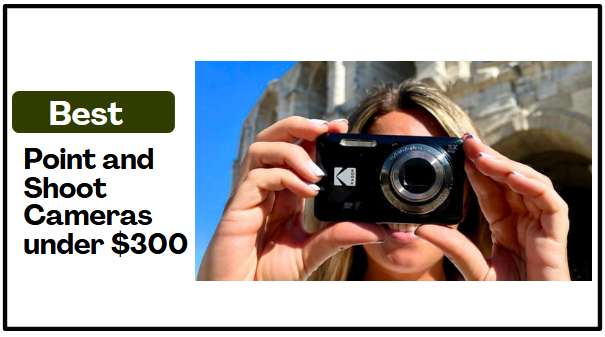
Want a dedicated camera for capturing life’s moments without spending hundreds of dollars on bulky photography equipment? The best Point and Shoot Cameras under $300 offer more variety than you might expect. Some make everyday photography and travel snapshots easier, while others bring optical zoom, underwater protection or dedicated vlogging features to the table. I looked at what each option offers, paying attention to practical features such as sensor resolution, lens coverage, video recording, battery life and ease of use.
In this guide, I’ll walk you through my top picks, highlight what makes each camera worth considering, and explain the factors to weigh before buying. I’ll also answer common questions to help you find a camera that fits your photography needs and budget. Ready to find your next camera? Let’s get started!
A snapshot of the Best Point and Shoot Cameras under $300:
- Kodak PIXPRO FZ55 16MP Compact Digital Camera – Best Overall
- Kodak PIXPRO FZ45 16MP Compact Digital Camera – Best Budget Option
- Kodak PIXPRO WPZ2 16MP Waterproof Digital Camera – Best Rugged and Waterproof Option
- VENOPTIX 4K Vlogging Camera – Best for Solo Vlogging
Best Point and Shoot Cameras under $300
1) Kodak PIXPRO FZ55 16MP Compact Digital Camera
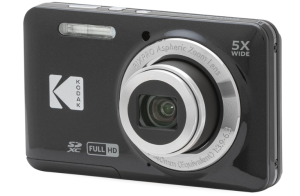
The Kodak PIXPRO FZ55 is a point-and-shoot camera designed for beginners and casual photographers. Its 16MP CMOS sensor and 5x optical zoom provide a straightforward setup for everyday photography. It prioritizes simple operation over extensive manual controls, making it accessible to first-time camera buyers.
Its 28–140mm equivalent lens offers flexibility for different shooting situations. The 28mm wide-angle setting accommodates group photos, landscapes and indoor scenes, while the 140mm telephoto end brings distant subjects closer. However, the 5x optical zoom offers limited reach for wildlife photography and distant action.
Image quality is best in well-lit environments. The 16MP sensor captures sufficient detail for casual photographs, but its small 1/2.3-inch size limits low-light performance. Images taken in darker conditions may show noticeable noise and reduced detail. HDR and several scene modes provide additional shooting options.
For video, the FZ55 records 1080p Full HD footage at 30fps. This is adequate for casual recordings, but the lack of 4K support limits its appeal to buyers seeking higher-resolution video. Its 2.7-inch LCD screen allows users to compose shots and review photographs, although it lacks touch controls and a tilting design.
Measuring approximately 91.5 × 56.5 × 22.9mm and weighing 106g without the battery, the FZ55 fits easily into a small bag or pocket. Its rechargeable LB-012 lithium-ion battery provides approximately 200 shots per charge under CIPA testing conditions.
The Kodak PIXPRO FZ55 is best suited to first-time camera buyers, students and casual photographers who want a simple camera for holidays, family gatherings and everyday snapshots.
Specifications
- Sensor: 16MP CMOS
- Optical zoom: 5x
- Focal length equivalent: 28mm to 140mm
- Video resolution: 1080p Full HD
- Display: 2.7 inch LCD
- Image stabilization: Digital
- Battery: LB 012 rechargeable lithium ion
- Memory card support: SD, SDHC and SDXC, up to 512GB
Pros
- 5x optical zoom
- 28mm wide angle lens
- Full HD video recording
- Lightweight compact body
Cons
- No 4K video recording
- Limited optical zoom range
2) Kodak PIXPRO FZ45 16MP Compact Digital Camera
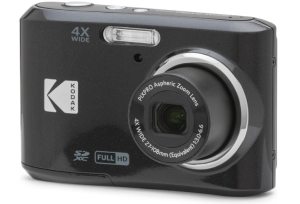
For buyers exploring the best Point and Shoot Cameras under $300, the Kodak PIXPRO FZ45 offers a 16.35MP BSI CMOS sensor, 4x optical zoom and a 27mm wide angle lens in a compact body. These features make it a practical option for beginners who want to capture family pictures, travel scenes and everyday moments without dealing with complex camera controls.
The 27mm wide angle lens helps capture broader scenes, including group pictures and landscapes. Its 4x optical zoom extends the focal range to 108mm, offering some flexibility when photographing subjects at a distance. This combination works well for general photography, although it provides less reach for distant subjects.
The FZ45 also records 1080p Full HD video at 30fps. Its one touch video function makes switching between photography and recording straightforward. The 2.7 inch LCD provides a viewing area for composing shots and reviewing pictures. Face detection and red eye removal offer additional assistance during casual shooting.
Power comes from two AA batteries, which can be alkaline or rechargeable NiMH types. This makes replacing depleted batteries straightforward when carrying spares. However, battery life is relatively modest. Kodak estimates approximately 120 still shots per set of alkaline batteries under CIPA testing standards. Video recording lasts approximately one hour at 1080p and 30fps.
The Kodak PIXPRO FZ45 suits beginners and casual photographers who want simple controls and basic photography capabilities. Its wide angle coverage, straightforward operation and Full HD video make it suitable for everyday use. In addition, buyers who need greater zoom reach or more advanced recording options may want to consider other cameras.
Specifications
- Sensor: 16.35MP BSI CMOS (1/2.3-inch)
- Optical zoom: 4x
- Focal length equivalent: 27–108mm
- Aperture: f/3.0–f/6.6
- Video resolution: 1080p at 30fps
- Display: 2.7-inch LCD (230K pixels)
- Image stabilization: Digital
- Battery: Two AA alkaline or NiMH batteries
- Memory card support: SD, SDHC and SDXC, up to 512GB
- Weight: 117g (body only)
Pros
- 27mm wide angle lens
- 4x optical zoom
- One touch video recording
- Replaceable AA batteries
Cons
- Limited optical zoom range
3) Kodak PIXPRO WPZ2 16MP Waterproof Digital Camera
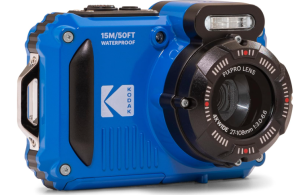
Unlike ordinary compact cameras, the Kodak PIXPRO WPZ2 is built for outdoor use. Its rugged body offers waterproof protection up to 15 metres, shock resistance against drops of up to 2 metres and IP6X dust protection. These features make it suitable for beach trips, swimming and outdoor activities where water, dust and accidental drops are concerns.
The WPZ2 also supports underwater photography at depths of up to 15 metres for a maximum of one hour. However, maintaining its waterproof protection requires care. Check the battery compartment gasket for dirt or damage before submerging the camera, and ensure the cover is securely closed. Rinse it with fresh water after exposure to saltwater to prevent salt buildup.
For still photography, the camera uses a 16.35MP BSI CMOS sensor and a 4x optical zoom lens with a 27–108mm equivalent focal range. The 27mm wide-angle setting accommodates landscapes and group photos, while the telephoto end provides some flexibility when photographing distant subjects. However, the limited zoom range restricts its usefulness for wildlife and action photography. Its small sensor also offers modest low-light performance, making it better suited to well-lit conditions.
The WPZ2 records 1080p Full HD video at 30fps, which is sufficient for casual outdoor recordings but falls short of 4K-capable alternatives. Built-in Wi-Fi allows wireless photo and video transfers through the PIXPRO Remote Viewer app. Compatible smartphones can also provide remote camera control. A 2.7-inch LCD screen handles image composition and playback.
The Kodak PIXPRO WPZ2 is best suited to beachgoers, swimmers, snorkellers and outdoor enthusiasts who need a camera for water-based activities and rugged environments.
Specifications
- Sensor: 16.35MP BSI CMOS
- Optical zoom: 4x
- Focal length equivalent: 27–108mm
- Video resolution: 1080p at 30fps
- Waterproof rating: IPX8, up to 15m
- Shockproof rating: Up to 2m
- Dust protection: IP6X
- Display: 2.7-inch LCD
- Battery: LB-015 rechargeable lithium-ion
- Memory card support: microSD/microSDHC, up to 32GB
Pros
- Waterproof up to 15m
- Shockproof up to 2m
- Built-in Wi-Fi connectivity
- Dedicated underwater shooting mode
Cons
- Limited memory card capacity
4) VENOPTIX 4K Vlogging Camera
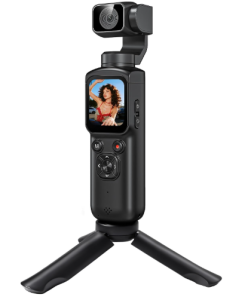
The VENOPTIX 4K Vlogging Camera offers a video-focused alternative in our roundup of the best Point and Shoot Cameras under $300. Designed primarily for solo content creators, it features a 330° horizontally rotating lens and 180° manual vertical adjustment. This allows users to change shooting angles without repositioning the entire camera, making it useful for recording selfies, tutorials and daily vlogs.
The rotating lens works alongside face tracking, which helps keep subjects within the frame during video recording. This is particularly useful when filming while moving around. The camera also includes autofocus and a 1.72-inch IPS touchscreen for navigating settings and reviewing footage.
For video recording, the VENOPTIX supports 4K resolution at 30fps. Additional options include slow motion, time lapse, loop recording and video pause. Built-in Wi-Fi connects the camera to a smartphone through the HDV CAM app for wireless transfers and remote control. It also supports webcam functionality for online meetings and streaming.
For still photography, the camera advertises 75MP images, although this figure should not be mistaken for verified native sensor resolution. Its 4x digital zoom also offers less flexibility than optical zoom when photographing distant subjects. The 2,400mAh rechargeable battery is advertised to provide up to three hours of continuous recording, although actual runtime depends on usage and recording conditions.
The VENOPTIX 4K Vlogging Camera is best suited to beginner vloggers and solo content creators who want flexible framing, automatic face tracking and straightforward video recording. Its digital-only zoom and limited photography capabilities make it less suitable for buyers prioritizing conventional still photography.
Specifications
- Video resolution: 4K at 30fps
- Advertised photo resolution: 75MP
- Lens rotation: 330° horizontal, 180° manual vertical adjustment
- Digital zoom: 4x
- Display: 1.72-inch IPS touchscreen
- Autofocus: Yes
- Face tracking: Video mode
- Connectivity: Built-in Wi-Fi
- Battery: 2,400mAh rechargeable
- Advertised battery life: Up to 3 hours
Pros
- 330° rotating lens
- Face tracking for video recording
- 4K video at 30fps
- Built-in Wi-Fi
- Multiple creative recording modes
Cons
- Digital zoom only
- No built-in flash
Related:
Advantages of Point and Shoot Cameras under $300
Easy Photography Without Complicated Settings
Capturing everyday moments doesn’t have to involve learning complex camera settings. Point and shoot cameras offer automatic shooting functions that help beginners take photographs with minimal adjustments. This makes them practical for family gatherings, holidays and casual outings where you want to focus on the moment rather than camera controls. For anyone moving beyond smartphone photography, the best Point and Shoot Cameras under $300 offer an accessible way to explore dedicated cameras.
Convenient to Carry on Everyday Outings
Carrying a camera becomes easier when it doesn’t require a separate bag or bulky accessories. Compact bodies and lightweight designs make these models convenient for travel, sightseeing and everyday photography. You can keep one in a small bag and have it ready when an interesting scene or memorable moment appears. This portability particularly benefits travellers and casual photographers who want a dedicated camera without carrying extensive equipment.
Greater Control Over Photo Composition
Optical zoom allows you to adjust your framing without relying entirely on digital enlargement. With 4x and 5x optical zoom options across this lineup, buyers get some flexibility when photographing subjects at different distances. Wide angle lenses also help capture group photographs, indoor scenes and landscapes. Although these zoom ranges won’t replace longer lenses for distant wildlife or sports, they provide useful coverage for everyday photography.
More Ways to Capture Memories Through Video
Still photographs aren’t the only way to preserve an experience. These cameras also support video recording, with options ranging from 1080p Full HD to 4K at 30fps. Full HD is suitable for casual recordings of family activities and travel moments. Meanwhile, 4K gives aspiring creators another option when producing video content. Buyers comparing the best Point and Shoot Cameras under $300 can therefore choose a model that accommodates both their photography and recording needs.
Added Protection for Outdoor Photography
Ordinary compact cameras require careful handling around water, dust and accidental drops. However, rugged models offer additional protection for activities that might put conventional cameras at risk. Waterproofing up to 15 metres, shock resistance against drops of up to 2 metres and dust protection make underwater photography and outdoor adventures more accessible. This is particularly useful for beach trips, swimming and other water-based activities. Buyers should still follow the manufacturer’s instructions on depth limits, exposure time and seal maintenance.
Easier Photo Transfers and Wireless Control
Moving pictures from a camera to a smartphone can be inconvenient when every transfer requires a cable or computer. Selected models address this through built-in Wi-Fi and compatible mobile apps. Depending on the camera, you can transfer photographs, access videos or use your phone for remote viewing and control. This is useful for travellers who want to share pictures while away from home and creators who need more convenient ways to manage their content.
Battery Choices That Match Different Needs
Battery arrangements can influence how convenient a camera is to use during longer outings. Some models rely on rechargeable lithium-ion batteries, while others accept replaceable AA batteries. Rechargeable options reduce the need to purchase disposable batteries, whereas AA-powered cameras allow you to carry spares and replace depleted batteries when charging isn’t available. Checking the estimated battery life alongside the battery type helps buyers choose an arrangement that fits their shooting habits.
Features That Make Solo Video Creation Easier
Recording yourself becomes more manageable when a camera includes features designed for solo content creation. A rotating lens helps switch between filming yourself and capturing your surroundings, while face tracking can assist with keeping you in the frame during video recording. Additional tools such as slow motion, time lapse and video pause offer more creative control. These capabilities make selected models worth considering for beginners producing vlogs, tutorials and short-form social media content.
Factors to Consider When Choosing the Best Point and Shoot Cameras under $300
Image Sensor and Photo Quality
A camera’s sensor influences how much detail it captures and how well it performs in different lighting conditions. Many affordable point and shoot models use small CMOS sensors, which work well for everyday photography but can struggle in dim environments.
Check the sensor type and size rather than relying on megapixel counts alone. A higher advertised resolution doesn’t automatically produce clearer or more detailed photographs. If you mainly capture family gatherings, holidays and casual snapshots, look for a camera that delivers satisfactory results in the lighting conditions where you usually shoot.
Optical Zoom and Lens Coverage
The lens determines how much of a scene you can capture and how closely you can frame distant subjects. Check the optical zoom range and equivalent focal length before choosing a camera.
A wider starting focal length helps with landscapes, indoor photography and group shots. Greater telephoto reach, meanwhile, makes distant subjects easier to frame.
Optical zoom is generally more useful than digital zoom because it magnifies subjects through the lens rather than simply cropping the image. Consider your usual photography subjects to decide how much zoom you need.
Video Resolution and Recording Features
If you plan to record family activities, travel experiences or social media content, examine video capabilities alongside still photography specifications. Some models offer 1080p Full HD, while others advertise 4K recording at 30fps. However, resolution alone doesn’t determine video quality.
Image stabilization, autofocus, frame rates and audio capabilities also influence the recording experience. Beginners making casual videos may find Full HD sufficient, while aspiring vloggers might prefer 4K and additional recording tools.
Check whether features such as face tracking work during video recording and whether the camera supports your preferred shooting style.
Build Quality and Environmental Protection
Consider where you intend to use the camera and how much protection it needs. Standard compact models may suit everyday outings, but outdoor activities can expose them to water, dust and accidental drops. If you enjoy swimming, snorkelling or beach photography, look for a clearly stated waterproof rating and maximum operating depth.
Shockproof and dustproof ratings also matter when photographing in demanding environments. A rugged appearance alone doesn’t guarantee protection. Review the manufacturer’s usage limits and maintenance instructions, particularly for waterproof models that require proper seal inspection and care.
Battery Type and Shooting Endurance
Battery arrangements affect how long you can photograph or record before needing another power source. Some cameras use rechargeable lithium-ion batteries, while others accept replaceable AA batteries. Rechargeable options reduce the need to purchase disposable batteries.
AA-powered models, on the other hand, let you carry spares for outings without convenient charging access. Check the manufacturer’s estimated still-image capacity and video recording time as well. These figures can differ considerably, so consider both when planning longer trips or extended recording sessions.
Connectivity and File Transfer Options
Wireless connectivity can simplify how you manage photographs and videos after shooting. Some cameras include Wi-Fi that connects to compatible smartphone apps for transferring files or controlling the camera remotely. This is particularly useful when sharing travel pictures without first connecting the camera to a computer. However, wireless functions vary between models.
Check whether the companion app supports file transfers, remote viewing or camera control, and confirm smartphone compatibility before buying. Memory card capacity and connection options are also worth checking if you regularly capture large files.
Handling, Display and Ease of Use
A camera should feel comfortable to hold and straightforward to operate, especially if you’re new to dedicated photography. Consider its weight, grip, button placement and screen size before making a decision. A clear LCD helps with composing photographs and reviewing captured images, while accessible controls make common adjustments less frustrating.
Automatic shooting modes, face detection and responsive focusing can also simplify everyday use. If possible, check how comfortably the camera fits in your hands and whether its controls are easy to reach.
Frequently Asked Questions
Are point and shoot cameras under $300 good for beginners?
Yes. Point and shoot cameras under $300 can be a good starting point for beginners who want a dedicated camera without complicated controls. Many offer automatic shooting modes, built-in lenses and straightforward operation. Depending on the model, you can also get optical zoom, Full HD or 4K video, and wireless connectivity. However, image quality and available features vary, so choose according to your photography needs.
Can point and shoot cameras under $300 record 4K video?
Some models in this price range support 4K video recording, while others are limited to 1080p Full HD. Check the maximum recording resolution and frame rate before buying.
Also, consider autofocus, image stabilization and audio quality, since these affect the overall recording experience. If you mainly capture family moments and travel memories, Full HD may be sufficient. Aspiring vloggers may prefer a model with 4K recording and dedicated video features.
What should I prioritize when buying a point and shoot camera under $300?
Start with the type of photography and video you intend to capture. Look at sensor size, optical zoom, video resolution and battery life. If you frequently visit beaches or participate in outdoor activities, waterproofing and shock resistance may matter more. Meanwhile, travellers may prioritize compact designs and convenient battery arrangements. Choose a camera that meets your most important needs rather than paying extra for features you are unlikely to use.
Conclusion
The best Point and Shoot Cameras under $300 bring together a useful mix of everyday photography, optical zoom, outdoor protection and video creation capabilities. Some make family photographs and travel snapshots easier, while others cater to underwater adventures or solo content creation. That variety makes choosing according to your shooting habits more important than chasing the highest megapixel count or video resolution. Therefore, how and where you intend to use your camera should guide your decision.