
From my experience exploring the night sky, I’ve found that the Best Computerised Telescopes combine powerful optics with automated systems, allowing beginners and pros to locate and track planets, the Moon, and deep-sky objects without struggling with star charts or complex setups.
In this guide, I’ll walk you through the features that matter most, share my top picks for beginners and aspiring astrophotographers, provide a detailed buying guide to help you choose the right telescope, and answer common questions through an FAQ section.
Whether you’re aiming to capture stunning planetary images or simply enjoy a clear view of the cosmos, this guide will give you the insights you need to get started with confidence.
Here is a summary of the Best Computerised Telescopes:
- Celestron NexStar 8SE Computerized Telescope – Best Overall for Performance and Versatility
- Celestron NexStar 6SE Computerized Telescope – Best Balance of Portability and Power
- Celestron NexStar 130SLT Computerized Telescope – Best Compact Option for Beginners
- Celestron NexStar 5SE Computerized Telescope – Best for Entry-Level Astrophotography
- Celestron NexStar 4SE Computerized Telescope – Best for Portability and Ease of Use
- Odyssey PRO UNISTELLAR Smart Telescope – Best Smart Telescope with Digital Imaging Features
- SkyWatcher Flextube 250 SynScan Dobsonian – Best Large-Aperture Telescope for Deep-Sky Observing
Best Computerised Telescopes
1)Celestron NexStar 8SE Computerized Telescope

Check Price in Amazon
The Celestron NexStar 8SE Computerized Telescope is an excellent choice among the Best Computerised Telescopes. It combines powerful optics with an intuitive automated system, making it ideal for users ready to move beyond manual scopes while keeping the setup approachable and efficient.
Its 8-inch Schmidt-Cassegrain optical tube delivers impressive light-gathering power without being bulky. Fine lunar details are easily visible, Jupiter’s cloud bands appear crisp, and Saturn’s rings are clear. Deep-sky objects like galaxies and globular clusters remain bright and detailed, even in less-than-perfect conditions. This makes the telescope rewarding for beginners while still engaging more experienced observers.
The fully computerized GoTo mount simplifies navigation. Using the NexStar+ hand control, you can access a database of over 40,000 celestial objects, and the telescope will automatically locate and track them. This eliminates the need for manual star charts and lets users spend more time observing. Continuous tracking keeps objects centered, which is especially helpful for planetary viewing and entry-level astrophotography.
SkyAlign technology reduces setup time and complexity. By centering any three bright stars or planets, the system calculates alignment without requiring prior knowledge of star names. Beginners can start observing within minutes, and experienced users benefit from the convenience. The telescope is also compatible with a wide range of Celestron accessories, allowing upgrades for enhanced automation, wireless control, or improved accuracy, making it a long-term investment.
Celestron provides a two-year warranty and technical support, offering reassurance to new users learning computerized telescopes. Overall, the NexStar 8SE delivers bright optics, automated tracking, and flexibility in a portable, reliable package.
Pros
- Excellent 8-inch aperture for detailed planetary and deep-sky viewing
- Fully automated GoTo system with a large 40,000 object database
- Easy alignment with SkyAlign for quick setup
- Compact design for its optical power
- Reliable tracking suitable for beginners in astrophotography
- Upgradeable with a wide range of accessories
- Strong warranty and customer support
Cons
- Higher price compared to entry-level telescopes
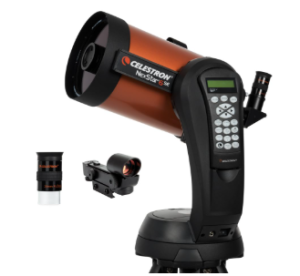
2)Celestron NexStar 6SE Computerized Telescope
Check Price in Amazon
The Celestron NexStar 6SE Computerized Telescope is an excellent choice for beginners and for observing planets. It strikes a balance between performance and portability, making it ideal for users seeking a capable telescope without the complexity or weight of larger setups.
The 6-inch Schmidt-Cassegrain optical tube offers impressive light-gathering power in a compact form. Fine lunar details appear clearly, and planetary features such as Jupiter’s cloud bands and Saturn’s rings are easy to observe. It also performs well on deep-sky objects like galaxies and globular clusters, providing beginners with a rewarding introduction while satisfying more experienced observers.
Navigation is simplified thanks to the fully automated GoTo mount. With the NexStar+ hand control, users can access a database of over 40,000 celestial objects, allowing the telescope to locate and track targets automatically. This system makes observing much more efficient, especially for those less familiar with star charts. Continuous tracking keeps objects centered, which is particularly helpful for planetary viewing and entry-level astrophotography.
SkyAlign technology streamlines setup further. By centering any three bright stars or planets, the telescope determines its alignment within minutes. Beginners can start observing almost immediately, while experienced users appreciate the convenience and speed of this system.
The NexStar 6SE also supports a wide range of Celestron accessories. As your astronomy skills develop, upgrades such as enhanced control options or improved accuracy tools can extend the telescope’s capabilities. This flexibility ensures it remains useful well beyond the entry-level stage.
Celestron backs the NexStar 6SE with a two-year warranty and access to technical support. This provides peace of mind for new users, giving guidance and assistance whenever needed during setup or operation.
Pros
- Compact and portable design with solid optical performance
- 6-inch aperture delivers clear views of planets and deep-sky objects
- Fully automated GoTo system with 40,000 object database
- Simple alignment using SkyAlign technology
- Reliable tracking for beginners in astrophotography
- Expandable with a variety of accessories
- Backed by a two-year warranty and customer support
Cons
- Less light-gathering power compared to larger models
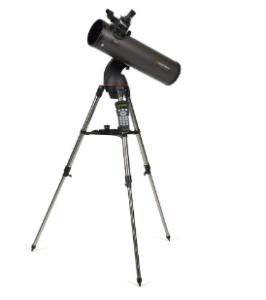
3)Celestron NexStar 130SLT Computerized Telescope
Check Price in Amazon
The Celestron NexStar 130SLT Computerized Telescope is a strong choice among the Best Computerised Telescopes, Astrophotography & Planets. It combines performance, portability, and ease of use, making it ideal for beginners and casual observers who want a computerized system without handling bulky equipment.
Its 130mm Newtonian reflector optics deliver bright and detailed views of the night sky. Lunar features appear sharp, while Jupiter and Saturn reveal clear cloud bands and rings. Beyond the Solar System, galaxies, nebulae, and star clusters are accessible with satisfying clarity for a telescope of this size. This versatility makes it suitable for both new and intermediate observers.
Locating objects is simplified by the computerized star tracking system. The telescope includes a database of over 4,000 celestial targets and can quickly point to and track objects accurately. This reduces time spent manually searching and allows users to focus on observing. Continuous tracking also keeps objects centered, which is useful for planetary viewing and basic astrophotography.
Setup is straightforward thanks to SkyAlign technology. By centering a few bright stars or planets, the system calculates alignment without requiring prior knowledge of the sky. Users can start observing in just a few minutes, saving time and reducing frustration for beginners.
Portability adds another advantage. Its compact design allows easy transport for trips or dark-sky sessions, and assembly is simple, letting observers spend more time exploring the sky. Compatibility with 2-inch eyepieces provides room for future upgrades, supporting skill growth.
The included Starry Night software enhances the experience by offering an interactive way to learn the night sky and plan observing sessions. Combined with a two-year warranty and access to Celestron’s customer support, the NexStar 130SLT offers confidence and reliability for beginners and casual astronomers alike.
Pros
- 130mm aperture provides bright and detailed views
- Computerized system with 4,000 object database for easy navigation
- Compact and portable for travel and outdoor use
- Simple alignment with SkyAlign technology
- Compatible with 2 inch eyepieces for upgrades
- Includes Starry Night software for learning and planning
- Backed by a two-year warranty and customer support
Cons
- Smaller database compared to higher-end models
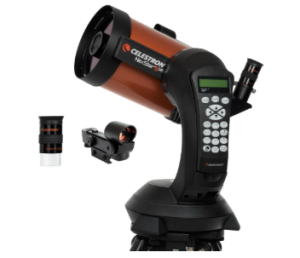
4)Celestron NexStar 5SE Computerized Telescope
Check Price in Amazon
The Celestron NexStar 5SE Computerized Telescope is a versatile option among Computerised Telescopes. It combines a compact design with advanced computerized features, making it ideal for beginners ready to move beyond manual scopes, as well as for more experienced observers seeking portability and performance.
The 5-inch Schmidt-Cassegrain optical tube delivers bright and detailed views of the night sky. Lunar features are clear, and Jupiter’s cloud bands and Saturn’s rings are visible with crisp definition. The aperture also allows you to explore deep-sky objects such as galaxies and globular clusters, offering a satisfying experience in a compact and portable form factor.
Navigation and tracking are simplified by the fully automated GoTo mount and NexStar+ hand control. With a database of over 40,000 celestial objects, the telescope can locate and track targets automatically. This eliminates the need for star charts or manual alignment and allows users to spend more time observing. The tracking system keeps objects centered, which is useful for planetary viewing and entry-level astrophotography.
SkyAlign technology makes setup fast and intuitive. By centering just three bright stars or planets, the system calculates your position and aligns the mount within minutes. Beginners can begin observing almost immediately, while more advanced users benefit from the convenience of quick, reliable alignment.
For those interested in astrophotography, the built-in wedge enables polar alignment for long-exposure imaging. This reduces field rotation and improves tracking, making it easier to capture detailed images of the night sky. The telescope’s compatibility with Celestron accessories allows users to expand its capabilities over time, including wireless control, automation, or enhanced positioning tools.
Celestron supports the NexStar 5SE with a two-year warranty and unlimited access to technical support. This provides peace of mind, particularly for newcomers to computerized telescopes, ensuring help is available whenever needed.
Pros
- 5-inch aperture provides clear views of planets and deep-sky objects
- Fully automated GoTo mount with 40,000+ object database
- SkyAlign technology enables fast and easy setup
- Built-in wedge supports long-exposure astrophotography
- Compact and portable design for travel and observation
- Expandable with a wide range of Celestron accessories
- Backed by a two-year warranty and customer support
Cons
- Smaller aperture limits light-gathering compared to larger models
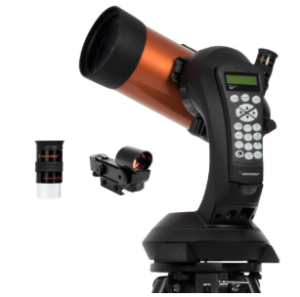
5)Celestron NexStar 4SE Computerized Telescope
Check Price in Amazon
The Celestron NexStar 4SE Computerized Telescope is a compact and versatile choice among the Best Computerised Telescopes. Its lightweight design and advanced computerized features make it ideal for both beginners and experienced users seeking a portable, easy-to-use telescope.
The 4-inch Maksutov-Cassegrain optics deliver crisp, high-contrast views of the night sky. Lunar craters and ridges appear sharply defined, while Jupiter and Saturn reveal intricate cloud bands and rings. The long focal length makes planetary observation particularly rewarding, and despite its small size, the telescope provides excellent clarity for both lunar and planetary viewing.
Finding objects is simplified with the fully automated GoTo mount and NexStar+ hand control. The telescope’s database includes over 40,000 celestial objects, allowing it to locate and track targets automatically. Continuous tracking keeps objects centered, which benefits planetary observation and entry-level astrophotography. SkyAlign technology makes alignment fast and easy. By centering three bright stars or planets, the system calculates its position without requiring prior knowledge of the night sky, letting beginners start observing immediately while offering convenience for experienced users.
For aspiring astrophotographers, the built-in wedge allows polar alignment for long-exposure imaging, reducing field rotation and improving tracking. The telescope is also compatible with Celestron accessories, allowing upgrades for enhanced automation, wireless control, or greater accuracy.
Celestron supports the NexStar 4SE with a two-year warranty and access to technical support, providing beginners with guidance and reassurance while learning computerized telescope operation. Overall, the 4SE delivers portability, precision, and flexibility in a compact package suitable for both new and seasoned stargazers.
Pros
- 4-inch Maksutov-Cassegrain optics deliver sharp, high-contrast views
- Fully automated GoTo mount with 40,000+ object database
- SkyAlign technology enables fast and simple setup
- Built-in wedge supports entry-level astrophotography
- Compact and portable design for easy travel
- Compatible with a wide range of Celestron accessories
- Backed by a two-year warranty and customer support
Cons
- Smaller aperture limits deep-sky visibility compared to larger models
6)Odyssey PRO UNISTELLAR Smart Telescope

Check Price in Amazon
The Odyssey PRO UNISTELLAR Smart Telescope offers a digital-first approach to astronomy, making it ideal among the Best Computerised Telescopes. Its combination of motorized GoTo, app control, and smart eyepiece technology provides an intuitive experience.
Setup is fast and easy. Simply power on, connect to the app, and begin observing. The motorized Alt-Az mount and ultra-precise GoTo system remove the need for polar alignment or calibration. Autofocus ensures clear images whether observing from a balcony or a dark-sky site. The telescope features the only smart eyepiece technology on the market. Users can enjoy an immersive visual experience while simultaneously capturing digital images. Observations are viewable both through the eyepiece and on smartphones or tablets, offering flexibility for beginners and enthusiasts alike.
The Odyssey PRO combines optics, a digital camera, electronics, motorized mount, tripod, and 64GB onboard storage in a compact 4 kg telescope with a 2.5 kg tripod. The 5-hour battery ensures extended observing sessions. Everything is integrated for a seamless experience. Users can export RAW and FITS data for post-processing. The telescope provides access to a 5,000+ object catalog and a 37-million-star database. It also allows participation in NASA and SETI citizen-science projects, including asteroid occultations and exoplanet transits.
The telescope supports iOS and Android devices via Wi-Fi. It has an 85mm f/3.9 optical system with a 320mm focal length. The field of view is 33.6 × 45 arcmin with a limiting magnitude of 17.2. Pixel size is 1.45 µm, resolving power 1.68″, and sampling 0.93″/px.
Pros
- Ultra-fast setup in under two minutes with automatic alignment
- UNISTELLAR eyepiece technology for immersive visual and digital observing
- All-in-one system with optics, camera, motorized mount, tripod, storage, and battery
- Export RAW/FITS data for advanced astrophotography
- Access to 5,000+ object catalog and 37-million-star database
- Participate in NASA and SETI citizen-science projects
- Compact, lightweight, and portable with up to 5-hour battery life
Cons
- Premium price compared to standard entry-level telescopes
7)SkyWatcher Flextube 250 SynScan Dobsonian

Check Price in Amazon
The SkyWatcher Flextube 250 SynScan Dobsonian is a large-aperture Dobsonian that combines bright, detailed views with computerized convenience. It ranks among the Best Computerised Telescopes, delivering excellent performance at a competitive price.
The 10-inch aperture delivers bright and bold views of the Moon, planets, and deep-sky objects. Fully multi-coated borosilicate mirrors with 94% reflectivity provide exceptional clarity. Even faint objects appear crisp, making it suitable for both casual and serious observers. The innovative Flextube design allows the optical tube to collapse for easy transport. Collimation is maintained during collapse, so setup at dark-sky sites is faster and simpler. This design keeps portability manageable despite the large aperture.
The SynScan Dobsonian uses all-metal gearing on DC servo motors to provide smooth, accurate tracking. The hand controller includes a 42,000-plus object database. Built-in Wi-Fi enables control via smartphone or tablet, offering flexible ways to navigate the sky. The telescope comes complete with a 2-inch Crayford-style focuser with 1 1/4-inch adapter, two wide-angle eyepieces (25mm and 10mm), and a 9×50 straight-through finder scope, so users can begin observing immediately.
Pros
- Large 10-inch aperture for bright, detailed planetary and deep-sky views
- Collapsible design allows easy transport without disturbing collimation
- Fully computerized GoTo with 42,000+ object database
- All-metal gearing and DC servo motors provide smooth and precise tracking
- Built-in Wi-Fi for smartphone and tablet control
- Fully multi-coated mirrors with 94% reflectivity for exceptional clarity
- Comes with all essential accessories for immediate use
Cons
- Larger size may require careful handling during setup
You may also like to read:8 Best Refractor Telescopes for Beginners
Advantages of Using Best Computerised Telescopes
Ease of Use
Computerized telescopes remove much of the complexity associated with traditional manual scopes. With automated GoTo mounts and intuitive hand controllers, beginners can quickly locate and track celestial objects without needing extensive knowledge of the night sky. For instance, systems like SkyAlign allow users to align their telescope by centering just a few bright stars or planets, significantly reducing setup time and frustration. This ease of use encourages beginners to start observing immediately rather than spending hours learning star charts.
Accurate Object Tracking
These telescopes continuously track objects as the Earth rotates, keeping planets, the Moon, and deep-sky objects centered in the eyepiece. This precision is particularly helpful for astrophotography, as it prevents objects from drifting out of view during long exposures. Tracking also ensures that observations remain smooth and uninterrupted, enhancing the overall viewing experience, especially when exploring fine planetary details or faint deep-sky structures.
High-Quality Optics in Compact Designs
Many computerized telescopes, such as the NexStar 6SE, 8SE, and Odyssey PRO, feature high-quality optics in portable, lightweight packages. Users can enjoy bright, detailed views of lunar craters, planetary cloud bands, rings of Saturn, and galaxies without needing a massive telescope. The combination of large apertures and long focal lengths allows for both planetary and deep-sky observation, making these telescopes versatile tools for a wide range of astronomical targets.
Integrated Technology and Expandability
Computerized scopes often include built-in software, digital imaging capabilities, or compatibility with accessories that enhance automation and precision. For example, telescopes like the Odyssey PRO allow RAW/FITS export for astrophotography, while others can integrate wireless control or advanced positioning tools. This flexibility makes them suitable for beginners who want a simple setup but also allows growth as skills improve, making the investment long-lasting.
Portability and Convenience
Many modern computerized telescopes are designed to be compact, collapsible, or lightweight, allowing users to transport them to dark-sky locations easily. Portability ensures that observing sessions are convenient and that users can take advantage of optimal viewing conditions, which is especially important for beginners who may not have permanent observatory setups.
Enhanced Learning and Engagement
By providing access to large celestial databases and software like Starry Night, computerized telescopes turn stargazing into an interactive learning experience. Beginners can identify thousands of stars, galaxies, and nebulae while gradually building knowledge about astronomy. Additionally, participation in citizen-science programs, available on some smart telescopes, allows users to contribute real observations to projects, increasing engagement and motivation.
Factors to Consider When Choosing the Best Computerised Telescopes
Aperture Size
Aperture size determines how much light the telescope can gather, directly affecting image brightness and clarity. Larger apertures reveal finer details on planets, sharper lunar features, and more distant deep-sky objects like galaxies and nebulae. For beginners, a balance is important—enough aperture to see interesting details, yet still manageable in size and weight for portability. Too small an aperture limits what can be observed, while too large can make the telescope cumbersome for regular use.
Optical Design
The type of optics, whether refractor, reflector, or compound (Schmidt-Cassegrain or Maksutov-Cassegrain), affects image quality, focal length, and maintenance needs. Long focal lengths are ideal for planetary observation, providing sharp, detailed views of planets and the Moon, while wider fields of view are better for star clusters and galaxies. Compound designs often offer compactness with good optical performance, which is helpful for beginners who need both portability and versatility.
Mount Type and Stability
A stable mount is essential for smooth tracking and clear viewing. Computerized telescopes generally use alt-azimuth mounts, which are intuitive, or equatorial mounts, which are better for long-exposure astrophotography. The mount should support the telescope’s weight and remain steady during observations to avoid vibrations that blur details. Stability becomes even more critical when adding accessories or imaging equipment.
Computerization and Tracking
Automated GoTo systems and tracking allow telescopes to locate celestial objects quickly and keep them centered as the Earth rotates. This saves time and makes stargazing more enjoyable, especially for beginners unfamiliar with star charts. Accurate tracking is crucial for astrophotography, as even minor shifts can blur images. Systems that combine a hand controller or app-based interface make navigation intuitive and reduce setup complexity.
Ease of Setup and Alignment
Quick and simple alignment is important, especially for beginners who may be discouraged by complicated procedures. Features that allow alignment using just a few bright stars, without prior knowledge of the sky, enable users to start observing within minutes. A telescope that is easy to assemble, transport, and calibrate ensures more time is spent viewing rather than troubleshooting.
Portability and Weight
Portability affects how often a telescope is used. Lightweight and collapsible designs make it easier to transport to darker skies or move between locations. A telescope that is too heavy or bulky may remain unused, reducing overall enjoyment. Compact designs allow beginners to experiment in urban areas or take the telescope on trips without difficulty.
Compatibility and Upgrade Options
A telescope that can accommodate accessories such as additional eyepieces, cameras, or automation tools extends its usefulness as skills grow. Compatibility with imaging equipment, wireless controllers, or advanced mounts ensures the telescope can evolve from simple viewing to astrophotography and more advanced observation. This flexibility protects the investment and allows continued engagement.
Budget and Support
Cost is an important factor, balancing quality optics, computerization, and stability with affordability. Beyond price, warranty coverage and access to customer or technical support provide reassurance for beginners. Reliable support ensures troubleshooting guidance, setup assistance, and confidence in using the telescope effectively, making the experience more enjoyable and reducing frustration.
FAQs
What makes a computerized telescope suitable for beginners?
A computerized telescope simplifies observing by automatically locating and tracking celestial objects. Beginners can access large object databases without needing prior knowledge of the night sky or star charts. Features like automated alignment, intuitive hand controllers, or app-based control reduce setup time, allowing users to start observing within minutes. This combination of guidance, precision, and ease of use makes computerized telescopes ideal for new astronomers.
Can computerized telescopes be used for astrophotography?
Yes, many computerized telescopes are suitable for entry-level astrophotography. Continuous tracking keeps objects centered in the eyepiece or camera, which is essential for long-exposure imaging. Some models also include polar alignment wedges or compatibility with cameras and imaging accessories, allowing users to capture detailed photos of planets, the Moon, and deep-sky objects. However, advanced astrophotography may require additional equipment such as cameras, adapters, and tracking enhancements.
How portable are computerized telescopes, and can they be used in urban areas?
Modern computerized telescopes are designed with portability in mind, featuring lightweight or collapsible designs. They can be transported to dark-sky locations for optimal observing or set up on balconies or small outdoor areas in cities. While city lights can reduce visibility of faint deep-sky objects, computerized tracking ensures accurate targeting and makes it easier to view planets, the Moon, and bright star clusters even in urban environments.
Conclusion
In summary, the Best Computerised Telescopes offer a perfect blend of accessibility, performance, and versatility. They simplify stargazing with automated GoTo systems, accurate tracking, and intuitive alignment, making it easy for beginners to locate and enjoy celestial objects. At the same time, their quality optics, compatibility with accessories, and imaging capabilities make them suitable for planetary observation and entry-level astrophotography. Whether you want to explore the Moon’s craters, capture stunning images of planets, or observe distant galaxies, these computerized telescopes provide a reliable and enjoyable way to experience the night sky while supporting your growth as an astronomer.