Are you planning an Alaska cruise and looking for the best binoculars to fully experience glaciers, whales, and distant wildlife? I’ve found that the scenery is breathtaking, but without the right binoculars, you miss the finer details that make the trip unforgettable.
From spotting humpback whales breaking the surface to catching a glimpse of bald eagles high above, the right pair brings everything closer and makes every moment feel more real.
In this guide, I’ll walk you through the top picks, highlight what each one does best, and help you choose the right pair for your trip so you can enjoy every detail without missing a thing.
See summary of the best binoculars for an Alaska cruise:
- Nikon Prostaff 3S 10×42: best overall
- Bushnell H2O Roof Prism Binoculars: best waterproof option
- Celestron Nature DX 8×42: best for wildlife viewing
- Vortex Optics Crossfire HD 10×42: best value for money
- Wingspan Optics Spectator 8×32: best budget
- Nikon Monarch 5 8×42: best premium option
- Nikon Aculon A211: best for beginners
- Steiner Predator AF 8×30: best for fast focus tracking
8 Best Binoculars for An Alaska Cruise
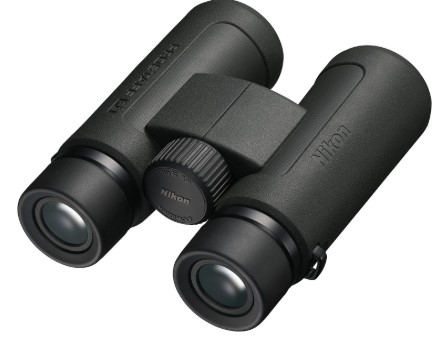
1) Nikon Prostaff 3S 10×42
Check Price in Amazon
The Nikon Prostaff 3S 10×42 is a practical and well-balanced option for an Alaska cruise, where changing weather, long viewing distances, and constant movement demand dependable optics. With its 10x magnification and 42mm objective lenses, it brings distant glaciers, whales, and coastal wildlife closer while still maintaining a bright and usable image in daylight conditions. This combination works especially well when scanning wide ocean views or tracking animals from the deck of a moving ship.
One of the most useful aspects for cruise travel is its rugged and weather-resistant build. The binoculars are fully waterproof and nitrogen-filled to prevent internal fogging, which makes them suitable for damp sea air and sudden weather shifts. O-ring seals and rubber armoring add durability and grip, so they remain easy to handle even in windy or wet conditions. This kind of reliability is important when you are exposed to ocean spray or early morning mist while cruising through fjords.
Optically, the binoculars deliver a clear and bright viewing experience thanks to multi-coated lenses and silver-alloy prism coatings. These features help improve light transmission and contrast, allowing you to pick out details such as distant wildlife or ice textures on glaciers. The wide field of view also makes it easier to locate moving subjects, which is useful when spotting whales or seabirds. While they are designed primarily for daytime use, they still perform well in overcast conditions common in Alaska.
Comfort is another area where this model performs well. The relatively lightweight design for a 10×42 binocular makes it easy to carry during long periods on deck, and the long eye relief allows comfortable viewing even for eyeglass wearers. The central focus system is smooth and easy to adjust, which helps when quickly shifting focus between near and far subjects such as passing icebergs and distant shorelines.
Pros
- Clear and bright image quality suitable for outdoor viewing
- Waterproof and fog-proof construction for harsh weather
- Comfortable grip with durable rubber armoring
- Good magnification for long-distance wildlife spotting
- Wide field of view helps track moving subjects
Cons
- Slight chromatic aberration can appear in high-contrast scenes
2) Bushnell H2O Roof Prism Binoculars
Check Price in Amazon
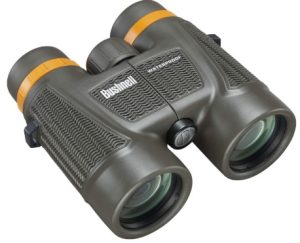
The Bushnell H2O Roof Prism Binoculars are designed with water environments in mind, making them a natural fit for an Alaska cruise. With 10x magnification and 42mm objective lenses, they provide a strong balance between reach and brightness, allowing you to observe distant glaciers, whales, and coastal wildlife with clarity. This level of magnification works well for open ocean viewing, where subjects are often far away but still require a stable and usable image.
One of the most important qualities for cruise use is durability in wet conditions, and this model performs well in that regard. It features an IPX7 waterproof rating along with O ring sealing and nitrogen purging, which prevents internal fogging when temperatures shift or when exposed to sea spray. This means you can confidently use them on deck in misty mornings or light rain without worrying about performance issues.
The optical system is built with fully multi coated lenses and BaK 4 roof prisms, which help improve light transmission, contrast, and overall image sharpness. This results in bright and clear views even in overcast conditions, which are common in Alaska. Anti reflection coatings also help maintain color accuracy and reduce glare when viewing reflective surfaces such as water or ice.
Handling and comfort are also well considered. The binoculars feature a lightweight aluminum chassis with a textured rubber coating that provides a secure grip, even when your hands are wet.
The ergonomic design makes them easy to hold steady for longer periods, and the central focus system allows quick adjustments when switching between moving wildlife and distant landscapes. Their relatively compact roof prism design also makes them easier to pack and carry during excursions.
Pros
- Waterproof and fog proof design suited for marine environments
- Bright and clear image with good contrast
- Comfortable grip with non slip texture
- Good magnification for long distance viewing
- Lightweight and travel friendly design
Cons
- Image sharpness is good but not at premium level
3) Celestron Nature DX 8×42
Check Price in Amazon
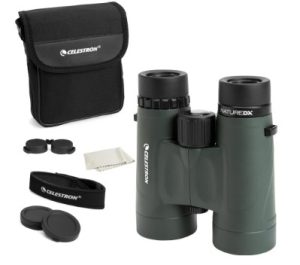
The Celestron Nature DX 8×42 is a well-rounded and budget-friendly binocular that fits the needs of an Alaska cruise surprisingly well. With 8x magnification and 42mm objective lenses, it delivers a steady and bright image that is easy to manage on a moving ship. This magnification level is especially useful for cruise environments because it provides enough reach to observe whales and distant shorelines while remaining stable in windy conditions.
Optically, the binocular uses fully multi coated lenses and phase coated BaK 4 prisms, which help improve light transmission, contrast, and clarity. This results in a clear and detailed image during daytime viewing, making it easier to pick out wildlife and landscape features such as glaciers and forested coastlines. The wide field of view also helps you quickly locate moving subjects like seabirds or breaching whales, which is important when viewing from a constantly shifting deck.
Another important advantage for an Alaska cruise is its weather resistance. The binocular is fully waterproof and nitrogen filled, which prevents internal fogging when moving between cold outdoor air and warmer indoor spaces. This makes it reliable in misty, rainy, or humid conditions commonly experienced in coastal Alaska. The durable rubber armored body also adds protection and ensures a secure grip even when your hands are wet.
In terms of usability, the Nature DX 8×42 is designed with beginners and casual users in mind. The focus wheel is smooth and responsive, allowing quick adjustments when switching between near and distant subjects. With an eye relief of around 17.5 mm, it is comfortable for eyeglass wearers, and its moderate weight makes it suitable for extended viewing sessions without causing fatigue. While it performs well in daylight, its limitations become more noticeable in low light conditions such as early morning or dusk, where image brightness and detail are reduced compared to more expensive models.
Pros
- Clear and bright image for daytime viewing
- Wide field of view helps track moving wildlife
- Waterproof and fog proof for changing weather
- Smooth and easy focusing system
- Good value for the price
Cons
- Low light performance is limited
4) Vortex Optics Crossfire HD 10×42
Check Price in Amazon
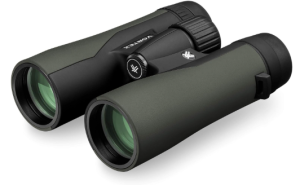
The Vortex Optics Crossfire HD 10×42 is a versatile and durable binocular that fits well into the demanding conditions of an Alaska cruise. With 10x magnification and 42mm objective lenses, it provides strong reach for spotting distant wildlife such as whales, seals, and coastal birds, while still maintaining a bright and usable image during daytime viewing. This level of magnification is especially useful when observing far-off glaciers or shoreline details from the deck of a ship.
Optically, the binocular uses an HD optical system designed to improve resolution, reduce chromatic aberration, and deliver accurate color reproduction. Fully multi coated lenses enhance light transmission, resulting in a clear and reasonably bright image even under cloudy or overcast skies. While it does not match premium models, it still offers a satisfying viewing experience for most outdoor situations, including the variable lighting conditions common in Alaska.
Durability is one of its strongest qualities. The binocular is built with a rubber armored body that provides a secure grip and protection against impacts. It is also O ring sealed and nitrogen purged, making it both waterproof and fog proof. This ensures reliable performance in wet, windy, and cold environments, which are typical during an Alaska cruise. It is designed to withstand harsh weather without compromising functionality, giving users confidence when using it on open decks or during excursions.
Handling and usability are also well suited for travel. The ergonomic open hinge design reduces weight and makes it easier to hold for extended periods. The central focus wheel is smooth and responsive, allowing quick adjustments when shifting between moving wildlife and distant scenery. Adjustable eyecups provide comfort for both eyeglass and non eyeglass users, while the option to mount it on a tripod adds flexibility for longer viewing sessions.
Pros
- Clear and detailed image with good color accuracy
- Waterproof and fog proof construction for harsh weather
- Durable rubber armored body with secure grip
- Good magnification for long distance viewing
- Comfortable handling with smooth focus control
Cons
- Low light performance is decent but not exceptional
5) Wingspan Optics Spectator 8×32
Check Price in Amazon
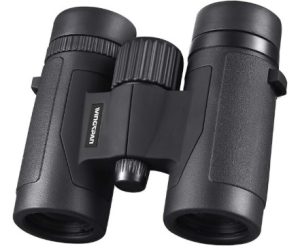
The Wingspan Optics Spectator 8×32 is a compact and lightweight binocular that suits travelers looking for portability without sacrificing usability. With 8x magnification and 32mm objective lenses, it provides a stable and easy viewing experience that works well on a moving cruise ship. This magnification level helps reduce image shake, making it easier to track whales, seabirds, and distant shorelines while standing on deck.
One of its most appealing qualities is its compact design. The mid size 8×32 configuration keeps the binocular small enough to carry comfortably in a bag or around your neck during long excursions. Weighing just over 15 ounces, it is light enough for extended use without causing fatigue, which is especially useful during long periods of sightseeing. Its ergonomic shape and non slip grip also make it easy to handle in windy or slightly wet conditions.
Optically, the Spectator 8×32 delivers clear and sharp images for its price range. It uses BaK 4 prisms and anti reflective coatings to improve image quality, helping produce good brightness and contrast during daytime viewing. The wide field of view allows you to scan large areas of ocean or coastline quickly, which is helpful when trying to locate moving wildlife. It also performs well in distinguishing details and colors, making it suitable for observing birds and marine life.
In terms of durability, the binocular offers basic waterproof and fog resistant capabilities, allowing it to handle light moisture and changing weather conditions. While it can withstand splashes and mist, it is not designed for heavy exposure to water, so some care is required in harsher conditions. The inclusion of accessories such as a carrying case, strap, and lens covers adds convenience for travel and protection during transport.
Pros
- Compact and lightweight design for easy travel
- Stable 8x magnification ideal for use on a moving ship
- Clear and sharp image for daytime viewing
- Wide field of view helps locate moving subjects
- Comfortable grip with good handling
Cons
- Low light performance is limited compared to larger models
6) Nikon Monarch 5 8×42
Check Price in Amazon
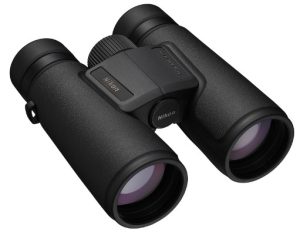
The Nikon Monarch 5 8×42 is a high quality binocular that performs exceptionally well in the demanding conditions of an Alaska cruise. With 8x magnification and 42mm objective lenses, it offers a steady and bright viewing experience that is easy to manage on a moving ship. This configuration is ideal for scanning wide ocean views, spotting whales at a distance, and observing coastal wildlife without excessive image shake.
Optically, this model delivers impressive clarity and color accuracy thanks to the use of ED glass and fully multi coated lenses. These features help reduce chromatic aberration and improve overall image sharpness, allowing you to see fine details such as feather patterns on birds or textures on distant glaciers. Dielectric high reflective prism coatings further enhance light transmission, resulting in brighter images and more natural colors even under overcast skies. This makes it particularly useful in Alaska, where lighting conditions can change quickly throughout the day.
Another strong advantage is its performance in low light conditions. The 42mm lenses gather a good amount of light, making the binocular effective during early mornings or late evenings when wildlife activity is often highest. While it does not reach the level of top tier models, it still provides very good brightness and clarity for its class. This adds versatility for cruise travelers who want to make the most of every viewing opportunity.
Durability and comfort are also well addressed. The binocular is waterproof and fog proof, with nitrogen purging and O ring sealing to prevent internal moisture buildup. This ensures reliable performance in mist, rain, and sea spray. The rubber armored body provides a secure grip and protects against minor impacts, while the lightweight design makes it comfortable to carry during long periods on deck. Adjustable eyecups and long eye relief also make it suitable for eyeglass wearers.
In everyday use, the binocular feels smooth and responsive. The central focus wheel allows quick and precise adjustments when switching between near and distant subjects, which is useful when tracking moving wildlife. While the field of view is slightly narrower than some competitors, the overall image quality and comfort still make it a strong performer for nature observation.
Pros
- Bright and clear image with accurate color reproduction
- ED glass reduces chromatic aberration
- Waterproof and fog proof for harsh weather
- Comfortable design with long eye relief
- Smooth and precise focusing system
Cons
- Field of view is narrower than some competitors
7) Nikon Aculon A211 10×42
Check Price in Amazon
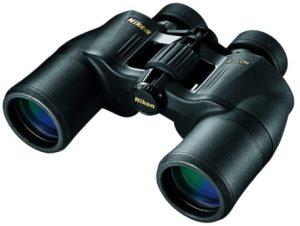
The Nikon Aculon A211 10×42 is a budget friendly binocular that offers solid optical performance for travelers heading on an Alaska cruise. With 10x magnification and 42mm objective lenses, it provides enough reach to observe distant glaciers, whales, and shoreline wildlife while maintaining a reasonably bright image during daylight hours. This makes it a practical option for general sightseeing, especially when viewing wide open ocean landscapes.
Optically, the binocular uses multi coated lenses and BaK4 Porro prisms, which help deliver bright and clear images across a range of lighting conditions. The inclusion of aspherical eyepiece lenses also helps reduce distortion and maintain image quality across the field of view, allowing for more consistent clarity when scanning large areas. The wide field of view further enhances usability, making it easier to locate moving wildlife such as seabirds or whales.
One of the key advantages of this model is its value for money. It is designed to provide good image quality without a high price, making it appealing for beginners or casual users. The rubber armored body offers a secure and comfortable grip, while the central focus system is simple and easy to use. It is also tripod adaptable, which can be useful for longer viewing sessions when observing distant scenery.
However, there are some limitations that are important to consider for an Alaska cruise. Unlike many modern roof prism binoculars, this model is not waterproof or fog proof, which can be a drawback in wet and unpredictable coastal weather. Its Porro prism design also makes it bulkier and heavier than more compact alternatives, which may affect portability during excursions.
Pros
- Bright and clear image for the price
- Wide field of view for scanning landscapes
- Good magnification for distant subjects
- Comfortable grip with simple controls
- Strong value for beginners and casual users
Cons
- Bulkier design compared to roof prism models
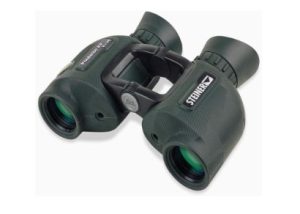
8) Steiner Predator AF 8×30
Check Price in Amazon
The Steiner Predator AF 8×30 is a unique and highly practical binocular that brings a different approach to viewing, making it a strong option for an Alaska cruise. With 8x magnification and 30mm objective lenses, it delivers a stable and easy viewing experience that works well on a moving ship. The moderate magnification helps reduce image shake, which is especially useful when observing wildlife such as whales or seabirds from the deck.
One of its most distinctive features is the Sports Auto Focus system. Instead of constantly adjusting a central focus wheel, each eyepiece is set once to match your vision, and everything from medium distance to infinity remains sharp without further adjustment. This makes it very effective for tracking fast moving subjects or quickly shifting between distant glaciers and passing wildlife. It simplifies the viewing process and allows you to react instantly to changing scenes
Optically, the binocular uses fully multi coated lenses along with Steiner’s CAT coatings, which are designed to enhance contrast and improve visibility in complex environments. This helps bring out details in shaded areas, such as animals against dark backgrounds or textured ice formations. The Porro prism design also contributes to a sense of depth and a more immersive image, which can make scenic viewing more engaging
The build quality is another strong point. The binocular features a durable Makrolon polycarbonate chassis with rubber armoring, offering both impact resistance and a secure grip. It is weather resistant with an IPX4 rating, meaning it can handle rain, mist, and splashes commonly encountered on an Alaska cruise. Its lightweight design, around 19 ounces, makes it comfortable to carry and use for extended periods
However, there are some trade offs to consider. The 30mm lenses limit low light performance compared to larger 42mm models, which may affect visibility during early mornings or late evenings. The field of view is also slightly narrower than some competing 8x binoculars, and the minimum focus distance is relatively long due to the fixed focus system.
Pros
- Fast viewing with no need for constant refocusing
- Stable 8x magnification ideal for use on a moving ship
- High contrast optics improve detail visibility
- Lightweight and comfortable for travel
- Durable and weather resistant construction
Cons
- Low light performance is limited compared to larger binoculars
Factors to Consider When Choosing The Best Binoculars For Alaska Cruise
Magnification
Magnification determines how close distant subjects appear, but higher power is not always better for a cruise. On a moving ship, too much magnification can make the image shaky and difficult to control. A moderate range such as 8x to 10x provides a good balance between reach and stability, allowing you to observe wildlife and scenery without constant image vibration.
Objective Lens Size
The size of the objective lens affects how much light enters the binoculars, which influences brightness and clarity. Larger lenses such as 42mm perform better in cloudy or low light conditions, which are common in Alaska. Smaller lenses are lighter and more portable but may struggle during early mornings, evenings, or overcast weather.
Image Quality and Optics
Optical quality plays a major role in how sharp and detailed your view will be. Features such as multi coated lenses, quality prisms, and good glass construction improve brightness, contrast, and color accuracy. Better optics help you see finer details like textures on glaciers or markings on distant wildlife, making the experience more immersive.
Field of View
A wider field of view allows you to see more of the scene at once, which is especially useful when scanning large ocean areas or tracking moving animals. It makes it easier to locate subjects quickly and follow their movement without constantly adjusting your position. This is particularly helpful when spotting whales or seabirds.
Waterproof and Fog Proof Design
Alaska’s coastal environment can be wet, cold, and unpredictable. Waterproof binoculars with proper sealing protect against rain, splashes, and sea spray. Fog proof construction, often achieved through nitrogen purging, prevents internal condensation when moving between temperature changes, ensuring clear viewing at all times.
Weight and Portability
Since you may carry binoculars for long periods on deck or during excursions, weight and size are important. Lightweight and compact designs reduce fatigue and are easier to pack. However, extremely small models may sacrifice brightness or durability, so it is important to find a comfortable balance.
Durability and Build Quality
Binoculars used on a cruise should be able to handle bumps, drops, and exposure to outdoor conditions. Rubber armoring improves grip and adds protection, while a sturdy internal build ensures long term reliability. A well constructed pair will perform consistently even in windy or rough environments.
Ease of Use and Focus System
Quick and smooth focusing is essential when switching between subjects at different distances. A responsive focus wheel or an alternative focusing system can make a big difference when wildlife appears suddenly. Comfortable eyecups and adequate eye relief also improve usability, especially for extended viewing sessions or for those who wear glasses.
Best Binoculars For Alaska Cruise FAQs
What magnification is best for an Alaska cruise?
A magnification of 8x to 10x is generally the most suitable for an Alaska cruise. This range provides enough power to observe distant wildlife and scenery while maintaining a stable image on a moving ship. Higher magnification may seem appealing, but it often results in shakier views and can make it harder to track subjects.
Are waterproof binoculars necessary for an Alaska cruise?
Yes, waterproof binoculars are highly recommended due to the wet and unpredictable conditions. Rain, sea spray, and temperature changes are common, so having binoculars that are both waterproof and fog proof ensures consistent performance and prevents internal moisture from affecting visibility.
Is a larger lens size better for viewing in Alaska?
Larger objective lenses, such as 42mm, are often preferred because they allow more light into the binoculars. This results in brighter and clearer images, especially in cloudy weather or during early morning and evening viewing. Smaller lenses are easier to carry but may not perform as well in low light conditions.
Can beginners use binoculars effectively on a cruise?
Yes, beginners can easily use binoculars on a cruise, especially if they choose a model with simple controls and comfortable handling. Features like smooth focusing, stable magnification, and ergonomic design make it easy to get clear views quickly, even without prior experience.
Conclusion
An Alaska cruise is not just about passing through dramatic landscapes, it is about truly seeing them unfold in detail, from the slow movement of glaciers to the sudden appearance of wildlife breaking the surface of the water. The right binoculars elevate these moments, turning distant shapes into vivid, memorable encounters that feel close and personal. What makes these binoculars especially suited for such a journey is their ability to perform consistently in shifting conditions while remaining comfortable and intuitive to use for long stretches of time. They invite you to linger on every scene a little longer, to notice what others might miss, and to stay fully engaged with the environment around you. In a place where every glance holds something extraordinary, having a reliable pair in hand transforms the experience from simply observing to truly connecting with Alaska’s wild beauty.
See Also: